
How to Maintain Industrial Air Filtration Systems for Peak Efficiency
Industrial air filtration systems are the backbone of a safe and productive factory environment. Without consistent upkeep, filters clog, airflow drops, and contaminant levels creep toward unsafe thresholds. The result? Regulatory fines, unplanned downtime, and worker health complaints. This guide walks you through the essential maintenance steps that keep your filtration equipment running at full capacity, extend filter life, and help you stay compliant with OSHA air contaminant standards (29 CFR 1910.1000). Whether you run CNC machines, grinders, or an entire metalworking line, these steps apply to you.
1. Establish a Regular Inspection Schedule
A preventive maintenance schedule is the single most impactful step you can take. Regular inspection and cleaning prevent contaminant buildup and maintain efficient operation. At a minimum, plan quarterly walkthroughs that cover every filtration unit on your floor.
What to Check During Each Inspection
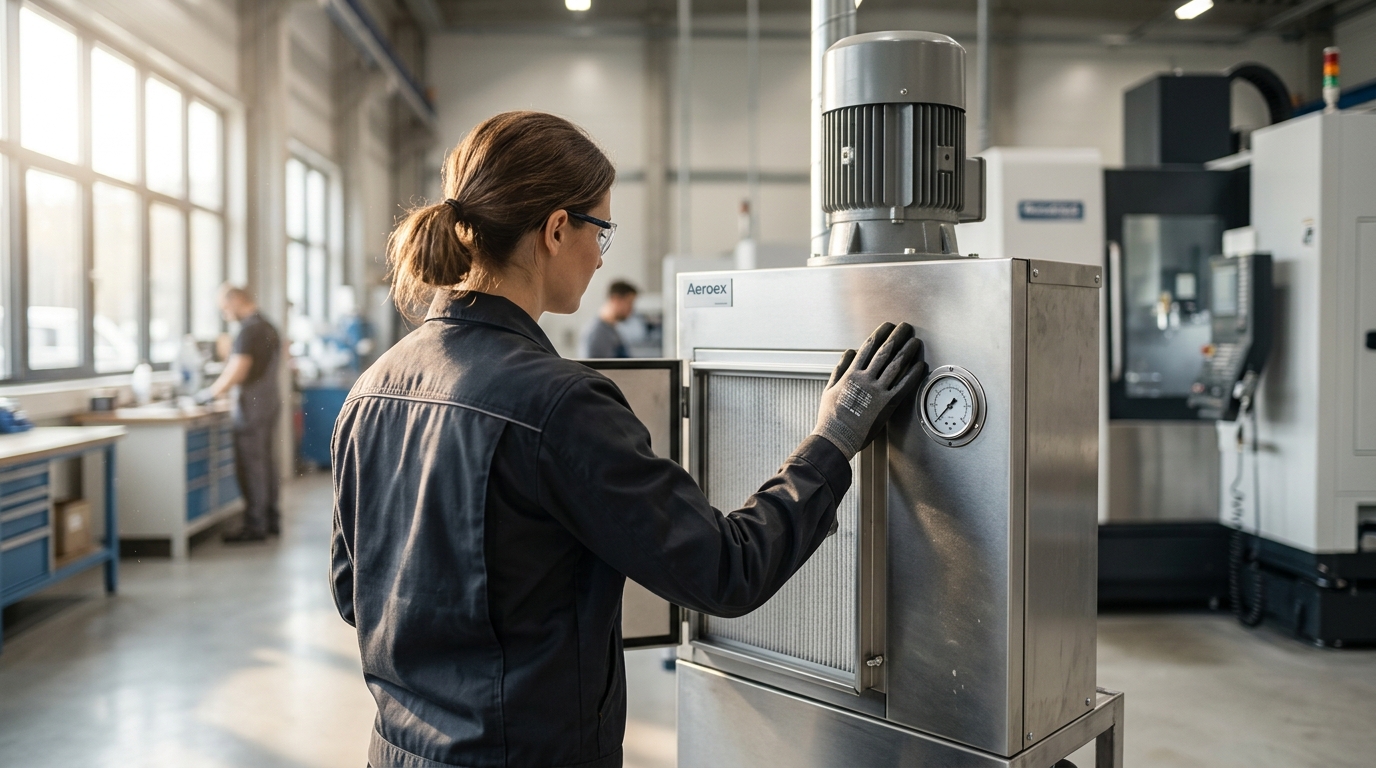
Examine filter housing seals, ductwork connections, and drain lines for leaks. Look for visible mist residue on exterior surfaces, which signals bypass or saturation. Verify that fan motors are running within their rated amperage. Document your findings each time so you build a maintenance history that proves due diligence during audits.
Recommended Inspection Frequency
| Component | Inspection Interval | Action |
|---|---|---|
| Mechanical pre-filter element | Weekly | Visual check, drain fluid back to sump |
| Depth-loading fiber bed filters (MERV 13-14) | Monthly | Check pressure drop across filter stage |
| HEPA filter (final stage) | Quarterly | Measure differential pressure, inspect seals |
| Fan motor and housing | Quarterly | Check amperage draw, clean fan blades |
| Ductwork and connections | Semi-annually | Inspect for leaks, corrosion, blockages |
2. Follow a Proactive Filter Replacement Plan
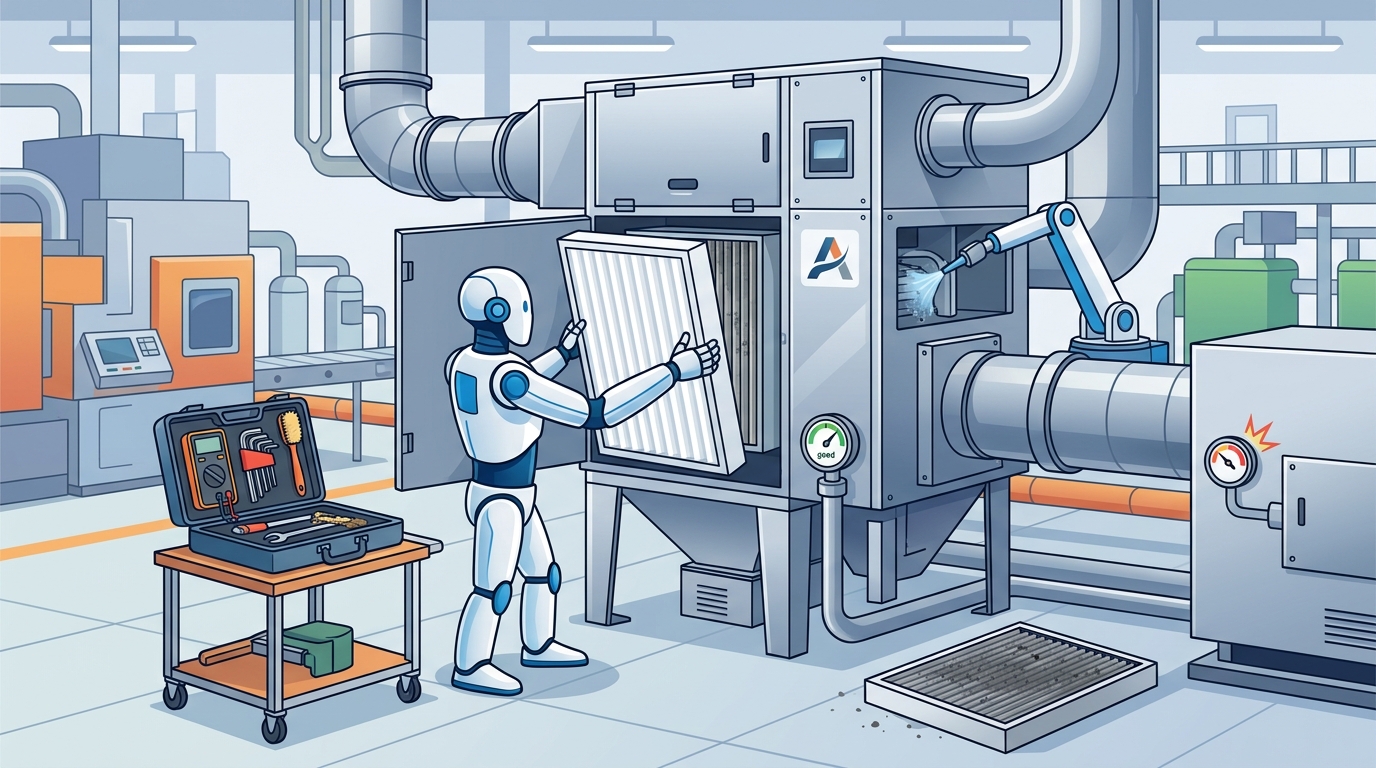
A filter replacement plan is a documented schedule that specifies when each filter stage should be swapped based on manufacturer guidelines or measured pressure drop. Replacing filters at the right time is crucial to sustaining filtration efficiency and preventing cascading failures across downstream stages.
Typical Filter Lifespans by Stage
In Aeroex ARO series mist collectors, the mechanical element can last up to 20 years, agglomerator filters 10 to 15 years, and HEPA filters typically 2 to 4 years. Depth-loading fiber bed filters rated MERV 13 and MERV 14 offer 1 to 3 years of service life thanks to 25 times more surface area than standard filters. Waiting until a filter is fully saturated forces the remaining stages to work harder, shortening the life of more expensive downstream media.
When to Replace Early
Replace filters ahead of schedule if pressure drop readings spike above the manufacturer threshold, if you switch to a higher-viscosity coolant, or if production volume increases significantly. Always keep spare filters on hand. Review the mist collector filters guide for media selection tips.
3. Monitor System Performance Metrics
Performance monitoring is the practice of tracking measurable indicators like airflow rate, pressure differential, and ambient particulate levels to detect efficiency loss before it becomes a problem. Monitoring filter performance allows for early detection of any issues or reductions in effectiveness, prompting timely intervention.
Install magnehelic gauges or digital pressure sensors across each filter stage. Log readings weekly. A gradual rise in differential pressure is normal, but a sudden spike may indicate a torn filter or oil-soaked media. Pairing pressure data with periodic air quality sampling gives you a complete picture of system health.
4. Troubleshoot Common Maintenance Issues
Even well-maintained systems encounter issues. A particularly prevalent problem is the rapid clogging of centrifugal filters, which can lead to increased maintenance frequency and operational downtime. Here are the most frequent problems and their fixes.
Reduced Airflow
Check for clogged pre-filters first. If mechanical elements are clear, inspect ductwork for collapsed sections or debris. Verify that the fan is spinning at the correct RPM and that VFDs (variable frequency drives) are set properly. Customers who installed VFDs on Aeroex units have reported substantially extended filter life.
Oil or Coolant Dripping from the Unit
This usually means the drain line is blocked or the first-stage mechanical separator is overwhelmed. Clean drain ports and confirm the unit is sized correctly for your application. Use the mist collector sizing guide to verify your configuration.
Unusual Odors
Persistent chemical smells may indicate that gaseous contaminants or VOCs are passing through particulate filters uncaptured. Carbon filtration stages are designed to adsorb these molecules. Explore engineered filtration solutions if your current system lacks an activated carbon stage.
5. Stay Aligned with OSHA and Environmental Regulations
OSHA's Permissible Exposure Limits (PELs) define the maximum airborne contaminant concentration workers can encounter during an 8-hour shift. Employers must monitor air quality and take action if PELs are exceeded. Facilities without documented monitoring programs struggle to prove compliance during inspections.
Maintain a log of every filter change, pressure reading, and air quality test. OSHA recommends MERV 13 or higher filtration for commercial and industrial applications. Keep training records that show employees understand how to operate and report issues with filtration equipment. For a deeper dive into regulatory alignment, read the role of mist collectors in environmental compliance.
6. Choose Systems Designed for Low Maintenance
Not all filtration systems are created equal. Multi-stage depth loading filtration technology is a progressive approach that targets increasingly smaller particles across successive filter stages, extending overall system life and reducing service frequency. The Aeroex ARO series uses this approach, with the first mechanical stage removing up to 95% of mist particles before they ever reach consumable filters.
User-friendly design features like accessible access points, longer periods between filter changes, and easy-access filters streamline routine inspections. A documented case study from a Midwest machining plant showed that source-capture mist collectors eliminated over 80% of airborne oil mist and delivered full ROI in under two years through maintenance savings and reduced absenteeism. Learn more about the full industrial air filtration guide for manufacturers.
Key Takeaways
- Set a written inspection schedule covering every filtration component from pre-filters to HEPA stages.
- Replace filters proactively based on pressure drop data, not just calendar dates.
- Monitor differential pressure and ambient air quality weekly to catch problems early.
- Keep detailed maintenance logs to demonstrate OSHA compliance during inspections.
- Address common issues like clogged drains, reduced airflow, and odor breakthrough promptly.
- Select multi-stage filtration systems that reduce long-term maintenance costs and extend filter life.
- Consult with filtration experts when production conditions change or contaminant profiles shift.
Frequently Asked Questions
How often should I inspect my industrial air filtration system?
At minimum, perform visual checks weekly on pre-filter stages and full system inspections quarterly. High-volume or high-mist environments may require monthly comprehensive checks. Consistent scheduling prevents contaminant buildup and keeps your system running efficiently.
What is the typical lifespan of a HEPA filter in a mist collector?
In systems like the Aeroex ARO series, HEPA filters typically last 2 to 4 years. Lifespan depends on upstream filter condition, mist concentration, and coolant type. Proper pre-filtration dramatically extends HEPA life.
How do I know when a filter needs replacing?
Monitor differential pressure across each filter stage. When the pressure drop exceeds the manufacturer-specified threshold, the filter is loaded and should be replaced. Visual inspection for discoloration or oil saturation also helps.
Can I clean and reuse industrial air filters?
Mechanical elements and some demister stages are washable and reusable. However, depth-loading fiber bed filters and HEPA filters are consumable and must be replaced. Never attempt to wash a HEPA filter, as this destroys the media structure.
What happens if I skip regular maintenance?
Neglected systems experience reduced airflow, higher energy consumption, and declining air quality. Contaminant levels can exceed OSHA PELs, exposing your business to fines starting at $13,260 per violation and putting workers at risk of respiratory illness.
Do I need to document my filtration maintenance for OSHA?
Yes. OSHA expects employers to demonstrate proactive hazard identification and control. Inspectors examine maintenance records and air quality monitoring data during workplace evaluations. A documented program protects your business during audits.
How does multi-stage filtration reduce maintenance costs?
By capturing the largest particles first, multi-stage systems prevent premature loading of finer downstream filters. This intelligent approach means fewer filter replacements, less downtime, and lower total cost of ownership over the life of the system.
What size mist collector do I need for my machines?
Sizing depends on the airflow requirements of your specific machines and enclosure configuration. Factors include spindle speed, coolant pressure, and enclosure volume. Use a professional sizing assessment to ensure optimal capture efficiency.
Get Expert Maintenance Support from Aeroex
Whether you need help sizing a new system or optimizing your current maintenance program, the Aeroex engineering team is ready to assist. With over 20 years of experience in industrial mist collection and air purification, Aeroex delivers solutions built for minimal maintenance and maximum performance. Contact Aeroex today to schedule a consultation and experience the difference.