
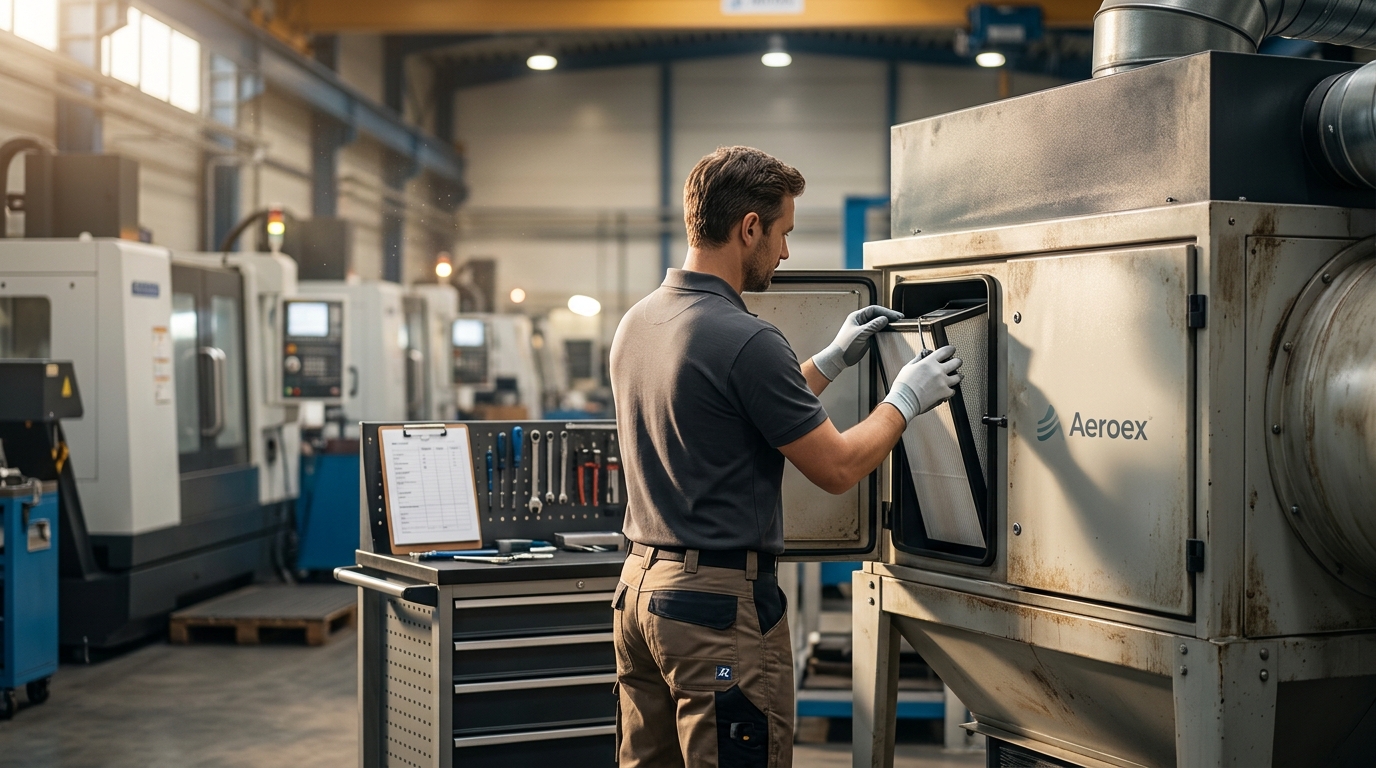
Keeping your industrial air filtration systems in peak condition is not optional. Poorly maintained filters lead to degraded air quality, higher energy costs, regulatory violations, and shortened equipment life. Whether your factory runs CNC machines, grinding operations, or heat-treating lines, a proactive maintenance routine protects both your workers and your bottom line. This guide walks you through the essential steps to maintain filtration efficiency, meet OSHA permissible exposure limits, and get the longest possible service life from your equipment.
Why Filtration Maintenance Matters
An industrial air filtration system is a mechanical assembly that removes airborne contaminants such as oil mist, coolant mist, smoke, and fumes from indoor factory air. When these systems are neglected, contaminant levels climb, machinery corrodes faster, and workers face increased health risks.
Cleaner air leads to fewer sick days and lower workers' compensation claims. Improved airflow and reduced contaminant buildup also increase machine uptime and throughput. One documented case study from a Midwest machining plant showed that source-capture mist collectors eliminated over 80% of airborne oil mist and recovered the full investment in under two years.
The Cost of Neglect
Long-term costs of air filtration include filter replacement, energy use, and maintenance. While advanced systems have higher upfront costs, they often reduce long-term expenses significantly. Skipping scheduled maintenance accelerates filter clogging, raises static pressure, and forces motors to work harder, increasing energy consumption by 15-30%.
Establish a Regular Inspection Schedule
Regular inspection and cleaning schedules are paramount to prevent the buildup of contaminants and maintain efficient operation. Create a written maintenance calendar that covers daily visual checks, weekly cleaning tasks, and monthly deep inspections.
Daily Checks
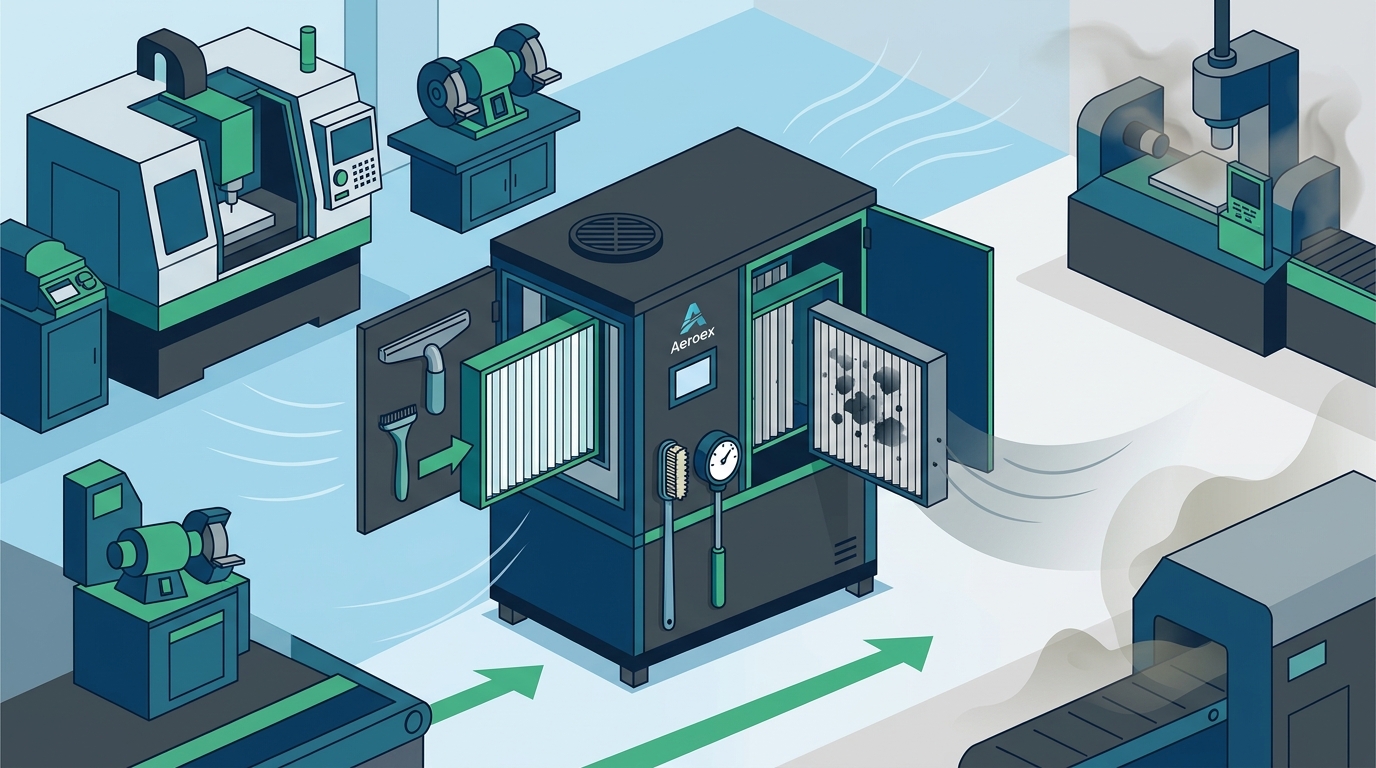
Walk the shop floor and look for visible mist escaping machine enclosures. Check differential pressure gauges on each collector unit. Listen for unusual motor noise or vibration, which can signal bearing wear or an imbalanced fan.
Monthly Deep Inspections
Inspect ductwork connections for leaks. Clean drain lines to ensure captured fluids return to the machine sump. Verify that all access panels seal properly. Document findings in a maintenance log. OSHA inspectors specifically look for evidence that reviews happened, not just that a program exists.
Replace Filters at the Right Intervals
Proper filter replacement at recommended intervals is crucial to sustain filtration efficiency. A filter replacement schedule is a documented plan specifying when each filter stage should be swapped based on runtime hours, pressure drop readings, or calendar intervals.
Filter lifespans vary widely by technology and application. The table below shows typical replacement intervals for multi-stage mist collector filters:
| Filter Stage | Type | Typical Lifespan | Efficiency Rating |
|---|---|---|---|
| 1st Stage | Mechanical Element | Up to 20 years | Removes 90-95% of mist |
| 2nd Stage | Depth-Loading Fiber Bed (MERV 13) | 1-3 years | Fine mist capture |
| 3rd Stage | Depth-Loading Fiber Bed (MERV 14) | 1-3 years | 25x surface area vs. standard |
| 4th Stage | HEPA Filter | 2-4 years | 99.97% of submicron particles |
Systems like the Aeroex ARO mist collector series use a progressive multi-stage filtration process that removes 95% of mist particles in the first stage, extending filter life and reducing maintenance costs. Their HEPA filters last 2-4 years and the mechanical element can last up to 20 years.
Monitor System Performance Continuously
Monitoring filter performance allows for early detection of any issues or reductions in effectiveness, prompting timely intervention. Do not wait until air quality visibly degrades to take action.
Pressure Drop Monitoring
Differential pressure is the most reliable indicator of filter loading. Install digital or analog gauges across each filter stage. When pressure drop exceeds the manufacturer's recommended threshold, schedule a replacement. Many modern industrial air purification systems work by pulling contaminated air through progressive filter stages, and a clogged early stage overloads downstream filters.
Air Quality Testing
Periodic air sampling confirms your system meets exposure limits. OSHA's permissible exposure limit for total dust is 15 mg/m³ and 5 mg/m³ for respirable particles over an 8-hour shift. Track results over time to identify trends before they become violations.
Stay Ahead of Regulatory Compliance
OSHA regulates workplace air quality through permissible exposure limits under 29 CFR 1910.1000, substance-specific standards, and the General Duty Clause. The General Duty Clause is a legal provision requiring employers to provide a workplace free from recognized hazards likely to cause death or serious physical harm.
As of January 2025, maximum penalties are $16,550 for serious violations and $165,514 for willful or repeated violations. Maintaining proper filtration documentation protects your facility during inspections. OSHA requires employers to maintain exposure monitoring records for 30 years.
Your filtration systems must comply with maximum exposure limits and ventilation requirements for the specific contaminants your processes generate. Working with experienced vendors like Aeroex helps ensure your systems stay aligned with current regulatory expectations.
Choose Systems Designed for Low Maintenance
Not all filtration systems are created equal when it comes to maintenance burden. A common issue is the rapid clogging of centrifugal filters, which can lead to increased maintenance frequency and operational downtime. Multi-stage depth-loading filtration technology offers a more efficient solution by extending the life of each filter stage.
The Mist-Fit series and the custom-engineered solutions from Aeroex are designed with user-friendly access points, longer periods between filter changes, and easy-access filters that streamline routine inspections. When selecting new equipment, prioritize systems with accessible filter compartments, built-in pressure gauges, and comprehensive documentation.
The size of the facility, ceiling height, and machine positioning will all impact system design. Some operations benefit from portable units, while others require centralized ducted systems. A professional assessment helps match the right solution to your shop layout.
Key Takeaways
- Create a written inspection schedule covering daily, weekly, and monthly maintenance tasks.
- Replace filters based on pressure drop data, not just calendar dates.
- Monitor differential pressure across each filter stage for early warning of issues.
- Document all maintenance activities to satisfy OSHA recordkeeping requirements.
- Choose multi-stage filtration systems that reduce maintenance frequency and extend filter life.
- Conduct periodic air quality sampling to verify compliance with OSHA PELs.
- Partner with experienced filtration providers who offer technical support and comprehensive documentation.
Frequently Asked Questions
How often should I inspect my industrial air filtration system?
Perform daily visual checks and pressure gauge readings. Schedule monthly deep inspections of ductwork, drain lines, and access panels. Comprehensive air quality sampling should happen at least quarterly or whenever processes change.
What are the signs that a filter needs to be replaced?
Rising differential pressure, visible mist escaping the collector, increased motor noise, and declining air quality readings all indicate a filter has reached its service limit. Always refer to the manufacturer's recommended thresholds.
How long do HEPA filters last in industrial mist collectors?
In well-designed multi-stage systems, HEPA filters typically last 2-4 years. Systems that remove 90-95% of contaminants in earlier stages, like Aeroex ARO collectors, protect the HEPA filter and extend its service life significantly.
What OSHA standards apply to factory air quality?
OSHA enforces air quality through 29 CFR 1910.1000 (permissible exposure limits for hundreds of substances), 29 CFR 1910.134 (respiratory protection), and the General Duty Clause. Specific standards also exist for silica, lead, and other hazardous substances.
Can poor air filtration maintenance result in OSHA fines?
Yes. As of January 2025, serious violations carry fines up to $16,550 per instance, while willful or repeated violations can reach $165,514. Employers are also required to maintain exposure monitoring records for 30 years.
What is multi-stage depth-loading filtration?
Multi-stage depth-loading filtration is a progressive air cleaning process where contaminated air passes through multiple filter layers of increasing efficiency. Each stage captures a specific particle size range, which prevents premature clogging of finer downstream filters and extends overall system life.
How do I choose the right air filtration system for my factory?
Start by identifying the pollutants your processes generate. Consider your facility size, ceiling height, machine layout, and regulatory requirements. Request a professional site assessment from an experienced provider like Aeroex to get a tailored recommendation.
Do industrial air filtration systems save money long term?
Yes. Properly maintained filtration systems reduce worker sick days, lower workers' compensation claims, increase machine uptime, and help avoid costly OSHA penalties. Many facilities recover their investment in under two years through operational savings.
Get Expert Help With Your Air Filtration Maintenance
Whether you need a new system or want to optimize your current setup, the engineering team at Aeroex can help. With over 20 years of experience manufacturing mist collectors and air purification systems, they will review your application and recommend the right solution. Request a free consultation today and experience the Aeroex advantage.