
How to Maintain Industrial Air Filtration Systems for Peak Efficiency
Keeping your industrial air filtration systems running at full capacity is not optional. Poorly maintained filters lead to degraded air quality, higher energy costs, increased worker sick days, and potential OSHA violations with fines starting at $16,550 per serious citation. The good news is that a structured maintenance routine is straightforward once you know the key steps. This guide walks factory managers and maintenance teams through proven practices to extend filter life, sustain airflow, and stay compliant with workplace air quality regulations.
1. Understand Your Filtration System Type
Before you can maintain a system effectively, you need to know what you are working with. Industrial air filtration is the process of removing airborne contaminants such as oil mist, coolant mist, smoke, fumes, and dust from the air inside a manufacturing facility. Different system architectures require different maintenance approaches.
Multi-Stage Filtration Systems
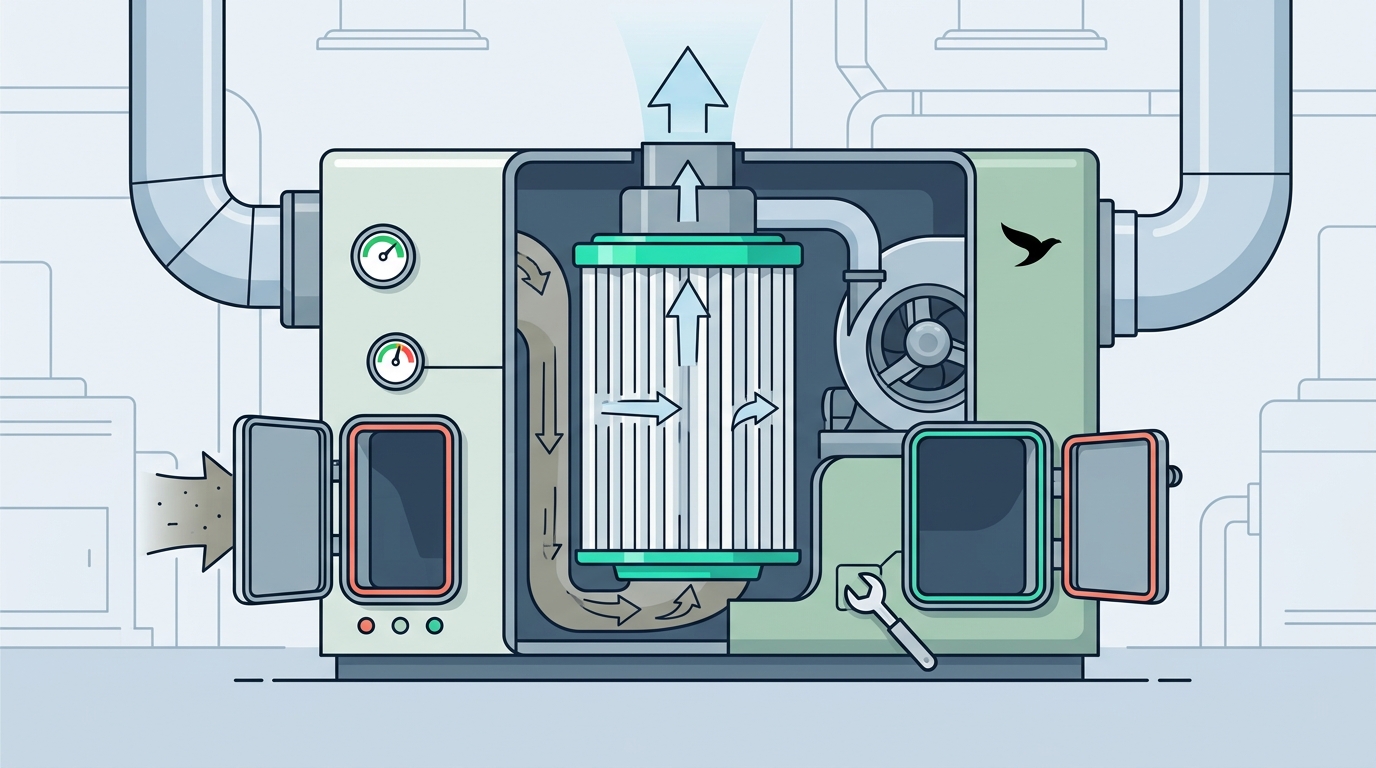
Multi-stage filtration systems use progressive filter media that target increasingly smaller particles at each stage. For example, the Aeroex ARO series mist collectors employ a four-stage process, starting with a mechanical element that separates up to 95% of mist particles in the first stage. This progressive approach extends the life of downstream filters and reduces overall maintenance costs.
Electrostatic Precipitators
An electrostatic precipitator (ESP) is a device that uses electrical charges to collect airborne particles. While ESPs do not require filter replacements, the collection plates must be cleaned regularly to maintain the electrical charge and capture efficiency.
Centralized vs. Source-Capture Systems
Centralized ducted systems handle air from multiple machines through a single unit, while source-capture collectors mount directly on individual machines. Your choice between centralized and point-of-source collection affects how you plan inspection routes and filter inventories.
2. Establish a Regular Inspection Schedule
Consistent inspections are the backbone of any maintenance program. OSHA recommends performing quarterly or semi-annual inspections to identify and address potential issues before they escalate. For high-output environments such as CNC machining or metalworking, monthly visual checks are advisable.
During each inspection, check for visible contaminant buildup on pre-filters, listen for abnormal fan noise, and verify that drainage systems are functioning. Documenting every inspection creates an audit trail that demonstrates compliance with environmental regulations.
3. Follow Proper Filter Replacement Intervals
A filter replacement interval is the manufacturer-recommended timeframe within which a filter should be swapped to maintain rated efficiency. Replacing filters too late leads to restricted airflow and higher energy consumption. Replacing them too early wastes money.
The table below outlines typical filter lifespans across common industrial air filtration stages:
| Filter Stage | Type | Typical Lifespan | Efficiency Rating |
|---|---|---|---|
| 1st Stage | Mechanical Element | Up to 20 years | Removes 90-95% of mist |
| 2nd Stage | Depth-Loading Fiber Bed (MERV 13) | 1 to 3 years | 25x more surface area than standard filters |
| 3rd Stage | Depth-Loading Fiber Bed (MERV 14) | 1 to 3 years | Fine particle capture |
| 4th Stage | HEPA Filter | 2 to 4 years | 99.97% of particles at 0.3 microns |
These lifespans reflect well-maintained systems. Learn more about filter media options in the mist collector filters guide from Aeroex.
4. Monitor Airflow and Filter Performance
Do not wait for visible problems. Use differential pressure gauges across each filter stage to track loading over time. A sudden pressure spike indicates blockage or premature loading that needs immediate attention. Monitoring filter performance allows for early detection of issues, prompting timely intervention before efficiency drops.
If your facility uses variable frequency drives (VFDs) on blower motors, these can extend filter life substantially by matching airflow to real-time demand. Tracking energy consumption at the blower is another proxy for filter condition: rising energy use at constant airflow suggests increased resistance from loaded filters.
5. Implement Cleaning Protocols
Between filter replacements, routine cleaning keeps your system performing at its best. For mechanical pre-filter elements, drain collected fluid back to the sump regularly. For ductwork, inspect and clean passages to prevent buildup that restricts airflow.
Cleaning Checklist
- Drain fluid from mechanical elements weekly in heavy-use applications
- Wipe down housing interiors during filter changes
- Inspect and clean ductwork connections quarterly
- Clear drainage lines to prevent backup and overflow
- Check gaskets and seals for air bypass
Aeroex systems are designed with user-friendly access points that streamline routine inspections and filter replacements, reducing downtime during cleaning.
6. Stay Current with OSHA and EPA Compliance
OSHA's General Duty Clause requires employers to provide a workplace free from recognized hazards, including poor air quality. While OSHA does not mandate specific filter types, it references ASHRAE standards recommending MERV 13 or higher filtration for commercial and industrial facilities.
Permissible Exposure Limits (PELs) are the maximum allowable concentrations of specific airborne substances that workers can be exposed to over an eight-hour workday. Employers must monitor air quality and take corrective action if PELs are exceeded. Maintaining proper filtration is the most effective engineering control for staying within these limits.
Keep maintenance logs for at least five years. Record filter specifications, replacement dates, technician names, and inspection results. Digital documentation systems are accepted by OSHA and often provide better audit trails than paper logs.
Key Takeaways
- Know your system type: multi-stage, ESP, or hybrid, as each has unique maintenance needs.
- Inspect monthly in heavy-use environments and at least quarterly for all facilities.
- Replace filters according to manufacturer intervals and pressure-drop readings, not on a guess.
- Use differential pressure gauges and energy monitoring to detect issues early.
- Clean mechanical elements and drainage lines regularly between filter swaps.
- Document every maintenance action and retain records for 5+ years to satisfy OSHA audits.
- Partner with an experienced filtration provider like Aeroex for system design, support, and replacement parts.
Frequently Asked Questions
How often should I replace industrial air filtration filters?
Replacement intervals depend on the filter stage and operating conditions. HEPA filters typically last 2 to 4 years, while mechanical pre-filter elements can last up to 20 years. Always follow manufacturer recommendations and monitor differential pressure readings for the most accurate timing.
What are the signs my air filtration system needs maintenance?
Watch for reduced airflow, visible mist or haze escaping the machine enclosure, unusual fan noise, rising energy consumption, and increased pressure drop across filter stages. Any of these signals warrants an immediate inspection.
Does OSHA require specific air filters in factories?
OSHA does not mandate specific filter types but requires adequate indoor air quality under the General Duty Clause. OSHA references ASHRAE standards, which recommend MERV 13 or higher filtration for most commercial and industrial facilities.
How do I know if my mist collector is sized correctly?
An undersized collector will struggle to maintain clean air and will load filters faster. Aeroex provides a detailed resource on how to size a mist collector based on your machine configuration, coolant type, and airflow requirements.
Can I clean filters instead of replacing them?
Some mechanical elements can be cleaned and reused, but fiber bed and HEPA filters are designed for single use and lose efficiency if washed or blown out. Attempting to clean disposable filters can damage the media and compromise air quality.
What maintenance records should I keep for compliance?
Maintain records including filter specifications, MERV ratings, replacement dates, technician names, inspection findings, and any corrective actions taken. Best practice is to retain these records for at least five years.
How does poor filter maintenance affect operating costs?
Clogged filters force blower motors to work harder, increasing energy costs. They also allow contaminants to pass through, leading to equipment damage, more frequent sick days, and potential regulatory fines. One documented case study showed that proper mist collection eliminated over 80% of airborne oil mist and paid for itself in under two years through reduced maintenance and absenteeism.
Get Expert Help with Your Filtration Maintenance
Whether you are setting up a new maintenance program or upgrading aging equipment, the engineering team at Aeroex can help. With over 20 years of experience in industrial air purification and mist collection, Aeroex offers consultation, system sizing, and ongoing support. Request a free consultation today and keep your factory air clean, compliant, and cost-effective.