
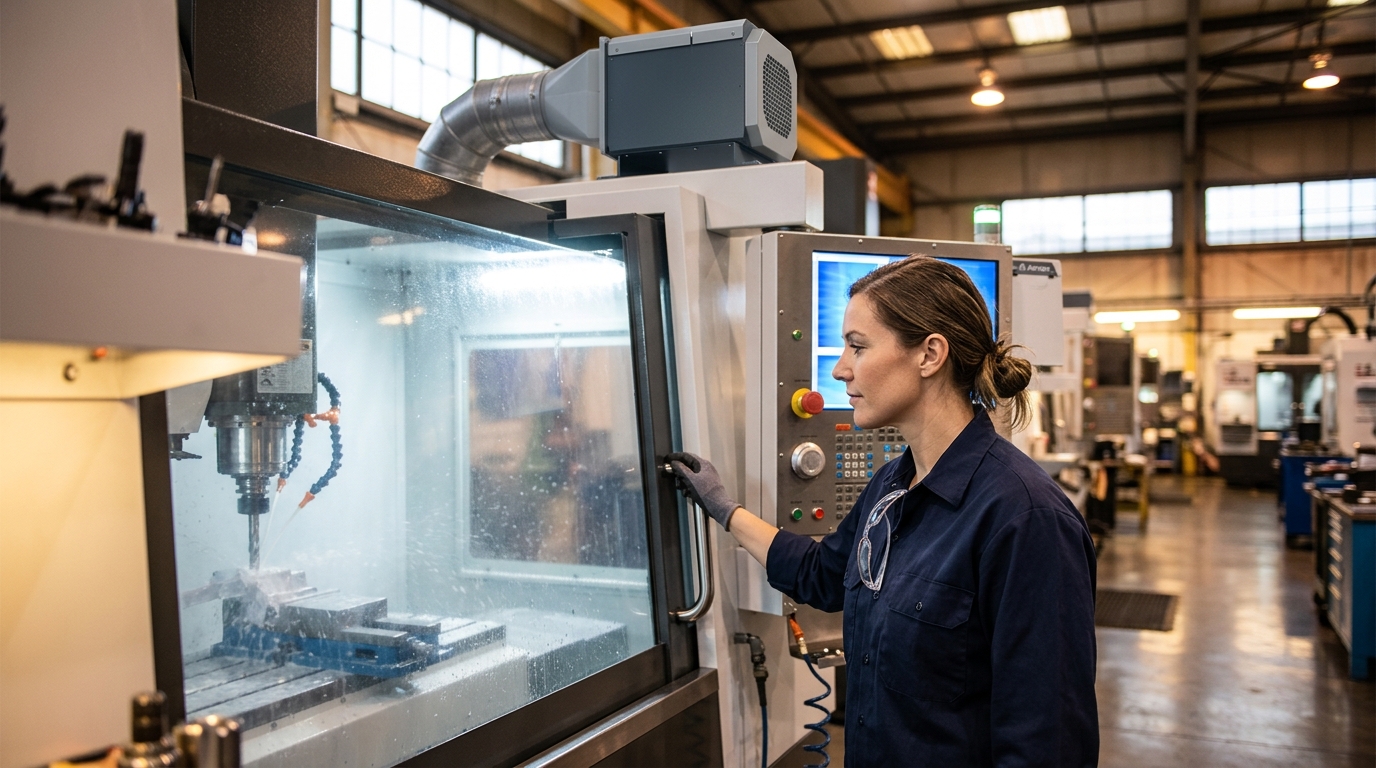
Choosing the best mist collector for CNC machining is not a one-size-fits-all decision. High-speed CNC operations generate oil mist and coolant mist whenever cutting fluid contacts rotating tools and heated workpieces, creating health risks, slippery floors, and accelerated equipment wear. With OSHA, NIOSH, and ACGIH all setting exposure limits for oil mist at 5 mg/m3, selecting the right collector directly affects regulatory compliance and long-term operational costs. This guide walks you through filtration technologies, sizing factors, mounting options, and maintenance considerations so you can confidently invest in the right system for your shop.
Why Mist Collectors Matter in CNC Environments
A mist collector is an industrial air filtration device that captures airborne oil and coolant droplets generated during CNC machining and returns clean air to the workspace. Without one, aerosolized coolant escapes the machine enclosure and spreads throughout the facility, settling on floors, electronics, and operators' lungs.
Exposure to coolant mist can cause irritation of the eyes, skin, and respiratory tract, and long-term exposure may increase the risk of serious respiratory and skin diseases. Regulatory bodies like OSHA set a permissible exposure limit (PEL) of 5 mg/m3 for oil mists over an 8-hour time-weighted average. Using a mist collector is one of the most effective engineering controls for CNC mist compliance.
Beyond health and safety, mist collectors protect CNC machines by preventing particles from settling on critical components, reducing premature wear and extending machine service life. A cleaner shop also means less downtime for housekeeping and fewer slip hazards on the floor.
Filtration Technologies Compared
Not all mist collectors filter the same way. Understanding the core technology inside each unit helps you match the collector to your specific machining process and coolant chemistry.
Mechanical/Baffle Filters
Mechanical collectors force air through baffles or mesh screens to capture larger oil droplets. They are simple and affordable but ineffective against fine mist or smoke, making them suitable only for light-duty, low-RPM applications.
Centrifugal Separators
A centrifugal mist collector uses rotational force to spin oil-laden air and separate droplets. These units handle moderate mist loads and can recover oil, but they struggle with submicron particles and have moving parts that increase maintenance needs.
Depth-Loading Coalescing Filters
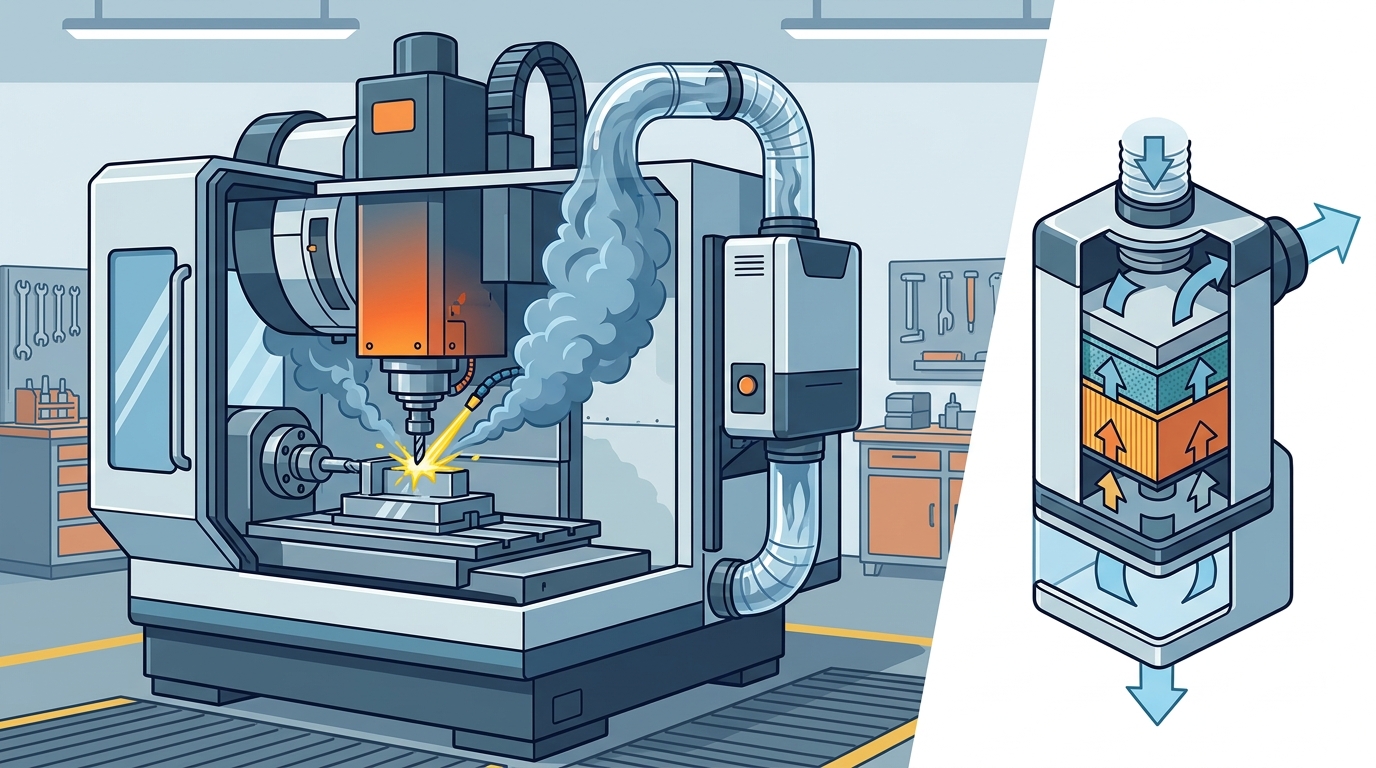
Coalescing filtration is the process of forcing fine mist droplets through engineered media so they merge into larger drops and drain by gravity. This approach is widely used in CNC machining because it manages both large droplets and fine mist without liquid baths or electrostatics. The Aeroex Mist-Fit series uses a multi-stage coalescing architecture with a MERV 15 fibre bed filter that can last 1 to 3 years.
| Technology | Best For | Fine Mist Capture | Maintenance Level |
|---|---|---|---|
| Mechanical/Baffle | Light-duty, low RPM | Low | Low |
| Centrifugal | Moderate mist, oil recovery | Moderate | Medium |
| Coalescing (Depth-Loading) | CNC machining, high-pressure coolant | High | Low to Medium |
| Electrostatic Precipitator | Smoke, submicron particles | High (when clean) | High |
Sizing and Airflow: Getting It Right
Airflow capacity is measured in cubic feet per minute (CFM) and determines how effectively a unit captures mist from the machine enclosure. A unit that is too small will allow mist to escape through enclosure gaps. An oversized unit wastes energy and can deplete coolant faster than necessary.
Proper sizing should focus on enclosure containment and airflow stability rather than enclosure volume alone. Factors include coolant pressure, spindle speed, the number of open ports on the enclosure, and the type of cutting fluid. If you run high-pressure coolant for CNC machining, the mist load increases dramatically and demands a collector engineered for that intensity.
A common mistake is treating all CNC machines identically. Lathes and milling machines generate heavy oil mist, while laser and plasma cutters produce more smoke and fumes. Each scenario calls for a different collector capacity and filtration stage.
Mounting and Installation Options
How a mist collector integrates with your CNC machine affects both capture efficiency and maintenance accessibility. There are four primary mounting methods to consider.
Direct Mount
Direct mounting places the collector on top of or directly beside the CNC machine, capturing mist right at the source. This eliminates ducting losses and keeps static pressure drop low. The Aeroex metalworking mist collectors offer proprietary direct-mount options ideal for compact spaces.
Centralized (Suspended or Floor Stand)
A centralized system ducts multiple CNC machines to a single collector. This can reduce long-term maintenance touchpoints but requires careful duct design and airflow balancing. Ducting multiple machines introduces complexity: pipe sizing must decrease downstream to maintain air velocity, and poorly designed runs cause mist to settle inside the ductwork.
For most shops running two to five machines, individual direct-mount collectors offer the best balance of capture performance and simplicity. Larger facilities with 10 or more machines in close proximity may benefit from a centralized approach with the Aeroex engineered solutions team designing a custom layout.
Maintenance and Filter Replacement
Filter life is not governed by a fixed calendar. Replacement timing depends on mist load, operating hours, and filter design. Depth-loading coalescing filters in systems like the Aeroex Mist-Fit typically deliver 1 to 3 years of service before the fibre bed stage needs replacement, though the mechanical pre-filter stages are washable and reusable.
Signs that a filter needs attention include visible mist escaping from the exhaust, increased noise, reduced airflow at the machine enclosure, and persistent odor. Delaying replacement leads to airflow instability, loss of enclosure containment, and higher energy consumption. You can learn more about filter lifespan and replacement indicators in the mist collector filters guide.
When evaluating total cost of ownership, consider noise output as well. Look for mist collectors rated below 70 dB, which is the threshold generally considered acceptable for indoor manufacturing environments.
Key Takeaways
- A mist collector is essential for any CNC shop to protect worker health, maintain machine longevity, and meet OSHA exposure limits.
- Depth-loading coalescing filtration is the most common and effective technology for CNC machining environments.
- Proper sizing depends on enclosure containment and mist load, not enclosure volume alone.
- Direct-mount installations eliminate duct losses and simplify maintenance for most shops.
- Filter replacement should be based on operating conditions, not a fixed schedule.
- Noise levels below 70 dB are recommended for comfortable indoor use.
- Aeroex offers four product lines (Maverick, Mist-Fit, ARO, and BlowBox) covering everything from single machines to multi-unit centralized systems.
Frequently Asked Questions
What is a mist collector?
A mist collector is an industrial air filtration system designed to capture airborne oil and coolant mist directly from CNC machine enclosures and separate liquid from airflow before returning clean air to the workspace.
Are mist collectors required on CNC machines?
While no single regulation mandates a mist collector by name, OSHA, NIOSH, and ACGIH all set permissible exposure limits for oil mist. Mist collectors serve as engineering controls that help facilities stay within these limits. Learn more about whether mist collectors are required on CNC machines.
What is the best filtration type for CNC mist?
For most CNC machining applications, drainable coalescing media is preferred because it supports consistent airflow over time and handles both large droplets and fine aerosol without requiring liquid baths or electrostatic maintenance.
How long do mist collector filters last?
Filter life varies based on mist load, coolant type, and operating hours. Depth-loading fibre bed filters such as those in the Aeroex Mist-Fit series typically last 1 to 3 years. Mechanical pre-filters are washable and reusable.
Can one mist collector serve multiple CNC machines?
Yes. Centralized systems can be ducted to multiple machines, but this requires careful duct sizing and airflow balancing. Single-machine collectors are simpler and often more effective for shops with fewer than five machines.
How do I choose the right size mist collector?
Match the collector's CFM rating to the mist volume and enclosure configuration of your CNC machine. Consider coolant pressure, spindle speed, and enclosure sealing. Read the full breakdown on how to choose an oil mist collector for CNC machines.
What maintenance does a mist collector need?
Regular inspection of airflow, filter condition, and drain function is essential. Replace filters when you notice mist escaping the exhaust, increased noise, or reduced suction at the machine enclosure.
Do mist collectors help recover coolant?
Yes. In coalescing systems, captured mist coalesces into liquid that drains back to the machine sump or a collection vessel, reducing coolant loss from evaporation.
Get Started with the Right Mist Collector
Every CNC shop is different, and the best mist collector for your operation depends on your machines, coolant type, shop layout, and production schedule. Aeroex offers free trials so you can test a mist collector on your own equipment before committing. Request a consultation with the Aeroex engineering team to get a recommendation tailored to your shop's needs.