
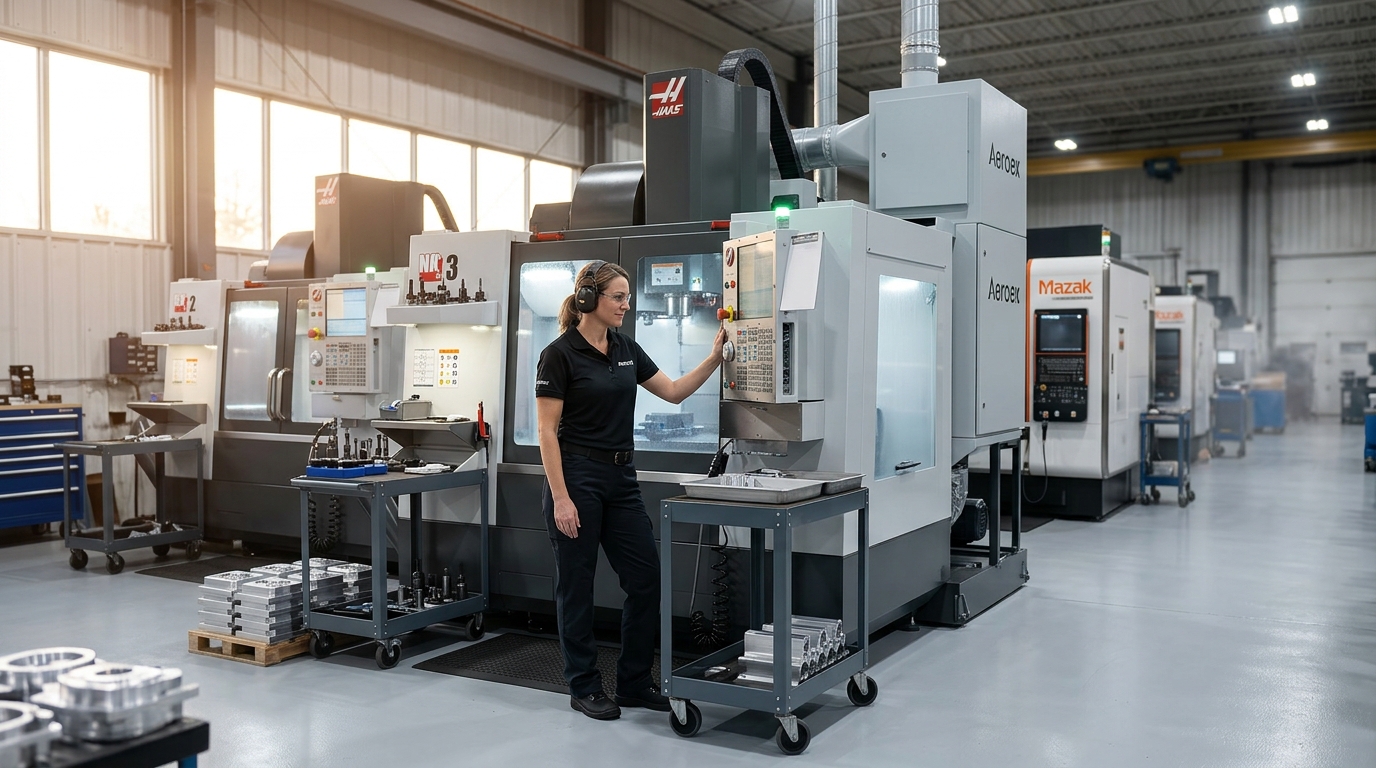
Best Mist Collector for CNC Machining: How to Choose the Right System
Choosing the best mist collector for CNC machining is one of the most important air quality decisions a machine shop can make. Every time a CNC machine runs high-speed cutting operations with coolant or oil, fine aerosol particles escape the enclosure and spread through the facility. Left unchecked, this mist creates slippery floors, damages electronics, and exposes operators to respiratory hazards. The right mist collector captures contaminants at the source, protects your team, and keeps your shop compliant with OSHA permissible exposure limits. This guide walks you through every factor that matters.
What Is a Mist Collector?
A mist collector is an industrial air filtration system designed to capture airborne oil and coolant mist directly from CNC machine enclosures and separate liquid from airflow before returning clean air to the workspace. In dry systems common to CNC applications, mist-laden air passes through engineered coalescing media that forces droplets to merge and drain. The separated liquid is collected while cleaned air returns to the shop.
Unlike general ventilation, a mist collector works as a targeted engineering control. It pulls contaminated air from the enclosure, removes particulate in progressive filter stages, and maintains negative pressure inside the machine to prevent mist leakage. For a deeper look at how the media works, see the mist collector filter guide.
Why CNC Machines Need Mist Collection
High-speed CNC machining generates oil mist and coolant mist whenever fluid contacts rotating tools and heated workpieces. Without effective source capture, this aerosol escapes the enclosure and spreads throughout the facility. The health risks are well documented: inhaling oil mist particles can cause irritation of the eyes, skin, and throat, and long-term exposure may increase the likelihood of respiratory disease.
Regulatory Requirements
OSHA has set a permissible exposure limit (PEL) for mineral oil mist at 5 mg/m³ as an 8-hour time-weighted average. NIOSH recommends an even stricter limit of 0.5 mg/m³ for all metalworking fluids. Facilities that exceed these thresholds face citations, fines, and increased worker health claims. Mist collectors serve as the primary engineering control to help maintain compliance with these standards.
Operational Benefits
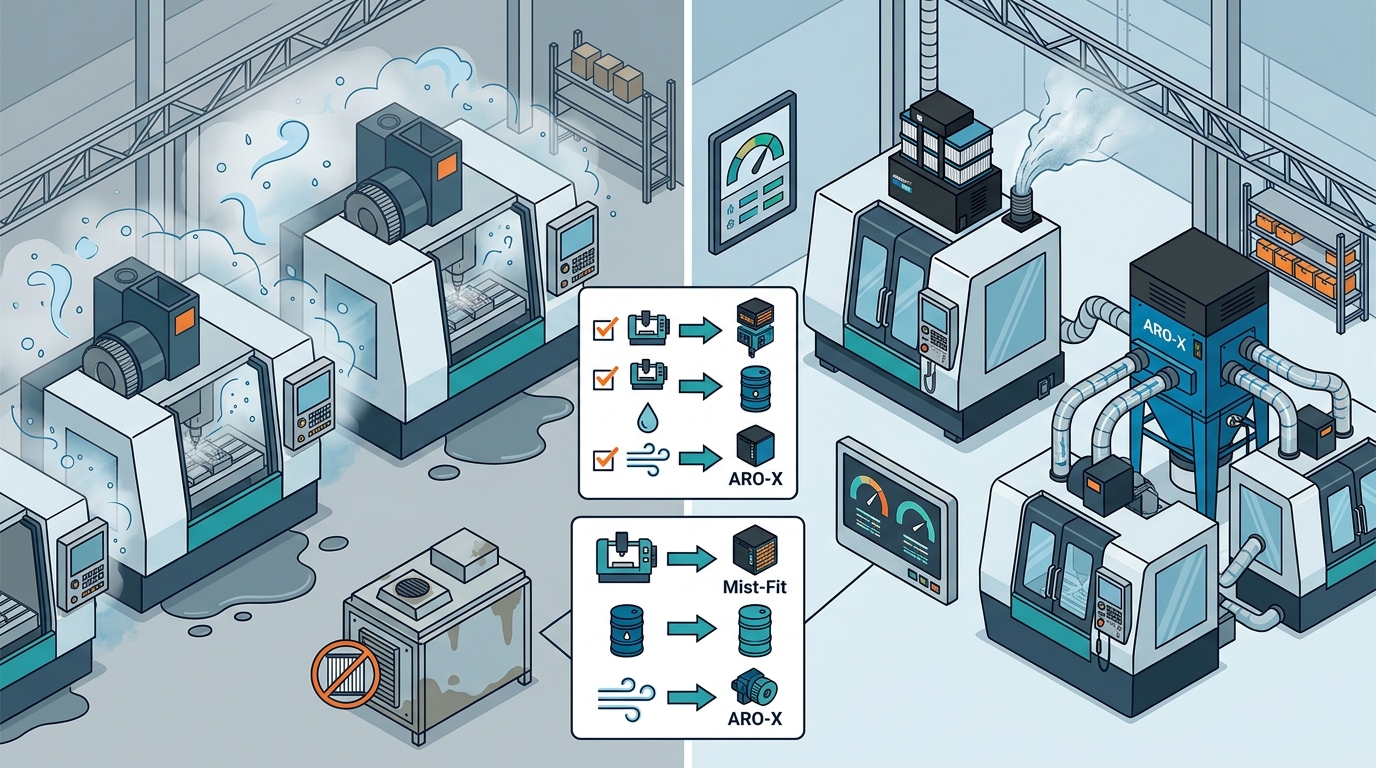
Beyond compliance, mist collectors enhance the efficiency and longevity of CNC machines by preventing mist particles from settling on machine parts, which can cause premature wear and tear. Cleaner shops also mean less time spent on housekeeping and fewer slip hazards on the floor. Learn more about why mist collectors are necessary on CNC machines.
Types of Mist Collector Filtration
Not all mist collectors use the same technology. The three main approaches each have distinct strengths and trade-offs for CNC environments.
| Filtration Type | How It Works | Best For | Maintenance Demand |
|---|---|---|---|
| Centrifugal (Rotary) | Uses rotational force to remove larger droplets | Heavy oil applications | Moderate; less effective on fine aerosol |
| Electrostatic Precipitator | Charges particles and collects them on plates | Smoke-heavy processes | High; requires frequent plate cleaning |
| Dry Coalescing (Depth-Loading) | Uses filter media to merge fine droplets and drain them | CNC machining with oil or coolant | Low; drainable media extends filter life |
Dry coalescing filtration is the approach widely preferred in CNC machining because it manages both large droplets and fine mist without liquid baths or electrostatic plates. Depth-loading coalescing media is a filter architecture that forces small mist droplets to merge into larger ones, allowing gravity to drain the liquid rather than clog the media. This supports consistent airflow over time and predictable maintenance cycles.
Key Selection Factors for Your Shop
Selecting the right oil mist collector requires matching the collector design to the machining process, enclosure configuration, and mist characteristics. Here are the factors that matter most:
Machine Type and Mist Load
Different CNC machines produce varying amounts of mist and smoke. Lathes and milling machines running high-pressure coolant generate heavy coolant mist, while Swiss-type machines with straight oil produce dense oil aerosol. Your collector must be sized to handle the specific pollutant load your machines produce. Review how to match a mist collector to your CNC machine type.
Airflow Requirements
An undersized system allows mist to escape. An oversized system wastes energy without improving containment. The collector's CFM rating must match the enclosure volume and mist generation rate of your machine. Aeroex engineers review each application to recommend the appropriate airflow configuration.
Coolant or Oil Type
Whether the sump runs straight oil, soluble oil emulsion, or synthetic coolant, the mist collector platform should handle all three. An oil mist collector and a coolant mist collector are not separate machines. They are the same filter-based system configured for your fluid chemistry.
Mist-Fit vs. ARO: Matching the Collector to the Application
Aeroex offers two primary product lines for CNC mist collection, each designed for a different operational scenario.
| Feature | Mist-Fit Series | ARO Series |
|---|---|---|
| Ideal Use Case | Individual CNC machines, compact layouts | Multi-machine setups, high-demand applications |
| Mounting | Direct-mount on machine | Floor stand, wall, or suspended |
| Airflow Range | Up to ~550 CFM (varies by model) | Up to 2,500+ CFM |
| Filter Technology | Multi-stage with MERV 15 fibre bed | Multi-stage depth-loading coalescing with HEPA option |
| Ductwork Needed | Minimal to none | Engineered ducting for multi-machine configs |
| Best For | Source capture, limited floor space | Complex applications, higher contaminant loads |
The Mist-Fit series is designed for source capture at the individual machine. Its compact footprint and direct-mount capability make it ideal when floor space is limited and you want to eliminate ductwork. The ARO series handles higher airflow requirements and can be ducted to multiple CNC machines, making it the right choice for complex shop floor configurations or when mist, smoke, and vapor loads exceed what a single compact unit can manage.
Mounting and Installation Options
How you mount a mist collector directly impacts capture efficiency and long-term maintenance costs. Direct-mount collectors reduce duct losses and static pressure drop, helping maintain stable airflow at the machine. Excessive ducting can reduce capture efficiency if not carefully engineered.
Aeroex supports four primary mounting configurations: direct mount on the CNC machine, wall mount for open-style machines like surface grinders, floor stand for central units ducted to multiple machines, and suspended mount for ceiling installations. Each option is designed for quick integration, with CNC-specific mounting hardware and optional M-Code wiring for automated operation. Explore all metalworking mist collector mounting options.
Key Takeaways
- A mist collector is an engineering control that captures oil mist, coolant mist, and smoke directly from CNC enclosures.
- OSHA's PEL for mineral oil mist is 5 mg/m³; NIOSH recommends 0.5 mg/m³ for all metalworking fluids.
- Dry coalescing (depth-loading) filtration is widely preferred for CNC environments due to drainable media and consistent airflow.
- Match the collector to your machine type, enclosure size, coolant chemistry, and mist load before comparing brands.
- The Mist-Fit series is ideal for direct-mount, single-machine source capture in compact shop layouts.
- The ARO series serves higher-demand, multi-machine, or engineered applications requiring greater airflow.
- Aeroex offers a 30-to-60-day trial period so you can evaluate performance risk-free before committing.
Frequently Asked Questions
What is the best mist collector for CNC machining?
The best mist collector depends on your machine type, coolant, enclosure design, and mist load. For individual CNC machines with limited space, a direct-mount unit like the Aeroex Mist-Fit is a strong choice. For multi-machine shops or heavy mist and smoke loads, an engineered system like the Aeroex ARO series is more appropriate.
Are mist collectors required by OSHA?
OSHA does not mandate a specific device, but it does enforce permissible exposure limits for oil mist at 5 mg/m³. Mist collectors are widely used as engineering controls to help facilities stay within those limits and avoid citations.
What is the difference between an oil mist collector and a coolant mist collector?
They are the same filter-based platform configured for your fluid chemistry. Whether you run straight oil, soluble oil, or synthetic coolant, a properly designed mist collector handles all three.
How often do mist collector filters need to be replaced?
Replacement timing depends on mist load, operating hours, and filter design rather than a fixed calendar. Aeroex Mist-Fit fibre bed filters typically last 1 to 3 years under normal CNC machining conditions. Check the mist collector maintenance guide for detailed intervals.
Can one mist collector serve multiple CNC machines?
Yes. Centralized systems like the ARO series can be ducted to multiple machines. However, this requires careful duct design and airflow balancing to maintain capture performance at each machine. Single-machine direct-mount units often provide more reliable source capture.
When should I use a direct-mount mist collector?
Direct-mount mist collectors are ideal when you have limited floor space, want to capture mist right at the source, and prefer to minimize or eliminate ductwork. The Mist-Fit line is specifically designed for this type of installation on individual CNC machines.
What size mist collector do I need?
Sizing depends on your machine enclosure volume and the CFM needed to maintain negative pressure inside the enclosure. Aeroex's engineering team reviews your application and recommends the appropriate unit. Request a custom assessment for complex setups.
Does Aeroex offer a trial for mist collectors?
Yes. Aeroex provides a 30-to-60-day free trial so you can deploy the mist collector in your actual production environment and assess performance before purchasing.
Find the Right Mist Collector for Your Shop
Every CNC shop has different machines, coolants, and layout constraints. Instead of guessing, let Aeroex's engineering team assess your specific needs and recommend the right mist collection system. Request a free consultation and trial today to experience cleaner air on your shop floor within weeks.