
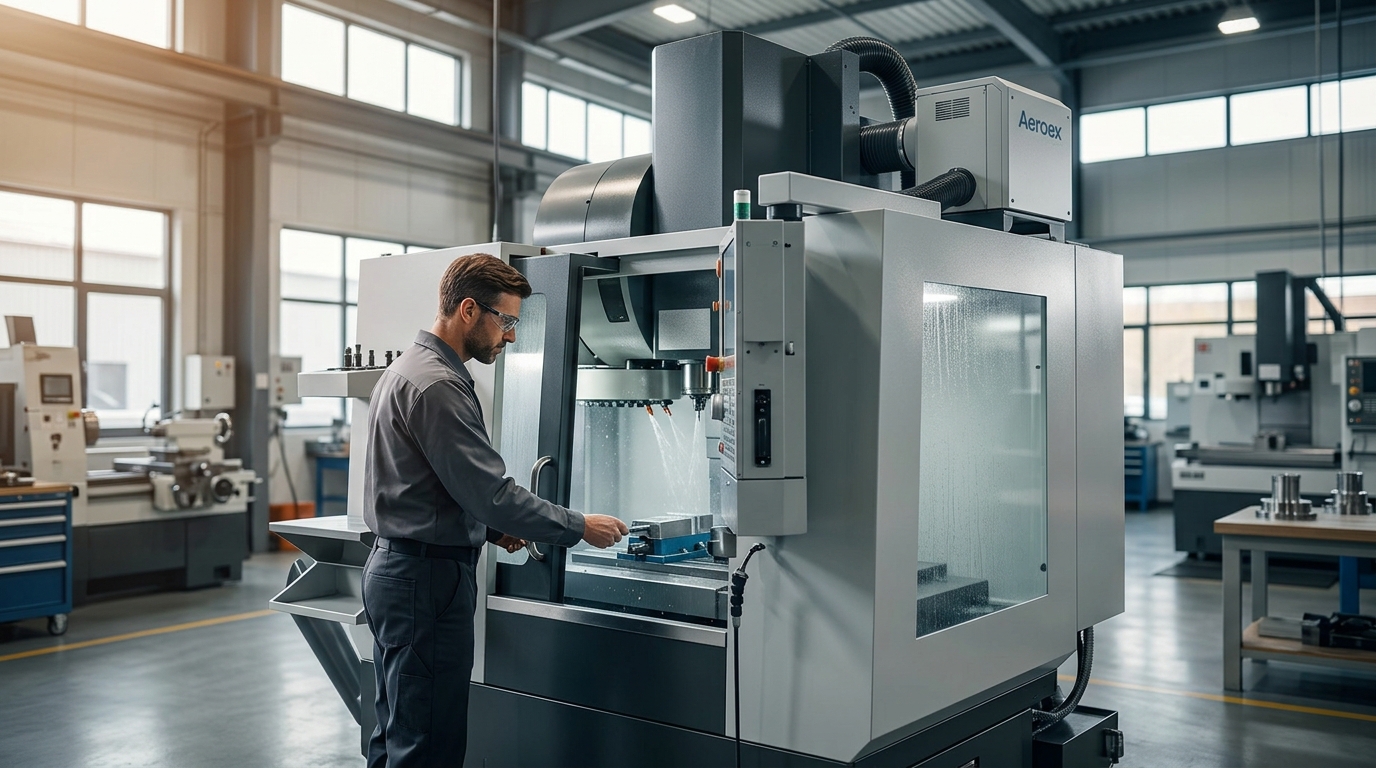
Choosing the best mist collector for CNC machining is one of the most impactful decisions a machine shop can make. Every time a CNC machine runs high-speed cutting operations with coolant or oil, fine aerosol escapes the enclosure and spreads across the shop floor. Left unchecked, that mist creates slippery surfaces, coats sensitive electronics, and exposes operators to respiratory hazards. A properly matched mist collector captures contaminants at the source, returning clean air to the workspace while helping your facility stay compliant with OSHA permissible exposure limits. This guide walks you through every factor that matters.
What Is a Mist Collector?
A mist collector is an industrial air filtration system designed to capture airborne oil and coolant mist directly from CNC machine enclosures and separate liquid from airflow before returning clean air to the workspace. In dry coalescing systems, mist-laden air passes through engineered filter media that forces droplets to merge, drain, and recycle back to the sump.
Unlike general ventilation, a mist collector provides targeted source capture. It pulls contaminated air from inside the machine enclosure, removes the liquid and particulate, and either returns filtered air to the shop or ducts it outside. Learn more in the Aeroex mist collector filters guide.
Why CNC Machining Demands Mist Collection
CNC machines generate mist whenever coolant or oil contacts fast-moving tools and heated workpieces. The mist primarily comprises two types: coolant mist and oil mist, formed when fluids are aerosolized by intense friction and high temperatures.
Health and Safety Risks
Inhaling oil mist particles can lead to respiratory problems, skin irritation, and long-term health effects. OSHA sets a permissible exposure limit (PEL) of 5 mg/m³ as an 8-hour TWA for mineral oil mist, while NIOSH recommends a stricter 0.5 mg/m³ for all metalworking fluids. Facilities that exceed these limits face citations and, more importantly, put workers at risk.
Equipment and Productivity Impact
Uncontrolled mist settles on machine parts, electrical cabinets, and floors. This causes premature wear, creates slip hazards, and forces more frequent cleaning. A mist collector prevents these problems, extending machine life and reducing unplanned downtime. See how metalworking mist collectors from Aeroex address these challenges.
Types of Mist Collector Filtration
Not all mist collectors work the same way. The three most common filtration technologies are centrifugal separation, electrostatic precipitation, and media-based coalescing filtration. Understanding the differences helps you avoid costly mismatches.
| Technology | How It Works | Best For | Maintenance Consideration |
|---|---|---|---|
| Centrifugal | Uses rotational force to fling larger droplets out of the air stream | Heavy oil loads with large droplets | Less effective on fine, submicron aerosol |
| Electrostatic Precipitator | Charges particles and collects them on metal plates | Smoke-heavy applications | Requires regular plate cleaning to maintain efficiency |
| Depth-Loading Coalescing Media | Forces fine droplets to merge inside fibrous media, then drain by gravity | CNC oil mist and coolant mist | Consistent airflow; filter life of 1 to 3+ years in typical use |
Depth-loading coalescing filtration is the approach most commonly preferred in CNC environments because it manages both large droplets and fine mist without liquid baths or frequent manual cleaning. Aeroex mist collectors use this multi-stage architecture with a MERV 15-rated fibre bed filter for consistent, long-lasting performance.
Key Factors for Choosing the Right Mist Collector
Selecting the right unit involves more than picking the highest CFM rating. Here are the factors that matter most.
Machine Type and Coolant Chemistry
Different CNC machines produce varying amounts of mist and smoke. Lathes and milling machines running straight oil generate heavy aerosol loads, while machines using water-soluble coolant produce a different mist profile. Whether the sump runs straight oil, soluble oil emulsion, or synthetic coolant, your mist collector should handle all three. Explore how to choose an oil mist collector for a deeper dive.
Airflow Requirements and Enclosure Design
The size of the machine enclosure determines the volume of air that must be turned over. Undersized systems allow mist to escape, while oversized systems waste energy without improving containment. Your collector's CFM rating should be matched to the enclosure volume and mist generation rate, not simply defaulted to the largest available model.
Noise Level
A noisy mist collector disrupts the shop floor. Look for units rated below 70 dB, which is roughly equivalent to normal conversation volume and far more suitable for indoor manufacturing environments.
Direct-Mount vs. Centralized Systems
Source capture is the preferred strategy for CNC mist collection. A direct-mount mist collector sits on or immediately next to the machine, eliminating lengthy duct runs and the static pressure losses that come with them.
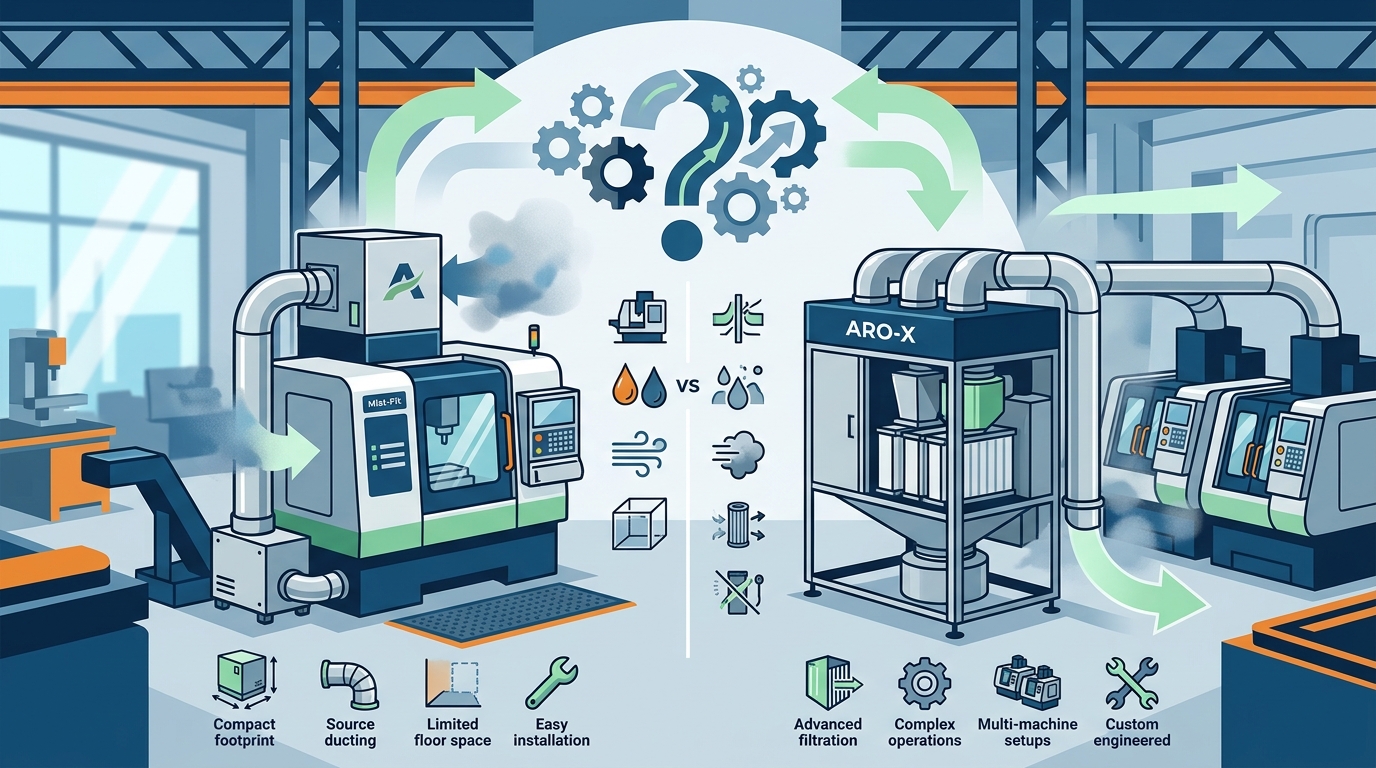
Direct-mount collectors are ideal when floor space is limited, machines are spread across the shop, or you want simplified installation without extensive ductwork. They capture mist right at the source before it can escape into the ambient air.
Centralized systems duct multiple machines to a single large collector. While this approach can reduce the total number of filter change-outs, it demands careful airflow balancing and higher upfront mechanical installation costs. If ductwork is not engineered correctly, capture efficiency at individual machines suffers. Review whether mist collectors are required on your CNC machines to understand the regulatory context.
Mist-Fit vs. ARO: Matching the Product to the Application
Aeroex offers two primary product lines for CNC mist collection, each designed for a different scenario.
Mist-Fit: Compact, Direct-Mount Solution
The Mist-Fit series is a compact mist collector built for individual CNC machines. With a footprint as small as 25" x 25" and a modular design, it mounts directly to the machine for true source capture. Mist-Fit units use depth-loading fibre bed filters rated at MERV 15, delivering filter life of 1 to 3 years in most applications. They are ideal for shops with compact layouts, individual machining centers, or limited floor space.
ARO: Engineered for Higher-Demand Applications
The ARO line serves more complex or higher-airflow requirements. ARO multi-stage oil mist collectors separate mist in progressive stages to reduce the potential for plugging, with cross-flow filter designs where air flows horizontally and oil drains vertically. The ARO-1400, for instance, handles 1,400 to 1,700 CFM and supports machine enclosures up to 575 ft³. These units are suited to multi-machine ducted configurations and high-demand applications.
Key Takeaways
- A mist collector is essential for any CNC shop running coolant or oil to protect workers and comply with OSHA and NIOSH exposure limits.
- Depth-loading coalescing filtration is the preferred technology for CNC environments because it handles both fine aerosol and large droplets while draining captured fluid.
- Always match the collector's airflow capacity to your machine enclosure volume and mist generation rate.
- Direct-mount collectors reduce duct losses and simplify installation, making them ideal for individual CNC machines.
- Centralized systems suit large facilities but require careful duct engineering to maintain capture performance at each machine.
- The Mist-Fit line is purpose-built for compact, single-machine source capture; the ARO line covers higher-demand and multi-machine configurations.
- Filter life, noise level, and maintenance frequency should weigh as heavily as upfront cost in your purchasing decision.
Frequently Asked Questions
What is the OSHA exposure limit for oil mist?
OSHA sets the permissible exposure limit for mineral oil mist at 5 mg/m³ as an 8-hour time-weighted average. NIOSH recommends a lower limit of 0.5 mg/m³ for all metalworking fluids. Facilities should target the stricter standard to minimize operator exposure.
Do I need a mist collector on every CNC machine?
Not necessarily, but source capture at each machine is the most effective strategy. A single centralized unit can serve multiple machines if ductwork is properly engineered, though airflow balancing becomes critical. Many shops find per-machine collectors simpler and more reliable.
How long do mist collector filters last?
Filter life depends on mist load, operating hours, and coolant type. In typical CNC applications with depth-loading coalescing media, primary filters often last 1 to 3 years. Monitoring differential pressure is the most reliable way to determine replacement timing.
What is the difference between oil mist and coolant mist?
Oil mist comes from neat cutting oils (straight oil), while coolant mist is generated from water-soluble emulsions or synthetic coolants. Both are aerosolized during high-speed machining. A well-designed coalescing mist collector handles both fluid types on the same platform.
Can a mist collector reduce shop cleaning costs?
Yes. By capturing mist at the source, collectors prevent oily residue from accumulating on floors, walls, and equipment. Shops commonly report reduced cleaning frequency and fewer slip incidents after installing mist collection.
What size mist collector do I need?
Size depends on your machine enclosure volume and the intensity of mist generation. Small machining centers may need 400 to 600 CFM, while larger enclosures or high-pressure coolant operations may require 1,400 CFM or more. An engineering review ensures proper sizing.
Is a direct-mount or centralized mist collector better?
Direct-mount units deliver the most consistent source capture with minimal duct losses. Centralized systems can lower long-term maintenance in large facilities but carry higher installation costs and require careful airflow design. The right choice depends on your shop layout and number of machines.
Does Aeroex offer a trial period for mist collectors?
Yes. Aeroex provides a 30- to 60-day trial period so you can assess performance in your actual environment before committing. If the unit does not meet expectations, you can return it with no obligation.
Get a Recommendation for Your Shop
Every shop is different. The best mist collector for your CNC machines depends on your enclosure design, coolant type, airflow needs, and floor layout. Aeroex engineers review your specific application and recommend the right solution, whether that is a compact Mist-Fit for a single machine or an ARO system for a multi-machine cell. Request a free consultation and find out which system fits your operation.