
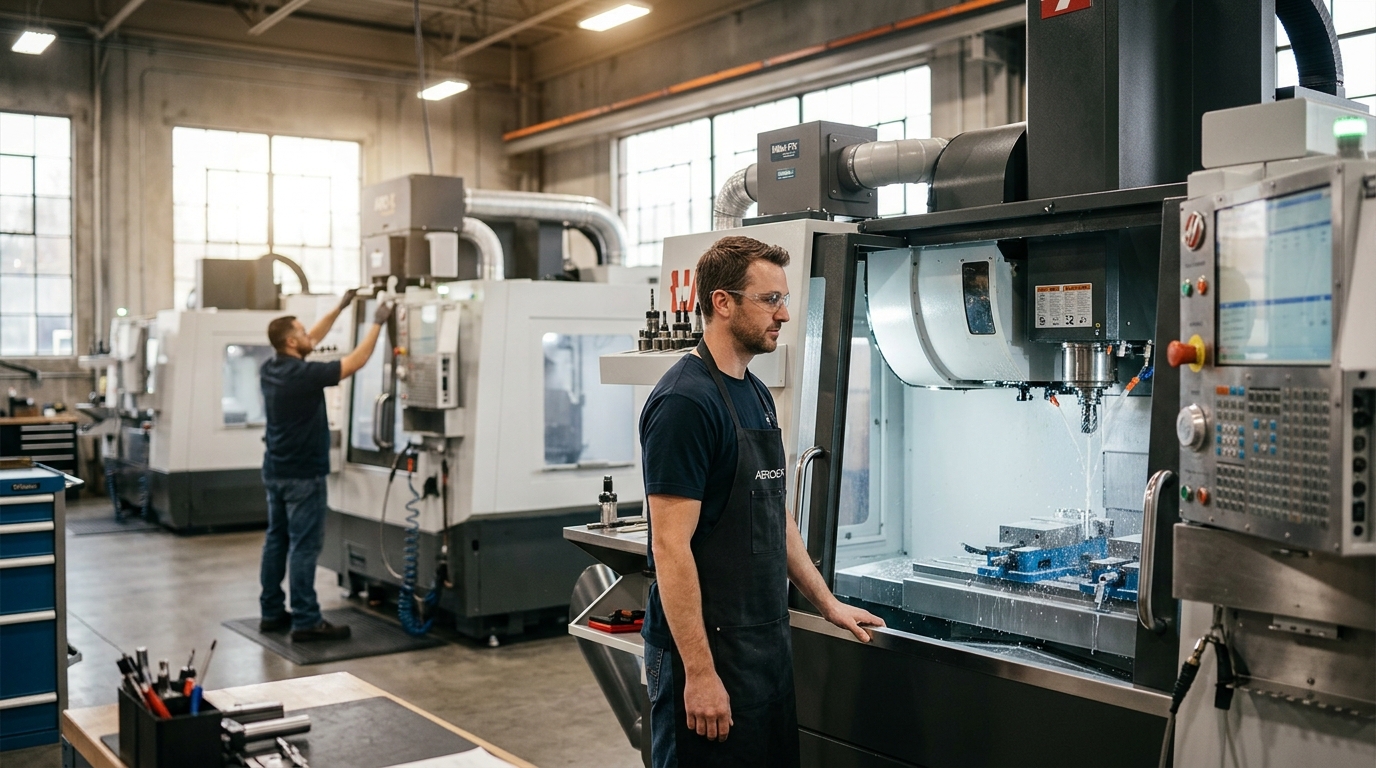
Choosing the best mist collector for CNC machining is one of the most important air quality decisions a machine shop can make. High-speed cutting, drilling, and milling operations aerosolize coolant and oil into fine droplets that escape enclosures, coat floors and electronics, and expose operators to respiratory hazards. A mist collector is an industrial air filtration device that captures airborne oil and coolant mist directly from CNC machine enclosures, separates liquid from the airflow, and returns clean air to the workspace. This guide covers every factor you need to evaluate, from filtration technology and mounting options to regulatory compliance and maintenance, so you can match the right system to your shop.
Why CNC Mist Collection Matters
CNC machines generate mist as a byproduct of high-speed cutting and cooling processes. The mist primarily comprises two types: coolant mist and oil mist, formed when fluids are aerosolized by intense friction and high temperatures. Left uncontrolled, this aerosol settles on floors and equipment, reduces visibility, and creates slip hazards throughout the facility.
The health consequences are serious. Inhaling oil and coolant mist particles can cause irritation of the eyes, skin, and throat, and may lead to headaches, shortness of breath, and long-term respiratory conditions. Regulatory bodies including OSHA, NIOSH, and ACGIH set permissible exposure limits (PELs) for oil mist to protect workers during an 8-hour workday. Compliance is not optional, and mist collectors serve as the primary engineering control to meet those standards.
How Mist Collectors Work
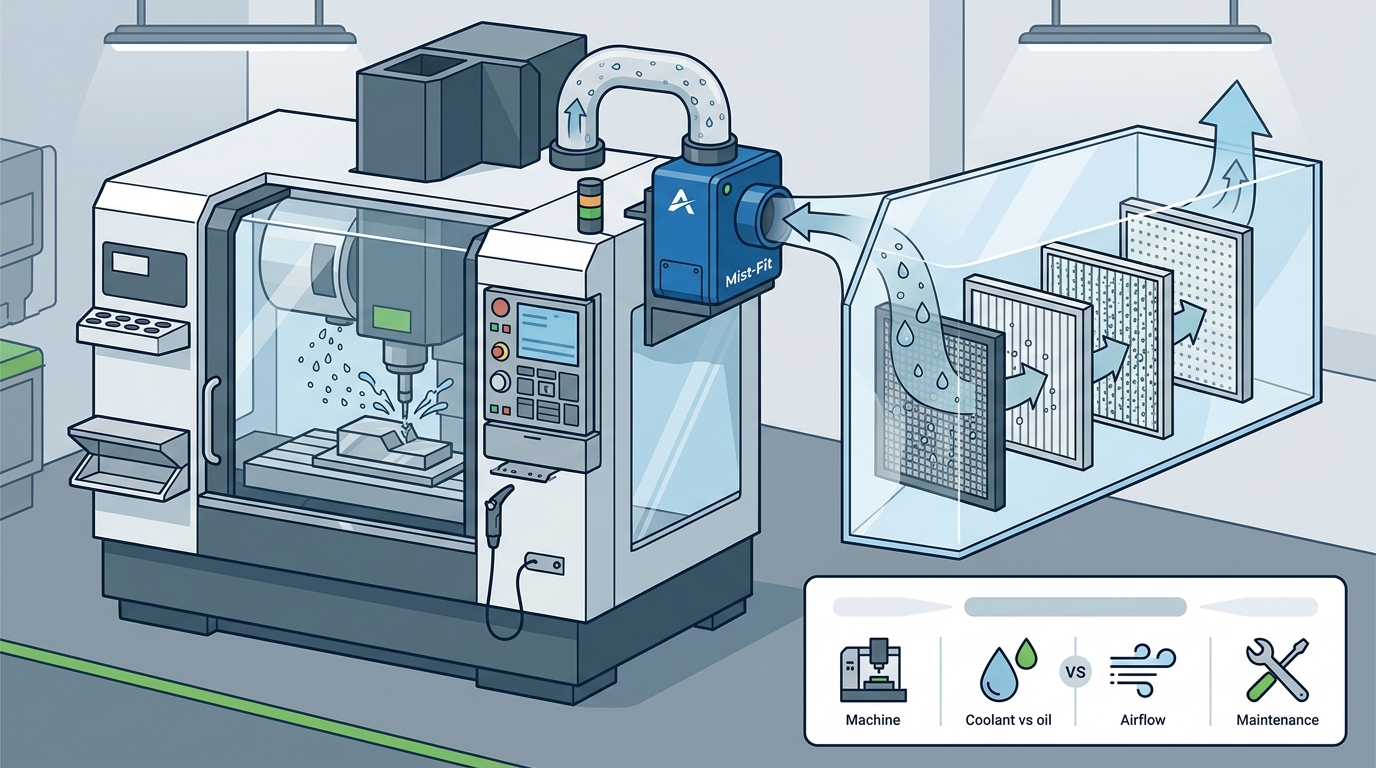
A mist collector pulls contaminated air from inside the CNC machine enclosure, passes it through engineered filtration stages, and either returns clean air to the shop or ducts it outside. The captured liquid drains back to the machine sump or is held for disposal.
Multi-Stage Filtration
Modern systems such as those from Aeroex's metalworking mist collector line use a multi-stage architecture. A mechanical pre-filter and depth-loading coalescer capture bulk droplets, while a final-stage HEPA or MERV-15 rated fibre bed filter handles submicron particles. This layered approach delivers consistent performance while extending the life of the most expensive filter elements.
Drainage Is Critical
In CNC environments, how a system handles liquid matters more than theoretical efficiency ratings. Dry, depth-loading coalescing filtration is the preferred approach because it forces fine droplets to merge, drain, and return to the sump rather than clogging media. Systems that manage drainage well provide more predictable maintenance cycles and stable airflow over time.
Key Selection Criteria for Your Shop
There is no single best mist collector for every CNC application. The right choice depends on matching the collector to your machining process, enclosure design, and operational demands. Here are the factors that matter most:
- Machine type: Lathes and milling machines produce heavy oil mist; laser cutters generate finer smoke and fumes.
- Coolant or oil type: Whether you run straight oil, soluble oil emulsion, or synthetic coolant, your oil mist collector must be configured for your fluid chemistry.
- Airflow requirements: Undersized systems let mist escape; oversized systems waste energy without improving containment.
- Mist and smoke load: High-pressure coolant applications produce heavier mist loads and need higher-capacity collection.
- Machine enclosure design: Gaps and leaks reduce capture efficiency regardless of collector quality.
- Mounting constraints: Limited floor space often favors direct-mount, machine-mounted solutions.
- Maintenance capacity: Filter replacement intervals, washable vs. disposable media, and accessibility all affect total cost of ownership.
Filtration Technologies Compared
Three main filtration technologies compete in the CNC mist collection market. Each has strengths and trade-offs depending on your application.
| Technology | How It Works | Best For | Maintenance Demand |
|---|---|---|---|
| Centrifugal Separation | Uses rotational force to remove larger droplets | Heavy oil applications | Low, but limited on fine aerosol |
| Electrostatic Precipitation | Charges particles and collects them on plates | Smoke-heavy environments | High; requires regular plate cleaning |
| Depth-Loading Coalescing | Merges fine droplets in filter media, drains liquid | CNC machining with oil or coolant mist | Moderate; predictable filter replacement cycles |
Depth-loading coalescing filtration is the most widely used technology in CNC machining because it handles both large droplets and fine mist without liquid baths or frequent manual cleaning. For most machine shops running coolant or oil, this is the technology to prioritize. Learn more about how filter media affects performance in the Aeroex mist collector filters guide.
Direct-Mount vs. Centralized Systems
When to Use a Direct-Mount Mist Collector
Source capture is the most effective strategy for controlling CNC mist. A direct-mount mist collector sits on top of or beside the individual CNC machine, capturing contaminated air right at the source. This approach eliminates the need for expensive ductwork, reduces static pressure losses, and is ideal for shops with limited floor space or compact machine layouts. Installation is straightforward, and each machine gets dedicated filtration.
When Centralized Systems Make Sense
Centralized mist collection may be appropriate in large facilities where multiple machines are grouped closely together. However, these systems require careful duct design and airflow balancing to maintain capture performance at each machine. Upfront mechanical installation costs are higher, and any imbalance can compromise the entire system. Single-machine collectors typically represent a smaller capital investment and offer simpler, more predictable maintenance.
Aeroex Product Lines at a Glance
Aeroex offers product lines purpose-built for CNC environments, each using depth-loading coalescing filtration. The Mist-Fit series is a compact, direct-mount mist collector designed for individual CNC machines. With a footprint as small as 25" x 25", Mist-Fit units capture mist right at the source, drain oil back to the CNC machine, and feature fibre bed filters rated at MERV 15 with a typical life of 1 to 3 years. The Mist-Fit is ideal for shops that need source capture without consuming floor space or running ductwork.
For more complex or higher-demand applications, the ARO and engineered solutions line handles higher airflow requirements, multi-machine setups, and unique operating conditions involving oil mist, coolant mist, smoke, vapor, and process contaminants. These systems are custom-configured after an engineer-reviewed assessment of your facility.
Aeroex mist collectors are modular and can be tailored with accessories to fit different machine setups, from CNC machining centers to Swiss lathes, with mounting options including direct-mount, wall-mount, suspended, and floor-stand configurations.
Key Takeaways
- A mist collector is essential for any CNC operation to protect worker health, maintain equipment, and comply with OSHA and NIOSH exposure limits.
- Depth-loading coalescing filtration is the preferred technology for CNC oil and coolant mist because it drains captured liquid rather than clogging media.
- Direct-mount, source-capture collectors like the Mist-Fit eliminate ductwork costs and deliver the most effective mist containment per machine.
- System selection should be based on machine type, coolant chemistry, airflow needs, mist load, and enclosure design rather than a single spec number.
- Centralized systems suit large multi-machine layouts but require careful duct engineering and airflow balancing.
- Filter architecture matters more than filter ratings; look for multi-stage systems with washable pre-filters and long-life coalescing media.
- Aeroex offers a 30- to 60-day trial period so you can assess performance in your actual environment before committing.
Frequently Asked Questions
What is a mist collector?
A mist collector is an industrial air filtration system designed to capture airborne oil and coolant mist from CNC machine enclosures, separate the liquid from the airflow, and return clean air to the workspace. It is the primary engineering control for managing airborne metalworking fluid exposure.
Are mist collectors required on CNC machines?
While there is no single regulation mandating a mist collector on every CNC machine, OSHA, NIOSH, and ACGIH set permissible exposure limits for oil mist that most uncontrolled CNC operations will exceed. Mist collectors are the most common engineering control used to meet these standards. Read more about whether mist collectors are required on CNC machines.
What is source capture in CNC mist collection?
Source capture is the practice of collecting contaminated air directly at the CNC machine enclosure before mist can spread into the shop. Direct-mount collectors achieve source capture by sitting on or beside the machine, eliminating the duct losses and airflow instability associated with remote systems.
How often do mist collector filters need replacement?
Replacement timing depends on mist load, operating hours, and filter design rather than a fixed calendar. In a typical CNC environment, depth-loading fibre bed filters can last 1 to 3 years. Washable mechanical pre-filters extend the life of downstream elements. Check out the full filter replacement guide for details.
Can one mist collector handle multiple CNC machines?
Yes, but it requires careful duct design and airflow balancing. Centralized or floor-stand configurations can serve multiple machines, though single-machine direct-mount collectors typically offer simpler installation, lower capital cost, and more predictable performance per machine.
What is the difference between oil mist and coolant mist?
Oil mist comes from straight oil or neat cutting oil applications, while coolant mist is generated from water-soluble or synthetic coolant fluids. Both are aerosolized during high-speed machining. A properly configured coalescing mist collector handles both types with the same filter platform.
What mounting options are available for CNC mist collectors?
Common mounting configurations include direct machine mount, wall mount, suspended (ceiling) mount, and floor stand. Direct mounting is ideal for compact spaces and source capture. Suspended and floor-stand options suit centralized or multi-machine layouts.
Does Aeroex offer a trial period for mist collectors?
Yes. Aeroex provides a 30- to 60-day trial so you can deploy the mist collector in your actual production environment and evaluate performance before making a purchase decision.
Request Your Free Mist Collector Assessment
Every CNC shop is different. The fastest way to find the best mist collector for your machines is to speak with an Aeroex engineer who can review your process, machine configuration, and airflow needs. Request a free consultation today and discover which solution fits your facility.