
Best Mist Collector for CNC Machining: How to Choose the Right System
Choosing the best mist collector for CNC machining is one of the most important air quality decisions a machine shop can make. Every CNC operation that uses coolant or oil generates airborne mist that poses health risks, creates slippery floors, and shortens equipment life. A mist collector is an industrial air filtration device that captures oil mist, coolant mist, and submicron particulate directly from CNC machine enclosures, returning clean air to the workspace. This guide walks you through the key factors that determine which mist collector is best for your shop, from filtration type and mounting options to maintenance and regulatory compliance.
Why Mist Collectors Matter in CNC Machining
CNC machines generate airborne mist whenever coolant or oil contacts rotating tools and heated workpieces. Without effective source capture, this aerosol escapes the enclosure and spreads throughout the facility. Uncontrolled mist creates residue on floors, reduces visibility, increases cleaning costs, and exposes operators to respiratory hazards.
Mist collectors also protect CNC machines themselves. When oil mist settles on electronic components like PLCs, it can cause premature equipment failure. By removing contaminants at the source, mist collectors extend machine life, reduce downtime, and improve overall shop productivity.
Types of Mist Generated by CNC Machines
CNC machining produces two primary categories of airborne contaminant: coolant mist and oil mist. Coolant mist is an aerosol formed when water-soluble or synthetic metalworking fluids are atomized by high-speed cutting. Oil mist is a similar aerosol generated by straight-oil or petroleum-based lubricants. High-speed machining and high-pressure coolant systems intensify mist generation, often producing smoke-like submicron particles that are harder to capture.
Understanding what your machines produce is the first step toward selecting the right collector. Lathes and milling machines tend to generate heavy oil mist, while operations with high-pressure coolant can create very fine aerosol that demands multi-stage filtration.
Filtration Technologies Compared
Not all mist collectors work the same way. The three most common filtration technologies are centrifugal separation, electrostatic precipitation, and coalescing media filtration. Each has trade-offs in efficiency, maintenance, and suitability for CNC environments.
| Technology | How It Works | Best For | Maintenance Level |
|---|---|---|---|
| Centrifugal | Rotational force removes larger droplets | Heavy oil applications | Moderate |
| Electrostatic | Charges particles and collects on plates | Smoke-heavy environments | High (regular cleaning required) |
| Coalescing Media | Depth-loading filters merge and drain droplets | CNC coolant and oil mist | Low to Moderate |
Coalescing media filtration is a method that uses depth-loading filter media to merge fine mist droplets and drain them as liquid. For CNC machining, this approach is widely preferred because it manages both large droplets and fine mist without liquid baths, and it supports consistent airflow over time. Aeroex mist collectors use dry, depth-loading coalescing filtration combined with multi-stage architecture for reliable performance in demanding shop environments.
Choosing the Right System for Your Shop
Selecting the best mist collector requires matching the system to your specific machining process. Key factors include:
- Machine type: Lathes, mills, Swiss screw machines, and grinders each produce different mist volumes and particle sizes.
- Coolant or oil type: Straight oil, soluble oil emulsion, and synthetic coolant all generate different aerosol characteristics.
- Airflow requirements: The collector must match or exceed the airflow needed to maintain negative pressure inside the machine enclosure.
- Mist and smoke load: High-pressure coolant and high-speed operations produce heavier mist loads that demand greater filter capacity.
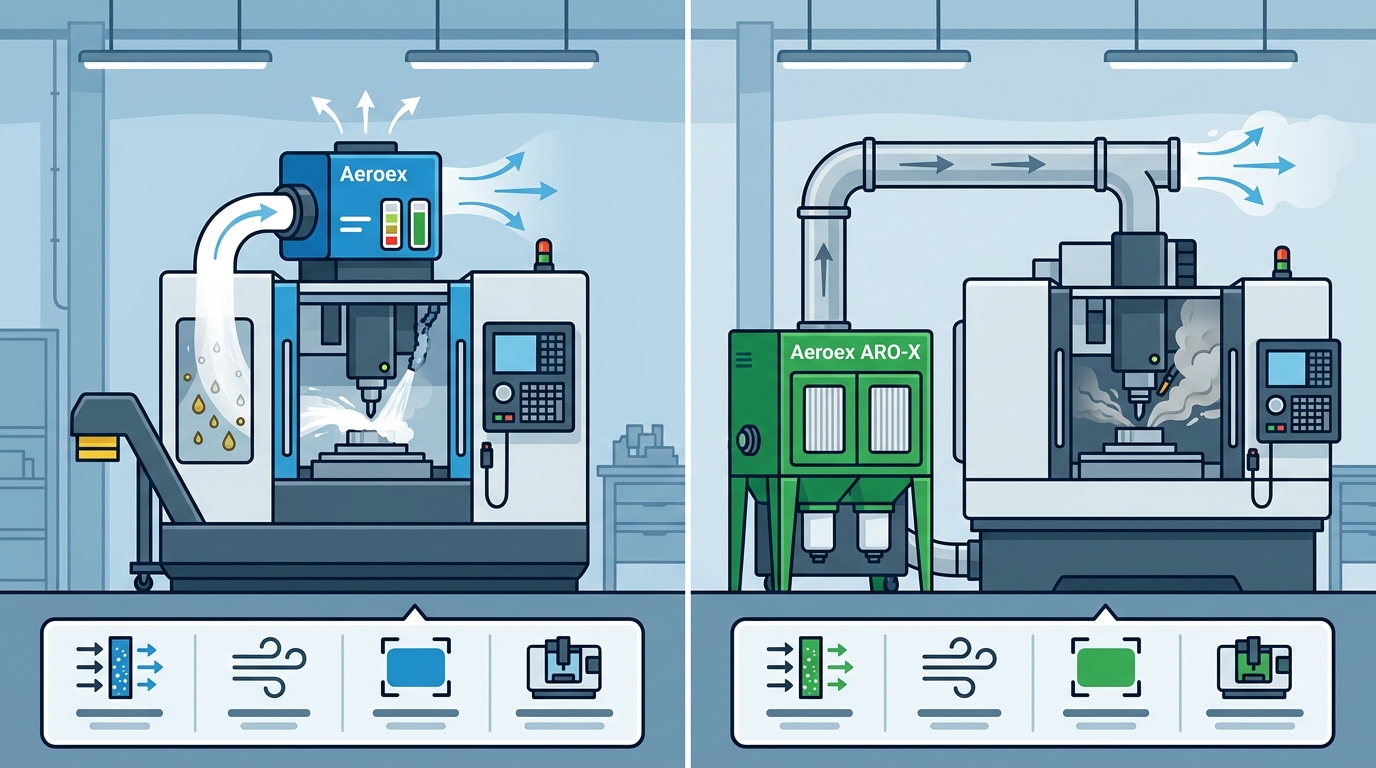
- Single-machine vs. multi-machine setup: Individual machines may benefit from compact direct-mount collectors like the Mist-Fit series, while multi-machine configurations may call for engineered solutions like the ARO-X line.
Single-Machine Applications
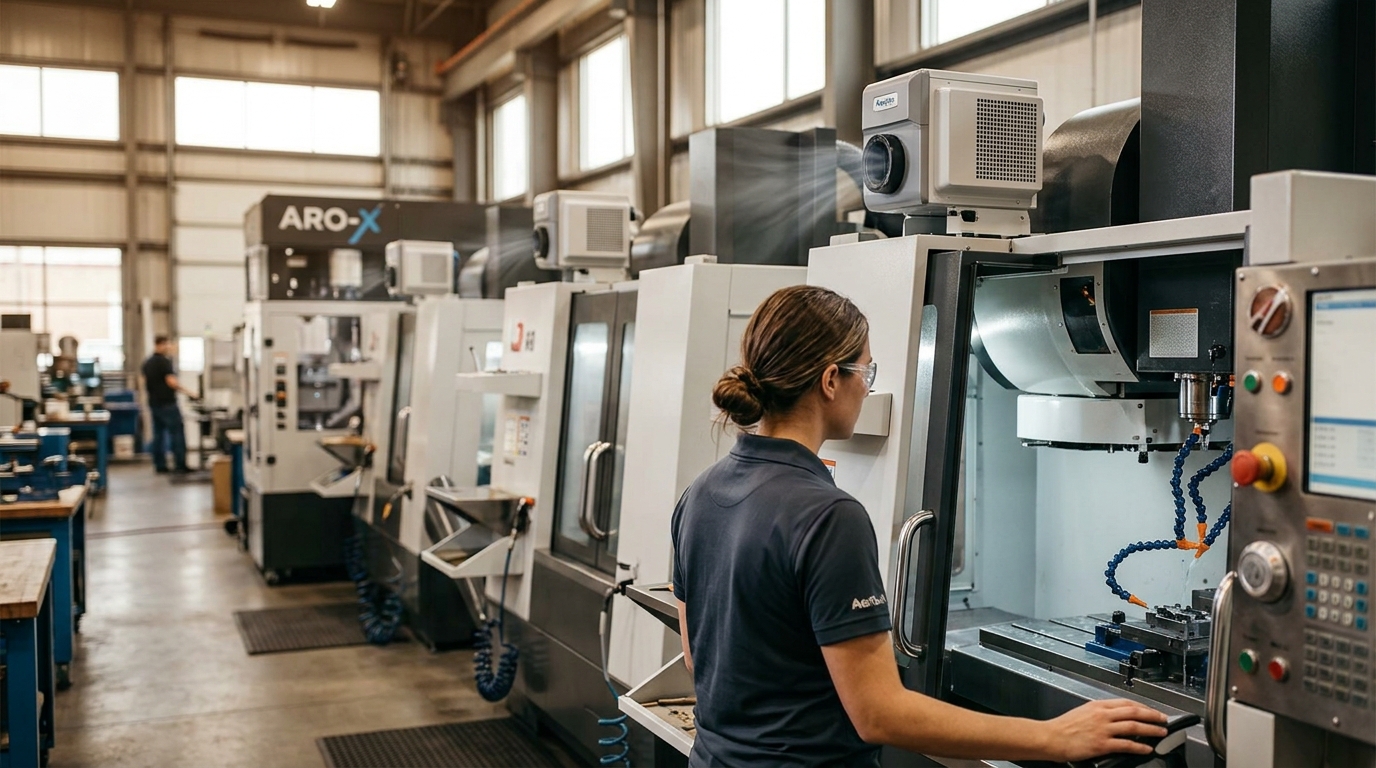
For individual CNC machines with limited floor space, a compact direct-mount mist collector captures mist right at the source without ductwork. The Mist-Fit series from Aeroex is purpose-built for this scenario, with a compact footprint, modular design, and easy installation on machines ranging from CNC machining centers to Swiss lathes.
Multi-Machine and Complex Applications
When higher airflow is needed or multiple machines must be served, an engineered system provides custom-tailored configurations. The ARO-X line from Aeroex handles complex applications involving oil mist, coolant mist, smoke, vapor, and process contaminants, with engineer-reviewed recommendations for each installation.
Mounting Options: Direct-Mount vs. Centralized
How a mist collector is mounted directly affects its capture efficiency. A direct-mount mist collector is a unit installed on or immediately adjacent to a CNC machine to capture mist at the source before it escapes into the shop. This method eliminates expensive ductwork, reduces static pressure losses, and provides a clean, integrated appearance.
Aeroex offers multiple mounting configurations including direct machine mount, wall mount, floor stand, and suspended mount. Centralized systems can serve multiple machines through ducting but require careful airflow balancing to maintain capture performance at each point of use.
Maintenance and Filter Life
Maintenance demands vary significantly by system design. Systems built around drainable coalescing media tend to offer more predictable maintenance cycles than electrostatic or centrifugal alternatives. Aeroex Mist-Fit collectors use depth-loading fibrebed filters with a MERV 15 rating, offering filter life of one to three years in typical CNC applications.
Key maintenance practices include regular inspection of differential pressure, filter condition, and drain lines. Coalescing filters should never be cleaned with compressed air, as this can damage the media and reduce performance. For detailed guidance, see the Aeroex mist collector maintenance guide.
Regulatory Compliance: OSHA, NIOSH, and Beyond
Mist collection is not optional in most manufacturing environments. OSHA's Permissible Exposure Limit (PEL) for mineral oil mist is 5 mg/m³ as an 8-hour time-weighted average. NIOSH recommends a stricter limit of 0.5 mg/m³ for all metalworking fluids. Facilities that exceed these limits face citations, fines, and increased liability.
A properly sized and installed mist collector serves as an engineering control that helps shops stay within these exposure limits. Aeroex mist collectors capture particles as small as 0.3 microns, helping facilities comply with both OSHA and NIOSH standards.
Key Takeaways
- A mist collector is essential on any CNC machine that uses oil or coolant to protect worker health and equipment longevity.
- Coalescing media filtration is the preferred technology for most CNC applications due to its ability to handle both large droplets and fine aerosol.
- Match your mist collector to your machine type, coolant chemistry, airflow needs, and shop layout.
- Direct-mount collectors like the Mist-Fit series eliminate ductwork costs and capture mist at the source.
- Engineered systems like the ARO-X line are designed for complex, multi-machine, or high-demand applications.
- OSHA mandates a PEL of 5 mg/m³ for mineral oil mist; NIOSH recommends 0.5 mg/m³ for all metalworking fluids.
- Aeroex offers a free 30-to-60-day trial so you can evaluate mist collector performance in your own environment.
Frequently Asked Questions
What is a mist collector and how does it work?
A mist collector is an industrial air filtration system that captures airborne oil and coolant mist from CNC machine enclosures. It pulls contaminated air through multi-stage filtration, separates the liquid from the airstream, and returns clean air to the shop. Learn more in the Aeroex CNC mist collector guide.
Are mist collectors required on CNC machines?
While no single regulation mandates a mist collector on every CNC machine, OSHA and NIOSH set enforceable exposure limits for oil mist. Most shops need mist collectors as engineering controls to remain compliant and protect workers from respiratory hazards.
What size mist collector do I need for my CNC machine?
Size depends on the airflow volume of your machine enclosure, the type and pressure of coolant used, and the intensity of mist or smoke produced. Small machines may only need a compact unit like the Mist-Fit MF-560, while large machining centers or multi-machine setups may require an ARO-series system.
How often do mist collector filters need to be replaced?
Replacement timing depends on mist load, operating hours, and filter design rather than a fixed calendar. Aeroex fibrebed filters typically last one to three years under normal CNC machining conditions. Monitoring differential pressure is the most reliable way to determine when replacement is needed.
Should I use a direct-mount or centralized mist collector?
Direct-mount collectors are ideal when you have individual CNC machines, limited floor space, or want to minimize ductwork. Centralized systems suit large facilities with multiple machines in close proximity, but they require careful duct design and airflow balancing.
Can one mist collector handle both oil mist and coolant mist?
Yes. An oil mist collector and a coolant mist collector are the same filter-based platform configured for your fluid chemistry. Whether your sump runs straight oil, soluble oil emulsion, or synthetic coolant, a properly designed system handles all three.
What is the OSHA exposure limit for oil mist?
OSHA's PEL for mineral oil mist is 5 mg/m³ as an 8-hour TWA. NIOSH recommends a more protective limit of 0.5 mg/m³ for all metalworking fluids. Many manufacturers adopt the stricter NIOSH guideline as a best practice.
How do I get started choosing a mist collector?
Start by assessing your machine type, coolant chemistry, enclosure design, and airflow needs. Then request a consultation with Aeroex to get an engineer-reviewed recommendation tailored to your shop. Aeroex offers a free trial period of 30 to 60 days.
Ready to Find the Right Mist Collector?
Every machine shop has unique requirements. Whether you need a compact direct-mount solution for a single CNC lathe or an engineered system for an entire production floor, Aeroex can help. Request a free consultation and trial today to test an Aeroex mist collector in your own environment with no obligation.