
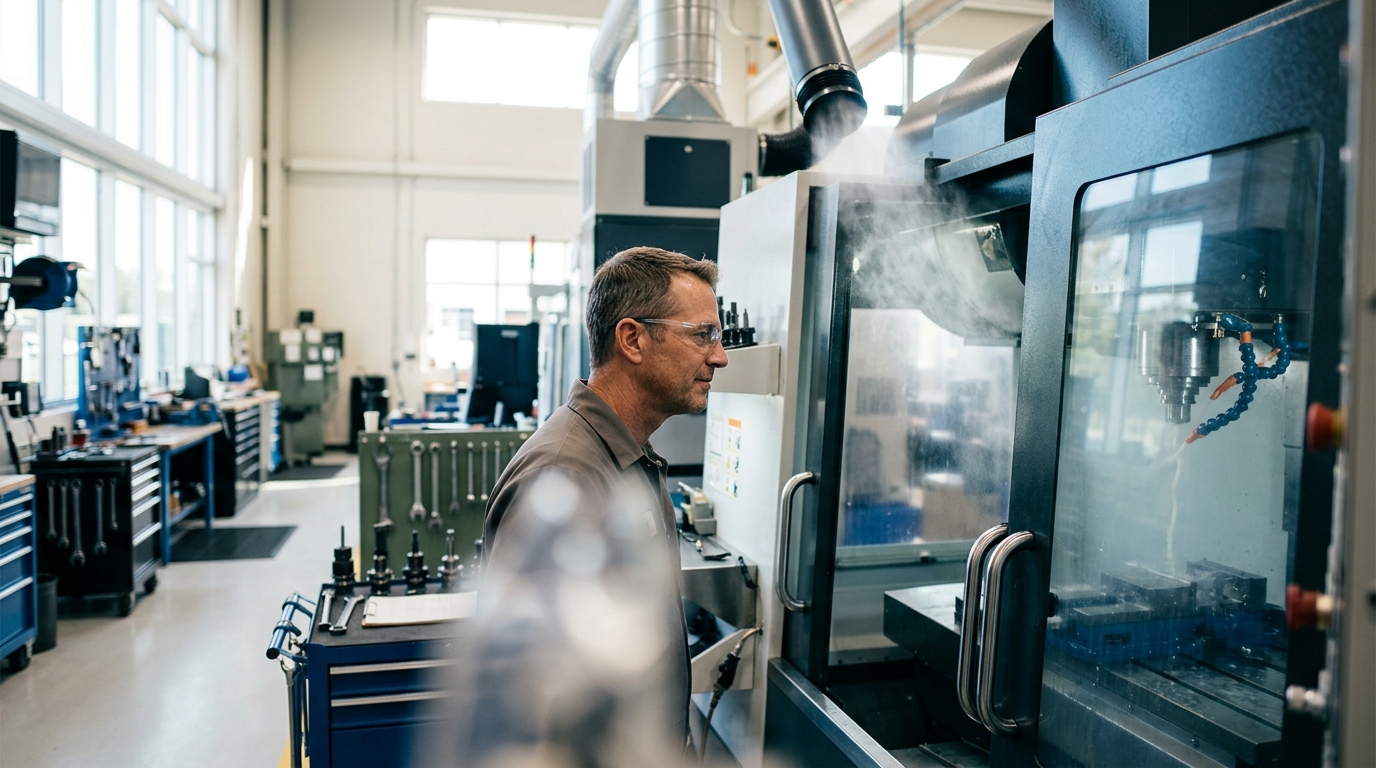
Modern manufacturing facilities face relentless pressure to maintain pristine air quality while maximizing production throughput. Industry data shows that metalworking fluid aerosols can reduce workshop air quality by over 40 percent when left unmanaged. A high-performance mist collector solves this exact problem by capturing airborne particulates before they compromise worker health or damage sensitive machinery. Selecting the optimal filtration system requires matching specific airflow metrics to your CNC operational footprint. This guide evaluates the top engineering frameworks available today.
Understanding CNC Mist Collection Fundamentals
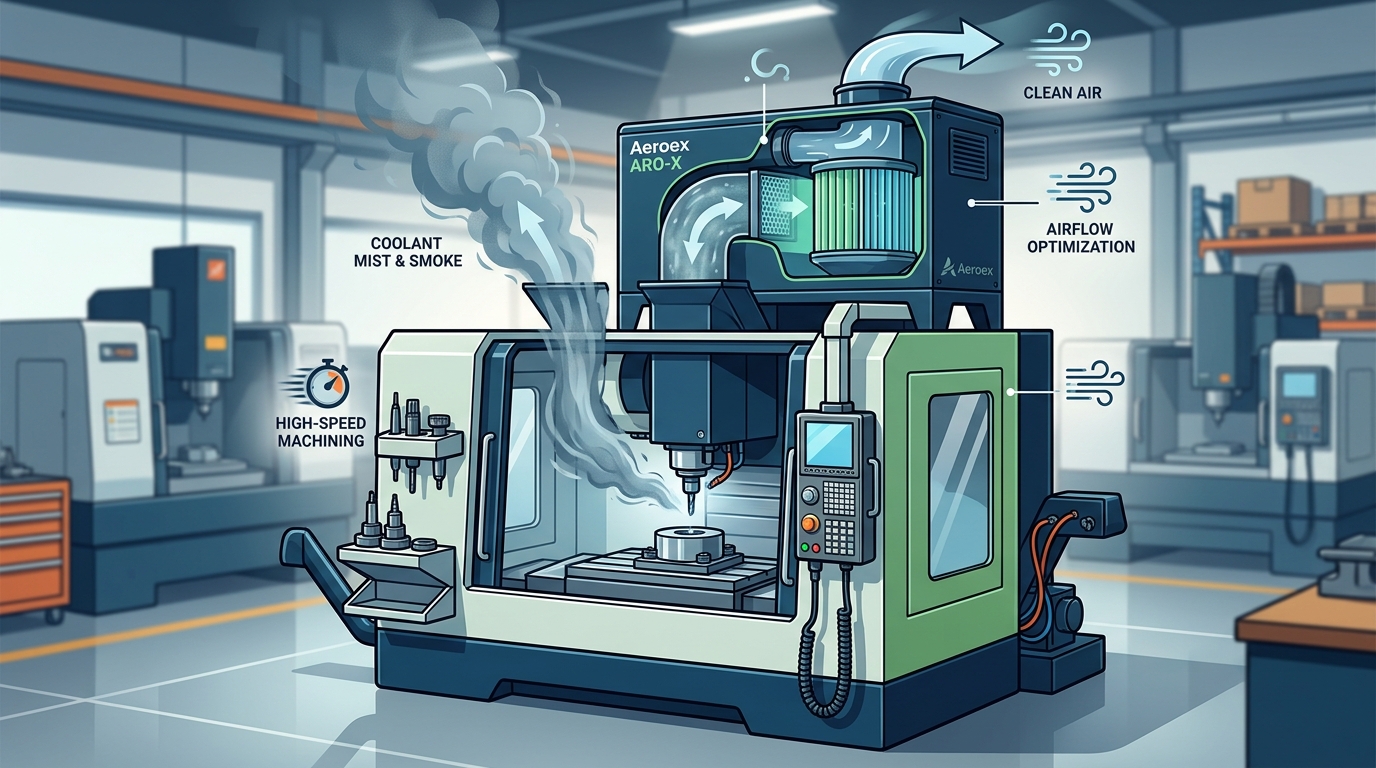
CNC machining generates microscopic oil and coolant aerosols during high-speed cutting operations. These airborne contaminants pose immediate respiratory hazards and create slippery floor conditions that trigger workplace safety violations. A dedicated mist collector is an industrial air purification device designed to extract these hazardous particulates directly at the source. The system relies on high-velocity airflow to pull contaminated air away from the operator zone. Once captured, the air passes through multi-stage filtration media that traps particles as small as 0.3 microns. This process ensures that 99.9 percent of harmful particles are removed before the air recirculates back into the workspace. Explore our complete industrial air purification solutions to see how engineered systems handle complex manufacturing environments.
Why Source Capture Matters
General ventilation systems simply dilute contaminants rather than eliminating them. Source capture technology is a targeted filtration method that intercepts aerosol plumes immediately after they leave the cutting tool. This targeted approach drastically reduces the total cubic feet per minute required to maintain safe air quality standards. Facilities that implement source capture consistently report fewer respiratory complaints and lower compliance audit findings. Learn how our core values drive continuous improvement in every installation we support.
Evaluating Filtration Technology Types
Manufacturers typically choose between centrifugal separation, electrostatic precipitation, or multi-stage filter bank systems. Each technology handles different fluid viscosities and particle sizes with varying efficiency rates. Centrifugal separators use rotational force to fling heavy oil droplets against a collection wall. Electrostatic precipitators charge particles and attract them to oppositely charged plates. Multi-stage filter banks combine pre-filters, fine particulate filters, and activated carbon stages to handle complex chemical blends. Contact our engineering team to determine which filtration pathway aligns with your specific coolant chemistry.
Filter Media Longevity and Replacement Cycles
Filter media degradation directly impacts system uptime and replacement budgets. High-density synthetic media typically lasts between six and eighteen months depending on machine runtime. Operators should monitor differential pressure gauges to predict filter saturation before airflow drops below acceptable thresholds. Replacing clogged filters restores optimal suction velocity and prevents motor strain. View our installation gallery to see how these filtration stages integrate into active production floors.
Matching Airflow Requirements to Facility Size
Undersized collectors fail to capture the full aerosol plume, while oversized units waste energy and increase noise pollution. Calculating the correct airflow requires measuring the exact cubic volume of your machining bay. You must also account for ceiling height, door openings, and existing HVAC exchange rates. A properly sized system maintains negative pressure around the CNC equipment to prevent cross-contamination. Read our latest technical insights on optimizing airflow distribution across large manufacturing floors.
Variable Frequency Drive Integration
Modern collectors utilize variable frequency drives to adjust motor speed based on real-time demand. These drives reduce energy consumption by up to 30 percent during low-production shifts. The system automatically ramps up when multiple machines run simultaneously. This adaptive capability extends motor lifespan and lowers monthly utility expenses. Watch our technology videos to see variable speed controls in action.
Analyzing Maintenance and Operational Costs
Operational expenditures extend far beyond the initial equipment purchase price. Facilities must budget for regular filter replacements, motor lubrication, and collection pan emptying. Automated drain valves simplify oil disposal by routing waste directly to central recycling tanks. These valves eliminate manual handling and reduce chemical exposure risks for floor staff. Request a quote to calculate your exact total cost of ownership over a five-year period.
Compliance and Regulatory Reporting
Environmental agencies enforce strict emission limits on volatile organic compounds and particulate matter. Maintaining detailed maintenance logs proves regulatory compliance during routine inspections. Automated data logging tracks filter changes, motor hours, and airflow metrics automatically. This digital recordkeeping simplifies audit preparation and demonstrates proactive environmental stewardship. Our commitment to integrity ensures transparent reporting for every client partnership.
Integrating Custom Engineered Solutions
Standard off-the-shelf units rarely accommodate complex factory layouts or unique coolant formulations. Custom engineered solutions adapt to irregular machine footprints, overhead crane clearances, and existing ductwork constraints. Our design process begins with a comprehensive site survey and airflow modeling session. Engineers then draft 3D layouts that optimize suction points without obstructing material handling workflows. Schedule a site visit to begin your custom engineering project today.
Scalability and Modular Expansion
Manufacturing operations frequently expand production lines or add new CNC equipment. Modular collector architecture is a scalable system design that allows facilities to add additional suction branches without replacing the entire unit. This scalability protects your capital investment during periods of rapid growth. Trusted by over 1000+ manufacturing facilities globally, our modular approach adapts to your evolving operational demands.
Comparing Top System Configurations
Selecting the optimal configuration requires weighing upfront costs against long-term efficiency metrics. The table below outlines the primary system architectures available for CNC environments.
| System Configuration | Best Application | Key Advantage | Recommended Path |
|---|---|---|---|
| Centrifugal Separator | Heavy coolant usage with large oil droplets | Low filter replacement frequency | Request a quote |
| Electrostatic Precipitator | High-precision machining with fine aerosols | Exceptional sub-micron particle capture | Request a quote |
| Multi-Stage Filter Bank | General purpose CNC operations | Cost-effective maintenance cycles | Request a quote |
| Custom Engineered System | Complex facility layouts or unique coolants | Tailored airflow optimization | Request a quote |
Key Takeaways
- High-performance mist collectors remove 99.9 percent of harmful particles from CNC workspaces.
- Source capture technology intercepts aerosols directly at the cutting tool before dispersion.
- Variable frequency drives reduce energy consumption by up to 30 percent during low-demand shifts.
- Centrifugal separators excel with heavy coolant usage, while electrostatic units handle fine aerosols.
- Modular collector architectures allow seamless production line expansion without full system replacement.
- Automated drain valves eliminate manual oil handling and reduce chemical exposure risks.
- Trusted by over 1000+ manufacturing facilities globally, our systems meet rigorous air quality standards.
Frequently Asked Questions
How do I calculate the correct airflow capacity for my CNC bay?
Measure the exact cubic volume of your machining area, then multiply by the required air exchange rate per hour. Factor in ceiling height, door openings, and existing HVAC exchange rates to determine the total cubic feet per minute requirement.
What is the typical lifespan of CNC mist collector filters?
High-density synthetic media typically lasts between six and eighteen months depending on machine runtime and coolant formulation. Monitoring differential pressure gauges helps predict saturation before airflow drops below acceptable thresholds.
Can mist collectors handle water-based coolants instead of oil-based fluids?
Yes, multi-stage filter banks effectively capture water-based coolant aerosols when paired with appropriate pre-filters. These systems prevent microbial growth and neutralize odors through activated carbon integration.
How often should I schedule professional maintenance for my air purification system?
Facilities should schedule professional inspections quarterly to verify motor performance, check belt tension, and validate airflow metrics. Automated data logging tracks filter changes and motor hours to streamline compliance reporting.
Do custom engineered solutions require extensive facility downtime during installation?
Our design process begins with a comprehensive site survey and airflow modeling session to minimize production disruption. Engineers draft 3D layouts that optimize suction points without obstructing material handling workflows.
What safety certifications do industrial air purification systems require?
Systems must comply with OSHA workplace safety standards and local environmental emission limits. Maintaining detailed maintenance logs proves regulatory compliance during routine inspections and audit preparations.
How does source capture technology differ from general facility ventilation?
General ventilation systems simply dilute contaminants rather than eliminating them. Source capture technology intercepts the aerosol plume immediately after it leaves the cutting tool, drastically reducing total airflow requirements.
Request Your Custom Consultation
Optimizing your CNC workspace requires precise engineering and reliable equipment. Our team provides comprehensive site surveys, custom airflow modeling, and seamless installation support. Contact us today to schedule your consultation and discover how our air purification technology can transform your manufacturing environment. Visit our main portal to explore our complete product lineup and request a quote.