
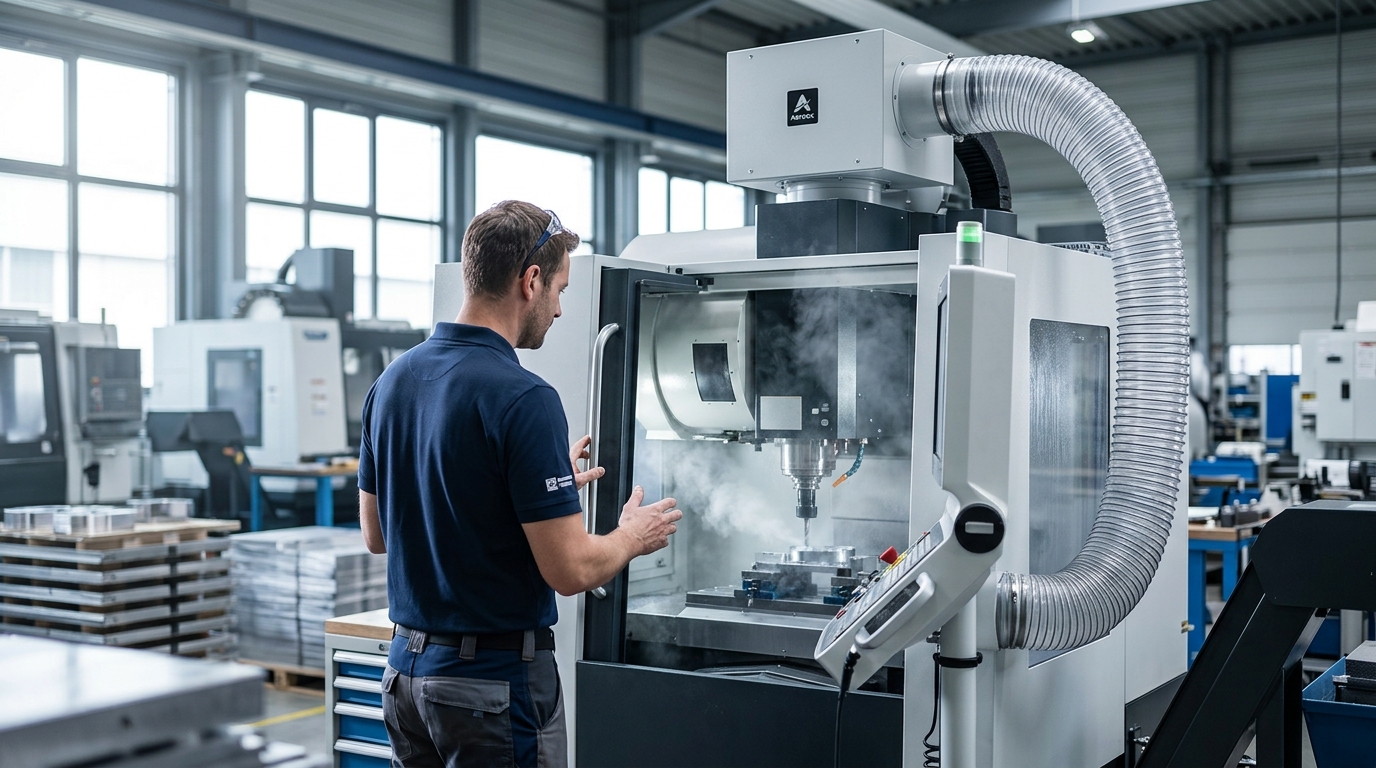
Modern manufacturing facilities face persistent challenges with airborne particulates generated during precision metalworking operations. According to industry data, over 70 percent of CNC operations require dedicated air purification to maintain safe worker environments. Selecting the optimal filtration architecture directly impacts operational uptime, regulatory compliance, and long-term maintenance expenditures. This analysis evaluates the leading industrial air purification systems available today. We examine core engineering principles, hardware specifications, and deployment strategies to help facility managers make informed procurement decisions.
Understanding CNC Mist Generation
Coolant Atomization Mechanics
Coolant atomization is the process where high-pressure fluid interacts with rapidly rotating cutting tools. This physical interaction breaks liquid into microscopic droplets that suspend in workshop air. These suspended particles create visible vapor clouds that drift across production floors. Proper air filtration captures these droplets before they settle on machinery or enter worker breathing zones. Facilities that ignore atomization mechanics face accelerated equipment corrosion and increased ventilation costs.
Health and Safety Risks
Unfiltered metalworking fluids contain complex chemical compounds that pose significant respiratory hazards. Prolonged exposure to fine particulate matter correlates with chronic bronchitis and reduced lung capacity. Regulatory agencies mandate strict exposure limits to protect manufacturing personnel. Implementing robust extraction systems reduces airborne concentration levels to acceptable thresholds. This proactive approach minimizes workers compensation claims and ensures continuous production schedules.
Core Filtration Technologies Explained
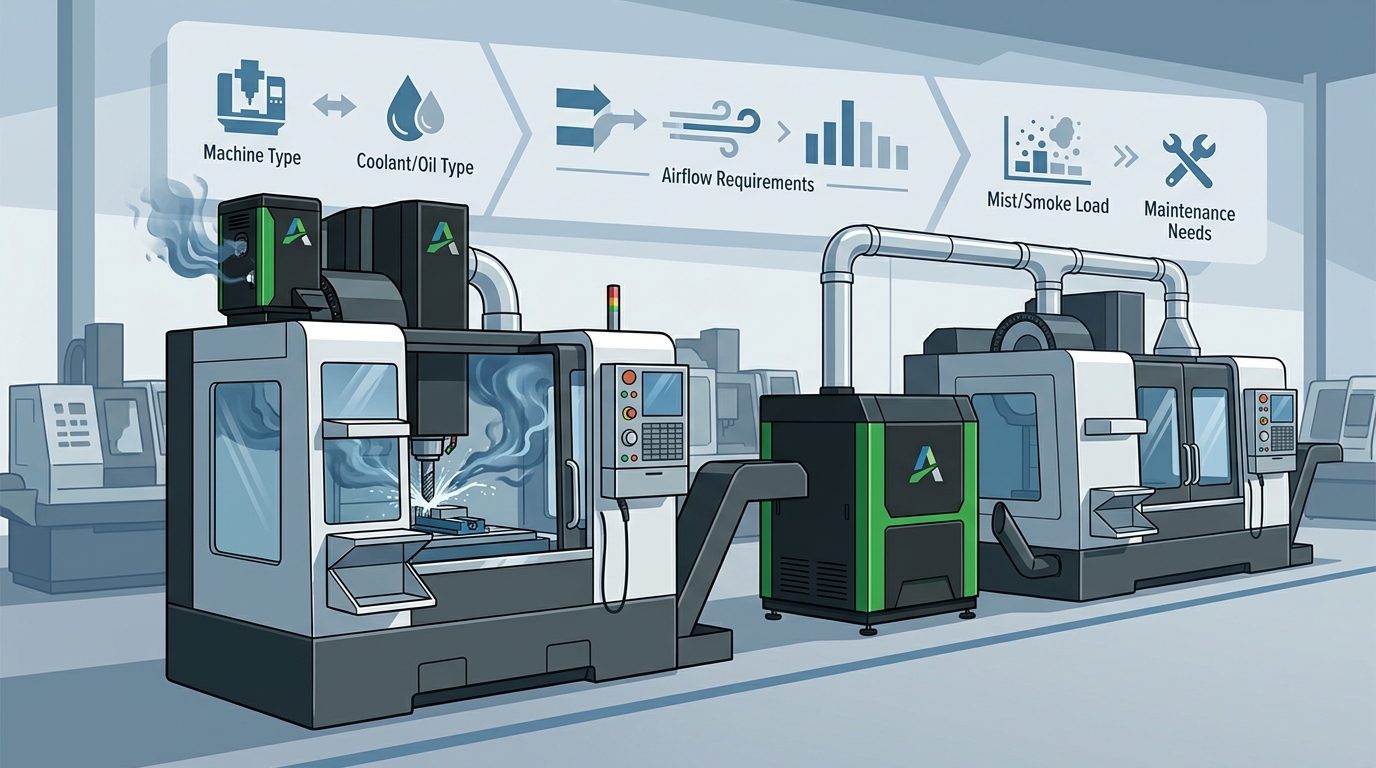
Electrostatic Precipitators
Electrostatic precipitators are filtration devices that utilize high-voltage electrical fields to charge airborne droplets. Charged particles adhere to oppositely charged collection plates, effectively removing them from the airstream. This technology excels at capturing submicron oil aerosols without restrictive mechanical barriers. Maintenance involves periodic plate washing rather than disposable filter replacement. Environmental standards favor these systems due to reduced solid waste generation.
HEPA Media Filters
HEPA media filters are mechanical barriers that rely on dense fibrous matrices to trap contaminants through impaction and diffusion. These physical matrices capture particles as small as 0.3 microns with exceptional accuracy. Facility managers must schedule regular filter replacements to maintain designed airflow velocity. The upfront hardware cost remains lower than electrostatic alternatives. Long-term operational expenses typically exceed electrostatic models due to recurring media purchases.
Evaluating Aeroex Mist-Fit and Maverick Systems
Industrial air purification requires customized engineering solutions that match specific facility layouts. The Mist-Fit series delivers modular extraction capabilities for standard CNC environments. These units feature adjustable mounting brackets and flexible ducting configurations. Modular design allows facilities to expand filtration capacity as production scales. The Maverick platform addresses heavy-duty metalworking applications with reinforced housing and higher static pressure ratings. Both product lines emphasize Canadian manufacturing standards and rigorous quality control protocols. Quality assurance processes ensure every unit meets exact engineering specifications before deployment.
Maintenance Cycles
Regular maintenance schedules dictate long-term system performance and filtration efficiency. Electrostatic models require weekly plate inspections and monthly solvent cleaning routines. Mechanical filter systems demand quarterly media replacements and annual motor inspections. Technical support teams provide comprehensive maintenance guides for all deployed equipment. Predictive maintenance algorithms monitor pressure differentials to alert operators before performance degradation occurs.
Key Selection Criteria for Your Facility
Airflow Requirements
Calculating accurate cubic feet per minute requirements prevents undersized system installations. Facility engineers must measure total floor area, ceiling height, and machine heat output. ISO guidelines recommend minimum air exchange rates based on specific coolant types. Oversized systems waste electrical energy while undersized units fail to capture vapor clouds. Proper airflow modeling ensures consistent capture velocity across all machining stations.
Space Constraints
Modern manufacturing floors prioritize maximum equipment density and streamlined material flow. Compact filtration units minimize footprint while maintaining high capture efficiency. Wall-mounted configurations free valuable floor space for additional CNC machines. Compact engineering allows installation in existing ductwork without major structural modifications. Facility planners should evaluate ceiling clearance and access panel requirements before procurement.
Implementation and Compliance Standards
Regulatory compliance dictates system selection and ongoing operational procedures. Occupational safety frameworks require documented air quality monitoring and periodic third-party testing. Testing protocols verify that captured particulate concentrations remain below permissible exposure limits. Documentation packages must include installation schematics, maintenance logs, and employee training records. Auditors review these records during routine facility inspections to verify adherence.
Table: Filtration System Comparison
| System Type | Primary Mechanism | Maintenance Frequency | Best Application |
|---|---|---|---|
| Electrostatic Precipitator | High-voltage charging plates | Weekly plate cleaning | Heavy metalworking operations |
| HEPA Media Filter | Dense fibrous matrix | Quarterly media replacement | Light precision machining |
| Mist-Fit Modular Unit | Adjustable extraction arms | Monthly filter inspection | Scalable CNC environments |
| Maverick Heavy-Duty | Reinforced housing design | Quarterly motor service | High-volume production floors |
Key Takeaways
- Over 70 percent of CNC operations require dedicated air purification to maintain safe worker environments.
- Electrostatic precipitators utilize high-voltage electrical fields to charge and capture submicron oil aerosols.
- HEPA media filters rely on dense fibrous matrices to trap contaminants through impaction and diffusion.
- Mist-Fit series delivers modular extraction capabilities for standard CNC environments with adjustable mounting brackets.
- Maverick platform addresses heavy-duty metalworking applications with reinforced housing and higher static pressure ratings.
- Facilities trusted by over 1000 manufacturing facilities globally prioritize Canadian manufacturing standards. (How Industrial Policy)
- Regular maintenance schedules dictate long-term system performance and filtration efficiency across all unit types.
Frequently Asked Questions
How do I calculate the required airflow for my CNC shop?
Measure your total floor area, ceiling height, and machine heat output to determine cubic feet per minute requirements. Multiply floor square footage by ceiling height to establish total volume. Apply standard air exchange rates based on your specific coolant chemistry. Consult facility engineering guidelines to verify calculated airflow matches equipment specifications.
What is the average lifespan of an industrial mist collector?
Properly maintained electrostatic systems typically operate for 15 to 20 years before major component replacement. Mechanical filter units require more frequent media changes but maintain core motor functionality for extended periods. Regular cleaning routines and scheduled motor inspections extend overall system longevity. System longevity depends directly on adherence to manufacturer maintenance schedules.
Can I install a mist collector on an existing facility?
Modern extraction units feature flexible ducting configurations and wall-mounted brackets for retrofit applications. Facility engineers can integrate new filtration into existing HVAC infrastructure without major structural modifications. Flexible integration allows seamless deployment across legacy manufacturing floors. Site assessments verify clearance requirements and electrical panel capacity before installation.
How often should I replace HEPA filter media?
Quarterly media replacements maintain designed airflow velocity and capture efficiency. Pressure differential gauges indicate when filter resistance exceeds acceptable thresholds. Facility managers should track replacement cycles using digital maintenance logs. Consistent scheduling prevents performance degradation and protects downstream equipment.
What certifications do industrial air purification systems require?
Manufactured units must comply with regional electrical safety standards and environmental discharge regulations. Certification requirements vary by jurisdiction but consistently mandate rigorous testing protocols. Documentation packages include engineering schematics and compliance verification reports. Procurement teams should verify all regulatory markings before finalizing purchases.
Ready to Optimize Your Facility?
Selecting the optimal filtration architecture requires precise engineering calculations and professional installation support. Our technical specialists provide comprehensive site assessments and custom system design services. Schedule a consultation to evaluate your specific production requirements. We deliver reliable air purification solutions that protect your workforce and maximize operational efficiency.