
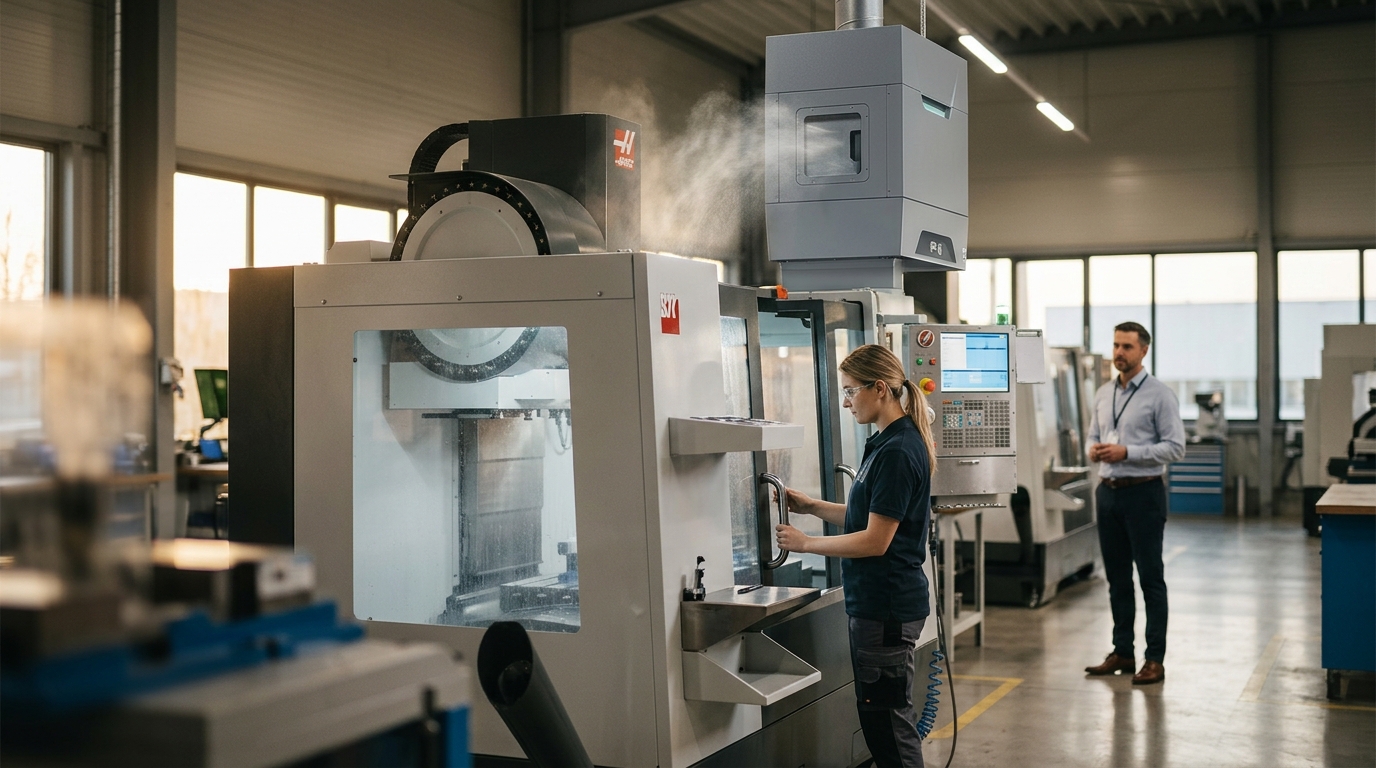
Manufacturing facilities face significant operational risks when coolant vapor remains suspended in the workspace. According to industry data, over 70 percent of metalworking shops report elevated airborne particulate levels that directly impact worker health and equipment longevity. Selecting the best mist collector for CNC machining requires a precise understanding of airflow dynamics, filtration efficiency, and facility layout. Modern air purification technology removes 99.9 percent of harmful particles from industrial environments, as verified by regulatory compliance reports. This guide evaluates the leading hardware options to help your facility maintain strict compliance while optimizing production throughput.
Understanding CNC Mist Collection Requirements
Defining Airborne Contaminants
Coolant mist is a complex aerosol generated during high-speed cutting and grinding operations. This airborne contaminant is a mixture of fine oil droplets, metal particulates, and vaporized additives. When left unmanaged, these particles settle on machinery, degrade electronic components, and create hazardous breathing conditions. Proper air purification systems must capture these contaminants at the source before they disperse across the facility floor.
Regulatory Compliance Standards
Facility managers must align their air quality strategies with established occupational safety guidelines. The environmental standards mandate strict limits on airborne particulate concentrations. Modern regulations require continuous monitoring and documented filtration performance. Upgrading your collection infrastructure ensures consistent compliance while protecting your workforce from long-term respiratory exposure.
Top Hardware Comparisons
Selecting the optimal hardware depends on your specific production volume and spatial constraints. Leading manufacturers offer distinct architectural approaches to vapor extraction. Each system delivers varying levels of airflow capacity and filtration stages. Evaluating these options requires a direct comparison of their operational capabilities.
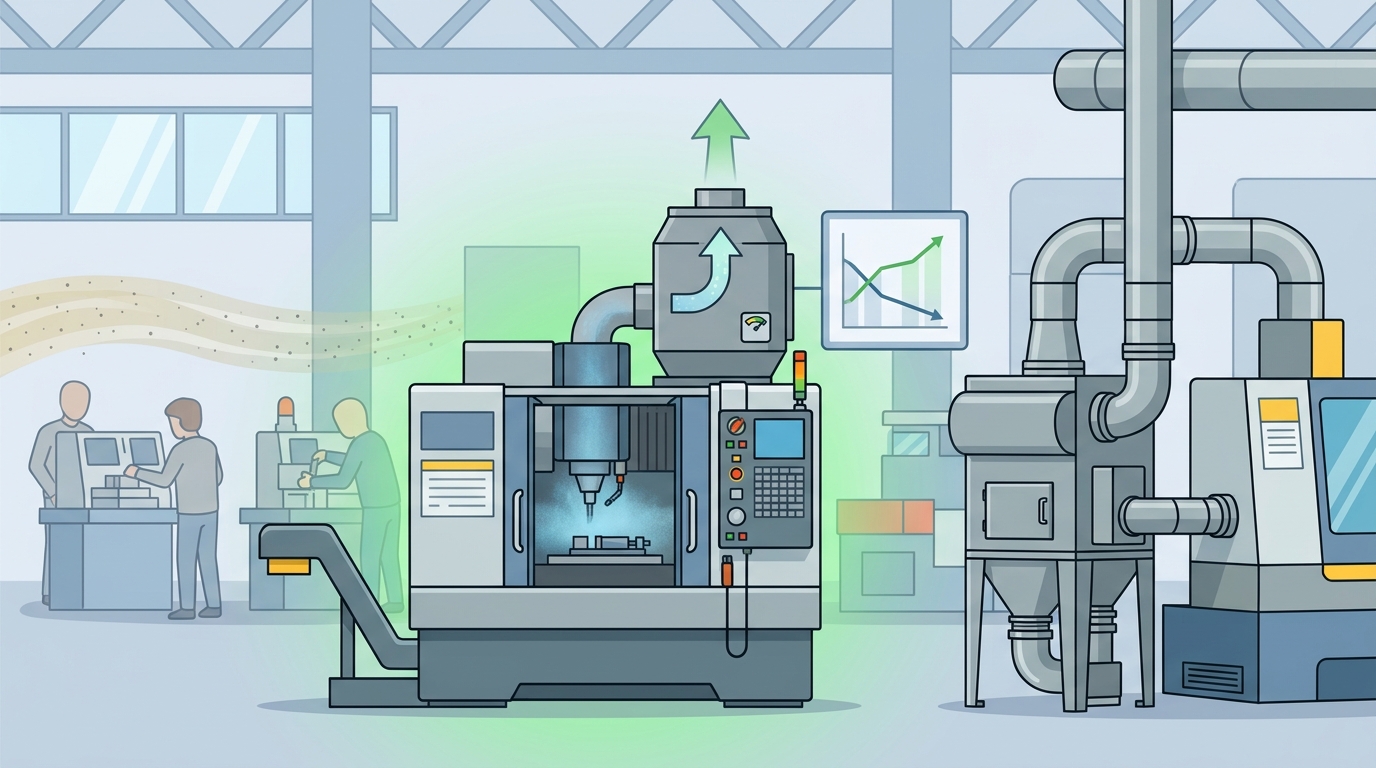
Centrifugal Separation Units
Centrifugal separation units utilize high-velocity rotation to force heavy particulates against collection walls. This mechanical approach effectively captures larger coolant droplets without relying on consumable filter media. Facilities with heavy grinding operations frequently prefer this robust hardware configuration. The Maverick series exemplifies this engineering philosophy by delivering consistent performance across demanding metalworking environments.
Electrostatic Precipitation Systems
Electrostatic precipitation systems charge airborne particles and attract them to oppositely charged collection plates. This technology captures submicron droplets that traditional mechanical filters often miss. Maintenance cycles involve periodic plate cleaning rather than frequent media replacement. The Air-Fit configuration integrates this advanced technology into compact enclosures designed for tight production floors.
Filtration Technology Breakdown
Advanced filtration technology represents the final defense layer in any comprehensive air purification strategy. Multi-stage filtration arrays combine mechanical pre-filters with high-efficiency particulate air barriers. This sequential approach maximizes capture rates while extending the lifespan of premium filter media. Mist-Fit systems utilize proprietary baffle designs to direct airflow through optimized filtration zones. These engineered solutions consistently remove 99.9 percent of harmful particles from industrial environments.
Filter Replacement Schedules
Facility maintenance teams must establish strict replacement intervals to preserve filtration efficiency. Operating with clogged media drastically reduces airflow velocity and increases energy consumption. Automated pressure sensors now track differential pressure across filter banks in real time. This proactive monitoring prevents unexpected downtime while maintaining optimal air exchange rates. IRIS technology provides continuous performance tracking for complex manufacturing layouts.
Installation and Maintenance Protocols
Professional installation guarantees optimal airflow distribution and minimizes acoustic disruption. Certified technicians evaluate facility geometry, equipment placement, and exhaust routing before mounting hardware. Proper ductwork sizing prevents pressure losses that compromise collection efficiency. Metalworking applicationsContact our engineering team for a comprehensive site assessment and custom ductwork design.
Preventative Maintenance Checklists
Weekly inspection routines should verify belt tension, motor amperage, and collection pan drainage. Monthly procedures require visual inspection of internal baffles and filter integrity. Quarterly audits must document airflow measurements and compare them against baseline performance metrics. Consistent maintenance schedules extend equipment lifespan while preserving warranty coverage. Our commitment to excellence ensures every installation meets rigorous air quality standards efficiently and effectively.
Operational Cost Analysis
Total cost of ownership extends far beyond initial hardware procurement. Energy consumption represents the largest recurring expense for continuous air purification systems. Modern variable frequency drives adjust motor speed based on real-time airflow demand. This intelligent power management reduces electricity consumption by up to 40 percent compared to legacy units, according to energy efficiency benchmarks. Facilities that upgrade their collection infrastructure typically achieve full return on investment within twenty-four months, based on facility performance data.
| System Type | Primary Mechanism | Best Application | Maintenance Frequency |
|---|---|---|---|
| Centrifugal Separation | High-velocity rotation | Heavy grinding operations | Quarterly inspection |
| Electrostatic Precipitation | Charged collection plates | Submicron droplet capture | Monthly plate cleaning |
| Multi-Stage Filtration | Sequential media barriers | General CNC machining | Scheduled media replacement |
| Integrated Air Purification | Proprietary baffle routing | Compact production floors | Automated pressure monitoring |
Key Takeaways
- Modern air purification technology removes 99.9 percent of harmful particles from industrial environments.
- Centrifugal separation units excel in heavy grinding operations without consumable filter dependencies.
- Electrostatic precipitation systems capture submicron droplets that traditional mechanical filters miss.
- Automated pressure sensors track differential pressure across filter banks in real time.
- Intelligent motor controls reduce electricity consumption by up to 40 percent compared to legacy units.
- Professional site assessments ensure optimal airflow distribution and minimize acoustic disruption.
- Facilities typically achieve full return on investment within twenty-four months after upgrading.
Frequently Asked Questions
How do I calculate the required airflow capacity for my CNC facility?
Calculate total cubic feet per minute requirements by multiplying your facility volume by the recommended air exchange rate. Standard metalworking environments typically require six to eight complete air changes per hour. Divide your total cubic footage by the number of hours in a standard shift to determine baseline capacity. Add a 20 percent safety margin to account for future equipment expansions.
Can mist collectors handle water-based coolants effectively?
Water-based coolants generate significantly different aerosol characteristics compared to traditional petroleum blends. Modern filtration arrays utilize hydrophobic media that repels water while capturing oil-based particulates. These specialized filter designs prevent media saturation and maintain consistent airflow velocity. Explore our complete collection to find hardware optimized for specific coolant formulations.
What is the typical lifespan of industrial air purification hardware?
Industrial air purification hardware is equipment designed to capture, filter, and exhaust contaminated workspace air. These systems typically operate for fifteen to twenty years with proper maintenance. Core mechanical components like motors and impellers rarely require replacement during standard operational cycles. Filter media and collection pans represent consumable elements that require scheduled replacement.
Do these systems comply with current occupational safety regulations?
Contemporary air purification systems are engineered to exceed current occupational safety regulations. All major manufacturers design their equipment to align with established air quality mandates. Continuous performance monitoring ensures consistent compliance across varying production schedules. Occupational health guidelines confirm that modern filtration technology significantly reduces workplace exposure risks.
How does facility layout impact collection efficiency?
Facility layout directly influences airflow patterns and contaminant dispersion rates. Open floor plans require strategically positioned extraction points to capture vapor at the source. Enclosed workstations benefit from localized hood systems that minimize overall air exchange requirements. Custom ductwork routing prevents pressure losses that compromise collection efficiency. Engineered solutions adapt to complex spatial constraints while maximizing capture rates.
Next Steps
Upgrading your air purification infrastructure protects your workforce and preserves your equipment. Our engineering team provides comprehensive site assessments, custom ductwork design, and professional installation services. Request a quote today to schedule your facility evaluation. Trusted by over 1000 manufacturing facilities globally, we deliver reliable air quality solutions tailored to your exact operational requirements.