
What is the Best Mist Collector for CNC Machining?
Modern manufacturing facilities require precise air management to maintain operational continuity. Industrial air purification systems remove harmful particulates from machining environments. These systems protect equipment and personnel while ensuring consistent production output. Selecting the correct filtration technology depends on facility layout, coolant type, and airflow requirements. Understanding these variables prevents costly downtime and regulatory compliance issues. Facility managers must evaluate airflow capacity, filter efficiency, and maintenance accessibility before deployment.
Core Filtration Technologies
Metalworking operations generate complex aerosol mixtures that require specialized extraction methods. Mist collection is the mechanical separation of liquid and solid particulates from industrial exhaust streams. Manufacturers typically deploy centrifugal separators, electrostatic precipitators, or multi-stage filtration units. Each technology addresses distinct operational challenges. Centrifugal units rely on rotational force to fling heavy droplets against collection walls. Electrostatic systems charge particles to attract them to grounded plates. Multi-stage filters combine mechanical barriers with chemical adsorption media. Facility engineers must match the extraction method to the specific coolant chemistry and machining process.
Advanced filtration architectures deliver consistent performance across high-volume production floors. Mist-Fit systems utilize proprietary baffle arrangements to maximize droplet capture rates. These units operate quietly while maintaining high static pressure. Canadian manufacturing standards emphasize rigorous quality control during production. Engineers prioritize durable construction materials to withstand harsh workshop environments. Regular maintenance schedules extend equipment lifespan and preserve filtration efficiency.
Evaluating Airflow and Capture Efficiency
Airflow capacity dictates how effectively a collector handles continuous machining operations. Air exchange rate is the volume of filtered air replaced within a facility per hour. Calculating the required cubic feet per minute requires measuring exhaust hood dimensions and machine placement. Insufficient airflow allows particulates to settle on equipment and flooring. Excessive airflow wastes energy and increases operational costs. Facility audits should map airflow patterns to identify dead zones and recirculation loops.
Optimal capture velocity prevents aerosols from escaping the extraction zone. OSHA guidelines recommend maintaining specific face velocities at source points. Engineers must account for ambient drafts and HVAC interference. Proper ductwork sizing reduces turbulence and pressure drops. Custom duct routing ensures balanced distribution across multiple workstations. Regular airflow testing validates system performance and identifies blockages early.
Filter Media and Maintenance Cycles
Filter selection directly impacts long-term operational expenses and air quality outcomes. Filter media is the porous material that traps particulates while allowing clean air to pass. Manufacturers offer disposable cartridges, washable mesh screens, and electrostatic collection plates. Disposable units require frequent replacement but deliver consistent capture rates. Washable screens reduce waste but demand rigorous cleaning protocols. Electrostatic plates require periodic voltage checks and electrode cleaning.
Maintenance accessibility determines how quickly technicians can service extraction units. Installation galleries showcase real-world configurations that prioritize technician access. Modular filter racks allow quick swaps without shutting down entire systems. Drain valves facilitate coolant recovery and prevent reservoir overflow. Scheduled inspections prevent filter saturation and maintain airflow consistency. Contact our engineering team to schedule a comprehensive facility assessment and maintenance planning session.
System Integration and Facility Layout
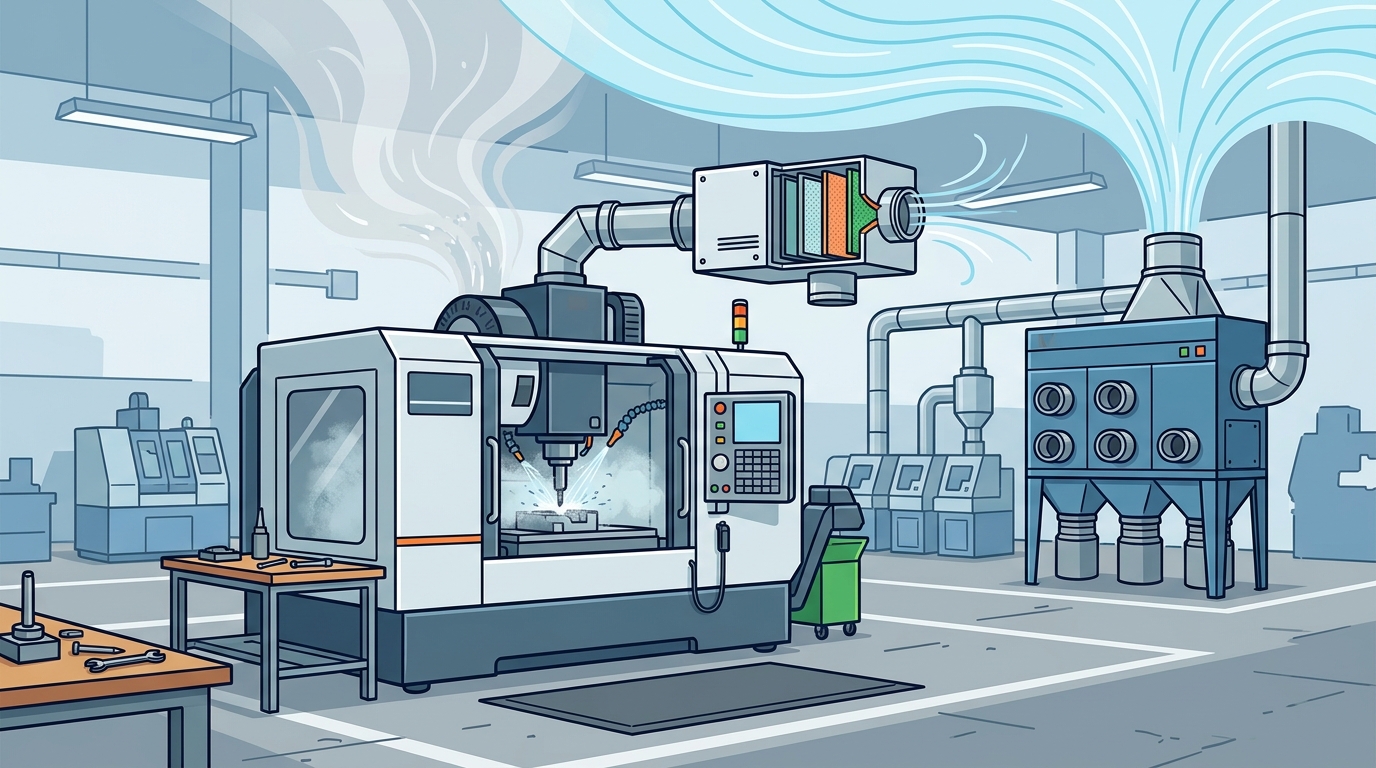
Integrating extraction units into existing workshop layouts requires careful spatial planning. System integration is the process of connecting air purification equipment to existing HVAC and exhaust networks. Engineers must evaluate ceiling height, column spacing, and machine footprints. Overhead ductwork minimizes floor clutter and improves forklift navigation. Floor-standing units save ceiling space but require careful placement near source points. Modular collection arrays allow phased upgrades without disrupting production schedules.
Strategic placement maximizes capture efficiency while minimizing energy consumption. Blog resources provide detailed case studies on facility retrofits and expansions. Engineers prioritize proximity to machining centers to reduce duct length and pressure loss. Flexible hose connections accommodate machine repositioning and workflow changes. Regular spatial audits ensure extraction zones remain aligned with production demands. Request a quote to explore customized layout solutions tailored to your facility constraints.
Regulatory Compliance and Air Quality Standards
Meeting environmental regulations requires precise monitoring and documented compliance protocols. Regulatory compliance is the adherence to government-mandated emission limits and workplace safety standards. Agencies enforce strict limits on particulate matter and volatile organic compounds. Facilities must maintain accurate logs of filter replacements and airflow measurements. Regular air sampling validates that indoor concentrations remain within safe thresholds. Non-compliance triggers fines, operational shutdowns, and increased insurance premiums.
Proactive monitoring prevents costly violations and protects workforce health. EPA recommendations emphasize continuous air quality tracking in industrial settings. Automated sensors alert technicians when particulate levels approach regulatory limits. Digital dashboards consolidate compliance data for audit readiness. Facility managers should establish clear escalation protocols for threshold breaches. ASHRAE standards provide comprehensive guidelines for ventilation and filtration design. Implementing these frameworks ensures long-term operational resilience and regulatory peace of mind.
Selecting the Optimal Unit for Your Facility
Choosing the right extraction system requires evaluating multiple operational variables. Optimal selection is the process of matching filtration capacity to specific machining demands and facility constraints. Engineers assess coolant type, machine count, shift duration, and ceiling height. High-viscosity coolants require heavier separation stages to prevent filter clogging. Continuous operations demand larger reservoirs and automated drain cycles. Seasonal temperature fluctuations affect coolant viscosity and extraction efficiency.
Comparing unit specifications reveals distinct advantages for different production environments. The following matrix outlines key differentiation points across standard collection architectures.
| Unit Category | Primary Application | Filter Type | Maintenance Frequency | Best For |
|---|---|---|---|---|
| Centrifugal Separator | Heavy coolant processing | Internal baffles | Quarterly inspection | High-volume machining |
| Electrostatic Precipitator | Fine aerosol capture | Charged plates | Monthly voltage check | Cleanroom environments |
| Multi-Stage Filter | Versatile coolant handling | Disposable cartridges | Monthly replacement | General manufacturing |
| Modular Array | Scalable facility expansion | Interchangeable racks | As needed | Phased upgrades |
Key Takeaways
- Mist collection systems remove harmful particulates from machining environments to protect personnel and equipment.
- Air exchange rate measures the volume of filtered air replaced within a facility per hour.
- Filter media is the porous material that traps particulates while allowing clean air to pass.
- System integration connects air purification equipment to existing HVAC and exhaust networks.
- Regulatory compliance ensures adherence to government-mandated emission limits and workplace safety standards.
- Optimal selection matches filtration capacity to specific machining demands and facility constraints.
- Regular airflow testing validates system performance and identifies blockages before they impact production.
Frequently Asked Questions
How do I calculate the required airflow capacity for my CNC shop?
Calculate the required cubic feet per minute by measuring exhaust hood dimensions and machine placement. Multiply the capture area by the recommended face velocity to determine baseline airflow. Add a standard safety margin to account for ambient drafts and HVAC interference. Regular airflow testing validates system performance and identifies blockages early.
What is the difference between centrifugal and electrostatic mist collectors?
Centrifugal units rely on rotational force to fling heavy droplets against collection walls. Electrostatic systems charge particles to attract them to grounded plates. Centrifugal models handle heavy coolants without frequent filter changes. Electrostatic units capture finer aerosols but require consistent voltage maintenance.
How often should I replace or clean the filter media?
Disposable cartridges typically require monthly replacement based on operational hours. Washable screens demand rigorous cleaning protocols to prevent clogging. Electrostatic plates need periodic voltage checks and electrode cleaning. Scheduled inspections prevent filter saturation and maintain airflow consistency.
Can I integrate a mist collector into an existing HVAC system?
System integration connects air purification equipment to existing HVAC and exhaust networks. Engineers evaluate ceiling height, column spacing, and machine footprints before deployment. Overhead ductwork minimizes floor clutter and improves forklift navigation. Modular collection arrays allow phased upgrades without disrupting production schedules.
What maintenance schedule ensures long-term equipment reliability?
Maintenance accessibility determines how quickly technicians can service extraction units. Modular filter racks allow quick swaps without shutting down entire systems. Drain valves facilitate coolant recovery and prevent reservoir overflow. Regular spatial audits ensure extraction zones remain aligned with production demands.
How do I verify compliance with workplace safety regulations?
Regulatory compliance is the adherence to government-mandated emission limits and workplace safety standards. Agencies enforce strict limits on particulate matter and volatile organic compounds. Facilities must maintain accurate logs of filter replacements and airflow measurements. Regular air sampling validates that indoor concentrations remain within safe thresholds.
What factors influence the initial installation cost?
Initial installation costs depend on facility layout, coolant type, and airflow requirements. Custom duct routing ensures balanced distribution across multiple workstations. Flexible hose connections accommodate machine repositioning and workflow changes. Regular spatial audits ensure extraction zones remain aligned with production demands.
Ready to Optimize Your Facility Air Quality?
Selecting the correct filtration technology depends on facility layout, coolant type, and airflow requirements. Understanding these variables prevents costly downtime and regulatory compliance issues. Facility managers must evaluate airflow capacity, filter efficiency, and maintenance accessibility before deployment. Contact our engineering team to schedule a comprehensive facility assessment and maintenance planning session. Request a quote to explore customized layout solutions tailored to your facility constraints. Secure your production environment with reliable air purification technology today.