
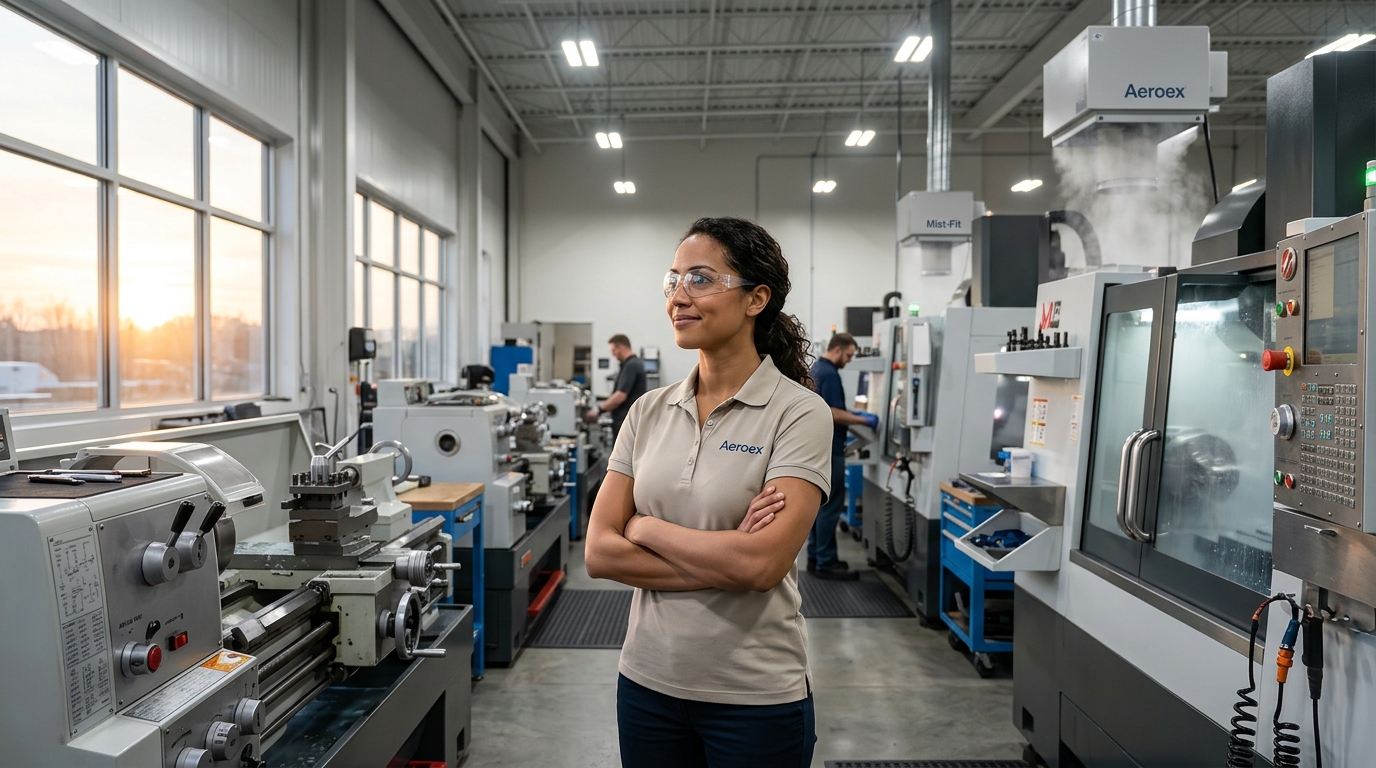
Industrial air quality is no longer just a compliance checkbox; it is a critical operational metric that directly impacts workforce health, equipment longevity, and regulatory fines. According to recent industrial safety data, effective oil mist collection can remove up to 99.9% of harmful particles from the air, significantly reducing the risk of respiratory issues and fire hazards in machining environments. Selecting the correct air purification system requires a deep understanding of your specific machining processes, coolant types, and facility layout. This guide breaks down the essential criteria for choosing the right mist collector, leveraging insights from industry leaders like Aeroex to help you make an informed decision.
Understand Your Mist Type and Coolant
The first step in selecting a mist collector is identifying the type of mist generated by your machinery. Not all mists are created equal, and the wrong filtration media can lead to rapid clogging or even fire hazards. Oil mist is a suspension of fine oil droplets in the air, typically generated during high-speed machining operations. Smoke refers to finer particulate matter often produced by dry machining or grinding processes. Fumes are gaseous byproducts that may require carbon filtration for effective removal.
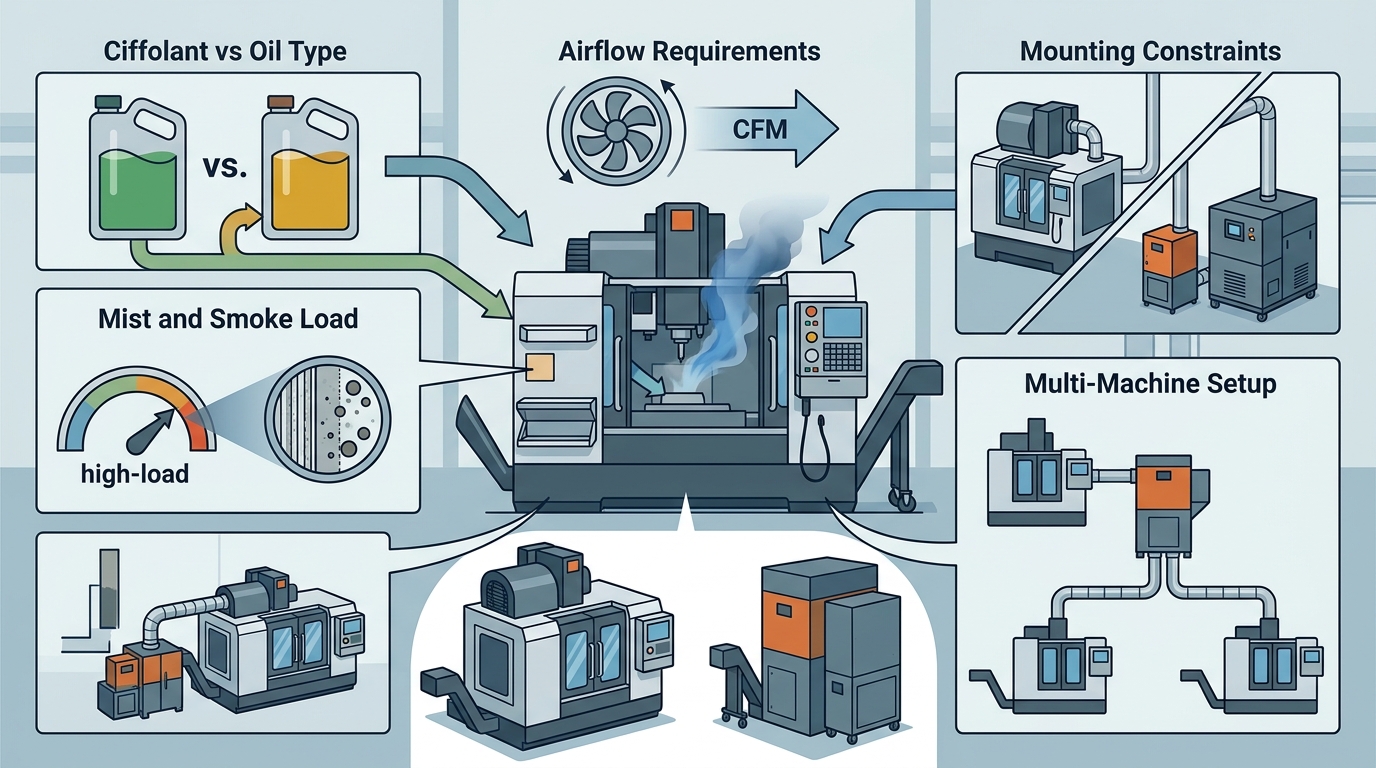
Your choice of cutting fluid plays a pivotal role in this decision. Water-soluble coolants tend to produce finer mists that are harder to capture than straight oils. If you are machining aluminum with a coolant like Cool Lube 2210, as noted by users who have installed Mist-Fit units, the mist can be particularly aggressive and require high-efficiency collection. Understanding the viscosity and composition of your coolant helps determine the necessary filtration efficiency and the type of filter media required.
Evaluate Filtration Technology
Not all mist collectors use the same filtration technology. The two most common types are centrifugal and electrostatic precipitators, though modern systems often combine multiple stages for optimal performance. Centrifugal filtration uses high-speed rotating cones to fling mist particles against a collection surface, where they coalesce and drain back into the sump. This method is highly effective for larger oil droplets and requires minimal maintenance.
For finer mists and smoke, electrostatic precipitation or multi-stage filtration is often necessary. Aeroex’s IRIS series utilizes a dual-stage system combining a MERV8/Carbon primary filter with a HEPA secondary filter. This approach is ideal for high-performance odor control and capturing sub-micron particles. When evaluating technology, consider the particle size you need to capture. If your goal is to meet strict indoor air quality standards, a multi-stage approach ensures that both visible mist and invisible fumes are addressed.
Match Capacity to Your Machine
One of the most common mistakes machine shop owners make is underestimating the airflow requirements of their mist collectors. The collector must be sized to handle the volume of air generated by your specific machine. A unit that is too small will struggle to maintain negative pressure, allowing mist to escape into the shop environment. Conversely, an oversized unit may cycle on and off too frequently, reducing its efficiency and lifespan.
Look for systems with Variable Frequency Drives (VFDs), which allow you to adjust the fan speed based on the machine’s operation. As one customer noted, installing VFDs on their ARO series units significantly extended filter life and improved energy efficiency. Matching the collector’s CFM (cubic feet per minute) rating to your machine’s exhaust requirements is crucial for maintaining a clean workspace. For smaller machines, a compact unit like the Mist-Fit might be sufficient, while larger CNC centers may require the power of the ROX series.
Consider Installation Options
Where you place your mist collector is just as important as the unit itself. There are generally two installation approaches: centralized systems and individual machine units. Centralized systems use a network of ducts to pull mist from multiple machines to a single large collector. While this can be cost-effective for large shops, it requires complex ductwork and careful balancing to ensure equal airflow to each machine.
Individual machine units, such as the Mist-Fit or BlowBox, offer a more flexible and often simpler solution. These units are mounted directly to the machine or placed nearby, capturing mist at the source before it can disperse. This approach eliminates the need for extensive ductwork and allows for easier maintenance. For cleanrooms and inspection areas, specialized units like the IRIS series provide the high-efficiency filtration needed to maintain sterile environments.
Assess Maintenance and Operational Costs
The true cost of a mist collector extends beyond the initial purchase price. Maintenance requirements, filter replacement costs, and energy consumption all contribute to the total cost of ownership. Units with easy-access filter panels and self-cleaning features can significantly reduce downtime and labor costs. For example, the Mist-Fit is designed for minimal maintenance, making it an attractive option for shops with limited technical staff.
Energy efficiency is another critical factor. Systems with VFDs can adjust power consumption based on demand, leading to substantial savings over time. Additionally, consider the cost of waste disposal. Some collectors allow for the recycling of collected oil, turning a waste product into a revenue stream. When evaluating options, ask for a detailed breakdown of annual maintenance costs and expected filter life to make a accurate financial comparison.
Compare Product Lines: Mist-Fit vs. ROX vs. ARO
Aeroex offers a range of products designed to meet different needs. Understanding the distinctions between these lines can help you choose the right solution for your shop.
| Product Line | Best For | Key Features | Ideal Application |
|---|---|---|---|
| Mist-Fit | Compact, high-efficiency collection | Progressive filtration, minimal maintenance | Individual CNC machines, lathes |
| ROX Series | Heavy-duty industrial use | High airflow, robust construction | Large CNC centers, multi-machine setups |
| ARO Series | Energy-efficient operation | VFD compatibility, extended filter life | Shops focused on energy savings |
| IRIS Series | High-performance odor control | Dual-stage MERV8/Carbon + HEPA | Cleanrooms, inspection areas |
| BlowBox | Part blow-off mist capture | Dual downdraft, compact design | Quality control stations |
Key Takeaways
- Identify Mist Type: Distinguish between oil mist, smoke, and fumes to select the correct filtration media.
- Match Capacity: Ensure the collector’s CFM rating aligns with your machine’s exhaust requirements to prevent escape.
- Consider VFDs: Units with Variable Frequency Drives offer significant energy savings and extended filter life.
- Evaluate Maintenance: Choose systems with easy access and low maintenance needs to reduce downtime.
- Source Capture: Individual machine units often provide better performance and flexibility than centralized ductwork.
- Brand Reputation: Aeroex has been a trusted North American air purification expert since 2001, serving over 1000 manufacturing facilities.
- Custom Solutions: For complex environments, engineered solutions may be necessary to meet specific air quality standards.
Frequently Asked Questions
What is the difference between oil mist and smoke?
Oil mist consists of liquid droplets suspended in the air, typically from cutting fluids. Smoke refers to finer, dry particulate matter often generated by grinding or dry machining. Different filtration technologies are required for each.
How often do I need to replace the filters?
Filter replacement frequency depends on the type of mist, the volume of air processed, and the filter media. Units with VFDs, like the ARO series, can extend filter life significantly. Regular inspection is recommended to determine the optimal replacement schedule.
Can I recycle the collected oil?
Yes, many mist collectors are designed to separate oil from water and air, allowing the collected oil to be recycled or disposed of properly. This can reduce waste disposal costs and environmental impact.
What is the IRIS series used for?
The IRIS series is designed for high-performance odor control and cleanroom applications. It uses a dual-stage filtration system with MERV8/Carbon and HEPA filters to capture both particulates and gaseous fumes.
How do I know if I need a centralized or individual unit?
Individual units are better for shops with diverse machine types or limited ductwork space. Centralized systems may be more cost-effective for large shops with similar machines and existing duct infrastructure. A site visit can help determine the best approach.
Does Aeroex offer custom solutions?
Yes, Aeroex provides engineered solutions for specialized applications, including cleanrooms and inspection areas. Contact their team for a custom quote tailored to your specific needs.
What is the BlowBox used for?
The BlowBox is a compact, dual downdraft station designed to capture hazardous mist during part blow-off with compressed air. It is ideal for quality control and inspection stations.
Contact Us for a Custom Solution
Choosing the right mist collector is a critical decision that impacts your shop’s efficiency, safety, and compliance. Whether you need a compact Mist-Fit for a single machine or a robust ROX series for heavy-duty use, Aeroex has the expertise to help. With over two decades of experience and a commitment to innovation, Aeroex is your trusted partner in industrial air purification. Contact us today to schedule a site visit or request a quote for your specific application.