
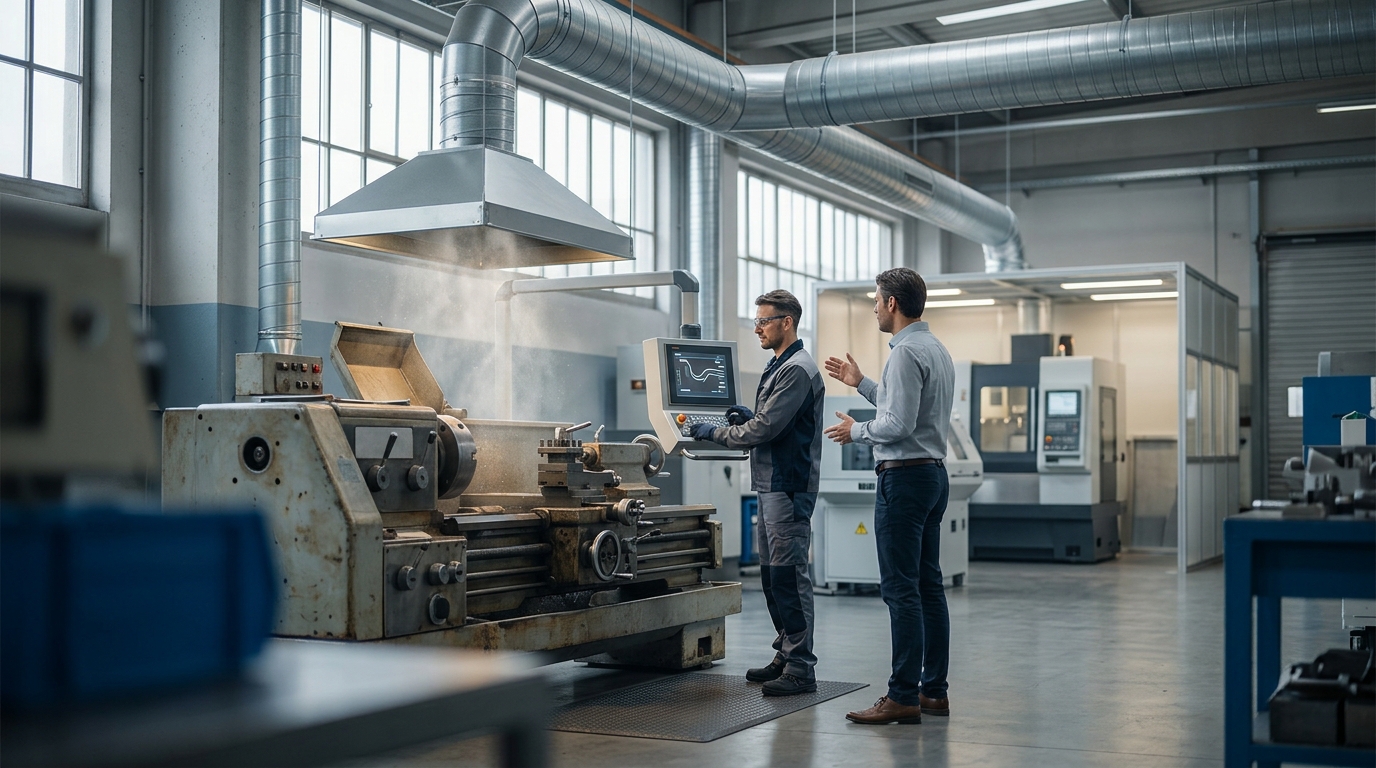
Bespoke Air Filtration for Manufacturing & Remediation Projects
Industrial environments generate complex airborne contaminants that standard off-the-shelf units cannot effectively manage. According to recent industry analyses, advanced air purification systems can remove up to 99.9% of harmful particles from manufacturing spaces, significantly improving worker safety and regulatory compliance. This guide explores how specialized engineering firms design custom solutions for metalworking, cleanrooms, and remediation projects. (Contact Aeroex Emission Control)
The Engineering Approach to Custom Filtration
Designing a bespoke air filtration system requires a deep understanding of the specific contaminants present in a facility. Generic solutions often fail to address the unique density, particle size, and chemical composition of industrial fumes. Aeroex Technologies, established in 2001, has built its reputation on this principle of tailored engineering. The company began in a modest 2,400-square-foot workshop in Barrie, Ontario, focusing on creating systems that adapt to the client's physical space and operational needs. (Aeroex Trusted North American)
Custom filtration projects typically begin with a comprehensive site assessment. Engineers analyze airflow patterns, machine placement, and the volume of contaminants generated during peak production hours. This data-driven approach ensures that the installed system maintains negative pressure in hazardous areas while providing positive pressure in clean zones. The goal is to create a controlled environment that protects both personnel and product quality.
For remediation projects, the engineering focus shifts to rapid containment and removal of existing pollutants. This might involve retrofitting existing ductwork or installing standalone units that can operate independently of the building's central HVAC system. The flexibility of bespoke systems allows them to be deployed in tight spaces or around complex machinery without disrupting ongoing operations.
Metalworking Mist and Smoke Control
Metalworking facilities face some of the most challenging air quality issues in the industrial sector. Processes such as CNC machining, grinding, and welding generate oil mist, smoke, and particulate matter that can settle on equipment, reduce product quality, and pose serious health risks to workers. Aeroex has developed specific product lines to address these challenges, including the Mist-Fit and the Blow Box.
The Mist-Fit series is designed for compact installation directly on or near machining centers. These units capture mist at the source before it can disperse into the general workspace. By using progressive filtration stages, they ensure that the captured oil is condensed and collected for potential recycling or safe disposal. This not only cleans the air but also reduces operational costs by recovering valuable cutting fluids.
For applications requiring part blow-off, the Blow Box offers a dual downdraft solution. This system captures hazardous mist and debris generated when compressed air is used to clean parts. It is particularly effective in high-speed production environments where traditional filtration might be overwhelmed. The compact design allows it to be integrated into existing workstations without requiring extensive structural modifications.
Cleanroom and Inspection Room Requirements
Cleanrooms and inspection areas demand air quality standards that far exceed those of general manufacturing floors. In these environments, even microscopic particles can compromise product integrity, leading to costly rejects or safety failures. Aeroex addresses this need with the IRIS series, which utilizes a dual-stage filtration system.
The IRIS system combines a MERV8/Carbon primary filter with a HEPA secondary filter. This configuration is critical for high-performance odor control and the removal of ultrafine particles. The carbon stage absorbs volatile organic compounds (VOCs) and odors, while the HEPA stage captures 99.97% of particles down to 0.3 microns. This two-step process ensures that the air returned to the cleanroom is not only particle-free but also chemically neutral.
Remediation in cleanrooms often involves maintaining strict airflow velocities and pressure differentials. Custom systems are engineered to integrate seamlessly with existing cleanroom infrastructure, ensuring that the laminar flow is not disrupted. This precision is vital for industries such as pharmaceuticals, aerospace, and semiconductor manufacturing, where contamination control is paramount.
Company Evolution and Operational Scale
The ability to deliver bespoke solutions is rooted in a company's operational history and capacity for innovation. Aeroex has evolved significantly since its founding in 2001. The company launched its first air purification series, the REX, in its early years, followed by the ROX series in 2008. This progression reflects a continuous commitment to improving filtration efficiency and energy consumption.
As demand grew, Aeroex expanded its physical footprint multiple times. The move to a 7,000-square-foot facility in 2014 allowed for larger-scale manufacturing and testing. By 2020, the company had expanded to 21 Hamilton Road, adding 5,000 square feet of workspace. This expansion was accompanied by the launch of the IRIS series, demonstrating the company's ability to innovate while scaling operations.
In 2021, Aeroex acquired 100 acres in Waubaushene, securing a site for future growth. This strategic move underscores the company's long-term vision and commitment to the North American market. The opening of a new 15,000-square-foot workshop in 2022 further enhanced its capacity to produce and install custom systems. In 2025, the company launched Aeroex U.S.A., marking a significant step in its international expansion and service delivery capabilities.
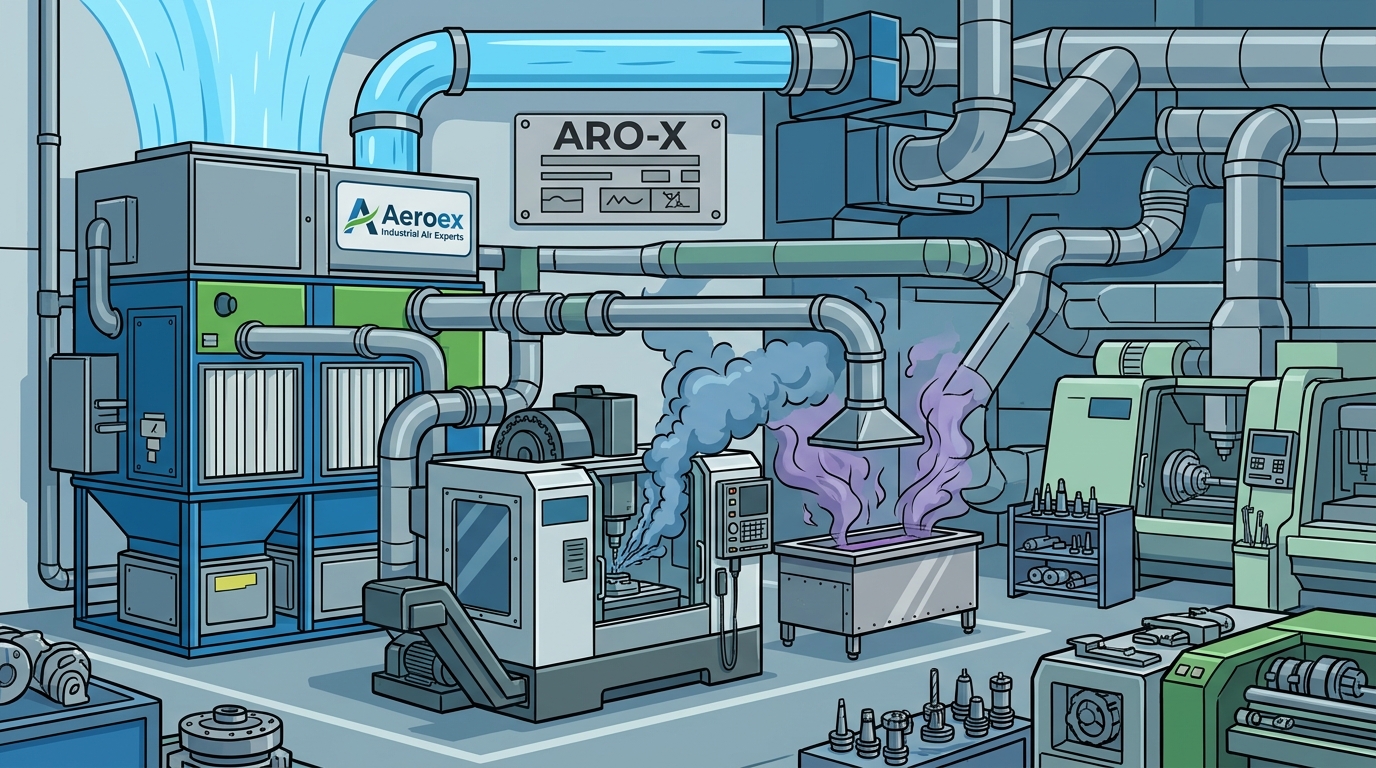
Comparing Bespoke System Options
Selecting the right filtration system depends on the specific application and environmental constraints. The table below outlines the primary bespoke solutions offered by Aeroex for different industrial scenarios.
| System Name | Primary Application | Key Technology | Best For |
|---|---|---|---|
| Mist-Fit | Machining Centers | Progressive Filtration | Compact oil mist capture |
| Blow Box | Part Blow-Off | Dual Downdraft | High-speed debris removal |
| IRIS | Cleanrooms | HEPA + Carbon | Odor and particle control |
| Maverick | Heavy Industry | High-Capacity Filtration | Large volume smoke removal |
Key Takeaways
- Custom Engineering is Essential: Off-the-shelf units often fail to address the unique density and volume of industrial contaminants.
- Source Capture is Most Effective: Systems like the Mist-Fit capture pollutants at the machine, preventing dispersion into the workspace.
- Dual-Stage Filtration Protects Cleanrooms: Combining carbon and HEPA filters, as seen in the IRIS series, is critical for odor and particle removal.
- Operational Scale Matters: Aeroex's expansion to 15,000 square feet in 2022 ensures capacity for large-scale bespoke projects.
- North American Presence: The launch of Aeroex U.S.A. in 2025 provides dedicated support for American manufacturing facilities.
- Continuous Innovation: From the REX series in 2001 to the Blow Box in 2021, the company consistently updates its technology.
- Regulatory Compliance: Proper air filtration helps manufacturers meet OSHA and other regional air quality standards.
Frequently Asked Questions
What is the difference between bespoke and standard air filtration?
Bespoke air filtration is engineered specifically for a facility's unique contaminants, airflow patterns, and spatial constraints, whereas standard units offer generic performance that may not address specific industrial challenges.
How does Aeroex design custom systems for metalworking?
Aeroex conducts site assessments to analyze mist density and machine placement, then designs systems like the Mist-Fit or Blow Box to capture contaminants at the source before they disperse.
What filtration stages are used in cleanroom applications?
Cleanroom applications typically use a dual-stage approach, combining a MERV8/Carbon primary filter for odor and VOC removal with a HEPA secondary filter for ultrafine particle capture.
Where is Aeroex Technologies located?
Aeroex Technologies is headquartered in Barrie, Ontario, Canada, with a significant operational expansion in Waubaushene and a dedicated U.S. branch launched in 2025.
Can bespoke systems be retrofitted into existing facilities?
Yes, many bespoke systems are designed for retrofitting, allowing them to integrate with existing ductwork or operate as standalone units without disrupting current operations.
What industries benefit most from custom air purification?
Industries such as metalworking, pharmaceuticals, aerospace, and semiconductor manufacturing benefit significantly from custom air purification due to their strict air quality and contamination control requirements.
How does Aeroex ensure the quality of its bespoke solutions?
Aeroex ensures quality through rigorous testing, adherence to high engineering standards, and a commitment to continuous improvement, as reflected in its core values of innovation and integrity.
Request Your Custom Solution
Transform your industrial environment with an air purification system designed specifically for your needs. Whether you are managing metalworking mist, maintaining a cleanroom, or remediating a contaminated space, Aeroex provides the engineering expertise and manufacturing capacity to deliver results. Contact the team at Aeroex to schedule a site assessment and explore your bespoke filtration options today.