
Common Mistakes in Industrial Air Filtration Selection and Implementation
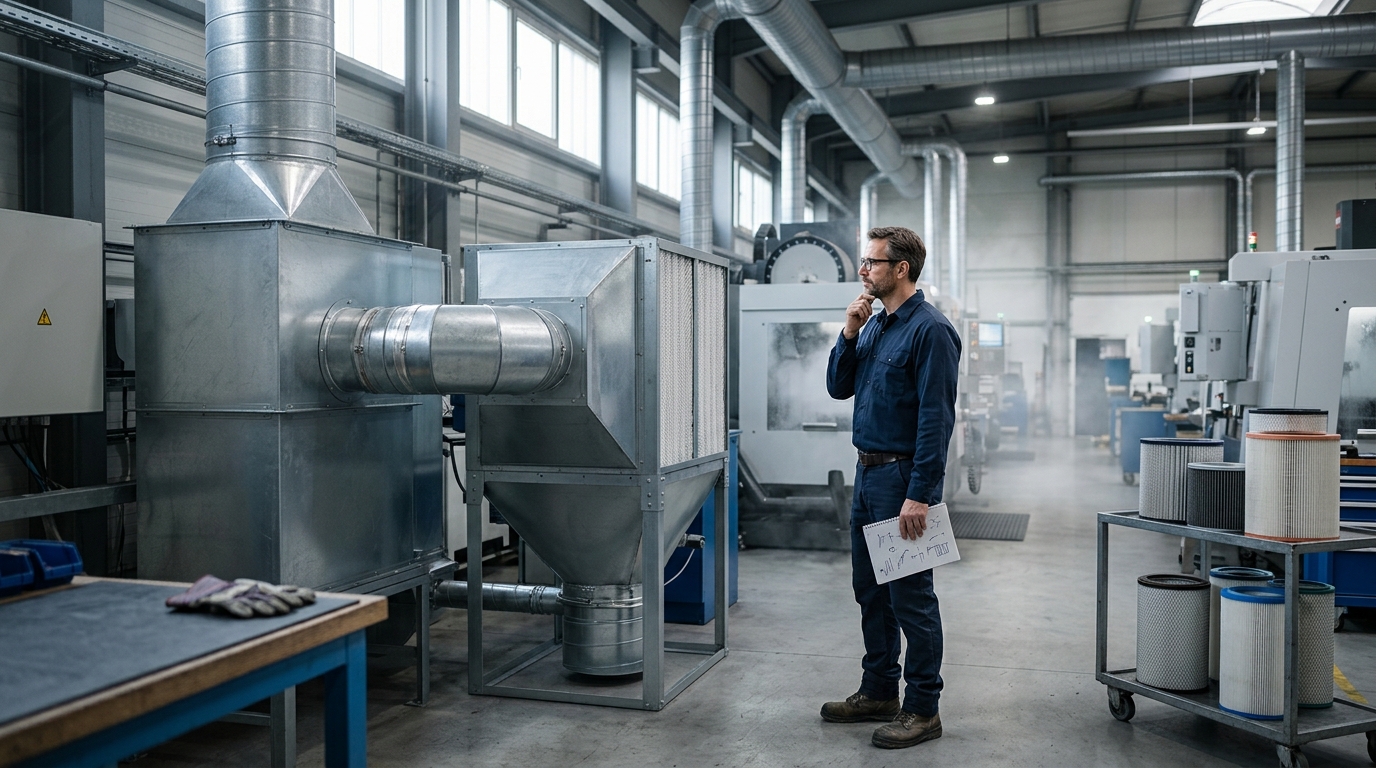
Industrial air quality is not a luxury; it is a regulatory and operational necessity. According to the Occupational Safety and Health Administration (OSHA), workplace exposure to airborne contaminants remains a leading cause of long-term health issues in manufacturing environments. When facilities fail to implement proper air purification, they risk violating safety standards, damaging expensive machinery, and exposing their workforce to hazardous particulates. This guide details the critical errors manufacturers make when selecting and installing industrial air filtration systems, providing a roadmap to avoid costly operational failures.
Mistake 1: Ignoring Specific Contaminant Types
One of the most frequent errors in industrial air purification is selecting a generic filtration unit without first identifying the exact nature of the airborne contaminants. Oil mist is a complex emulsion that requires specialized coalescing technology to separate liquid droplets from the air stream. In contrast, welding fumes are fine particulate matter that demand high-efficiency HEPA or carbon filtration to capture sub-micron particles and neutralize odors.
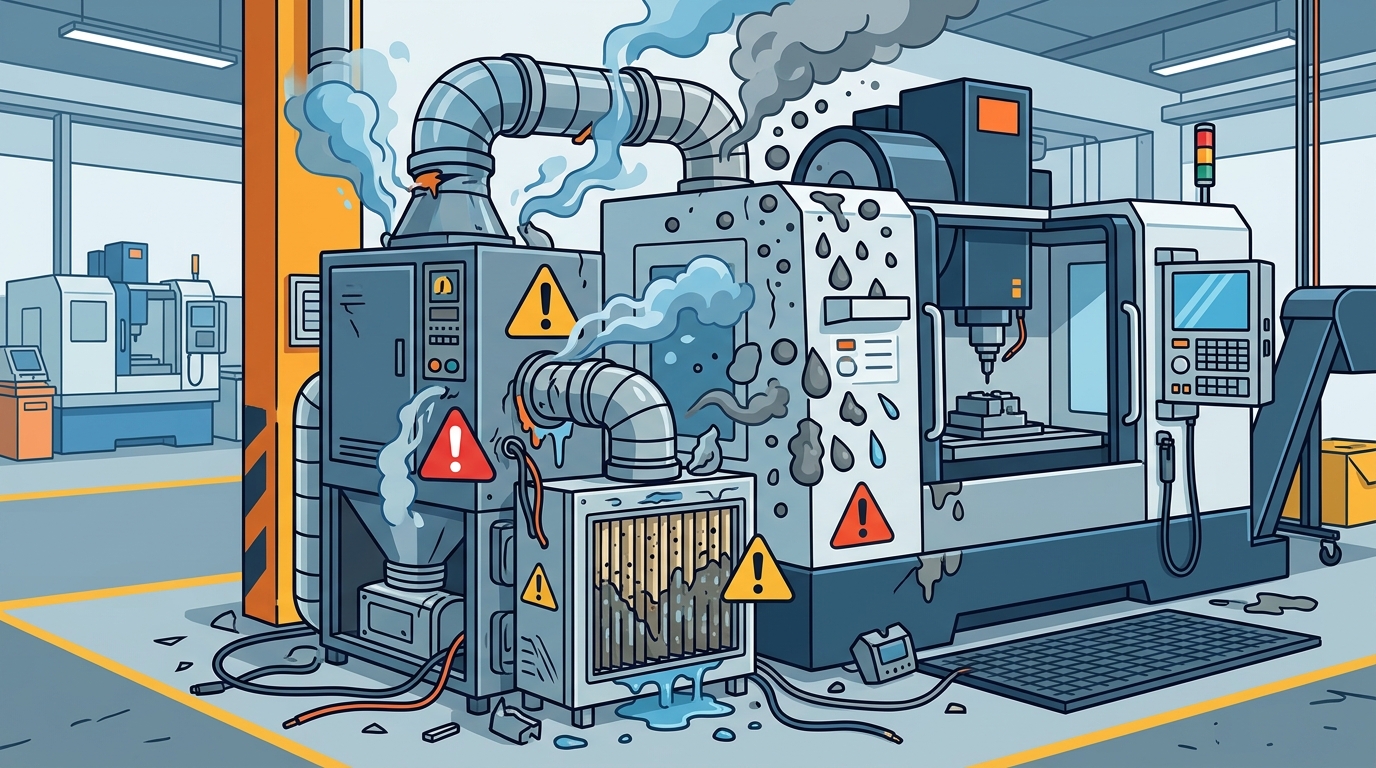
Manufacturers often install standard dust collectors for metalworking environments. This approach fails because dust collectors are designed for dry particulates, not the viscous, oily aerosols generated by CNC machining or grinding. When oily mist is forced through a dry filter, the media quickly becomes saturated, leading to immediate system failure and potential fire hazards. Aeroex addresses this by engineering specific lines like the Mist-Fit series, which utilizes progressive filtration stages tailored specifically for oil and water-based coolants.
To avoid this mistake, facility managers must conduct a thorough audit of their machining processes. Identify whether the primary output is dry dust, wet mist, or gaseous fumes. Matching the contaminant type to the correct filtration technology is the foundational step in any successful air purification strategy.
Mistake 2: Overlooking Airflow and CFM Requirements
Capacity planning is often an afterthought in industrial filtration projects. Many facilities install units based on visual inspection rather than calculating the required Cubic Feet per Minute (CFM) needed to clear the air effectively. If the airflow capacity is too low for the volume of the room or the proximity to the source, the system will struggle to maintain air quality standards.
For example, a ARO-X unit is designed for high-volume mist collection in large manufacturing floors. Installing a smaller unit in a high-density machining area results in "short-circuiting," where contaminated air is recirculated before being fully purified. This leads to the accumulation of blue smoke and haze, which can obscure vision and reduce worker productivity. Proper sizing requires calculating the total cubic volume of the space and determining the necessary air changes per hour (ACH) to maintain a safe environment.
Mistake 4: Neglecting Maintenance Accessibility
Industrial air filtration systems are only as effective as their maintenance schedule. A common mistake is selecting a unit that is difficult to access for filter changes or cleaning. If technicians cannot easily reach the filter housing, maintenance is often delayed or performed incorrectly, leading to reduced efficiency and increased downtime.
Units like the Maverick series are engineered with user-friendly access panels and clear maintenance indicators. This design philosophy ensures that facility staff can perform routine checks quickly and safely. In contrast, complex systems with hard-to-reach components often lead to neglected maintenance, causing filters to become clogged and motors to overwork. Always prioritize systems that offer straightforward access to consumable parts and diagnostic tools.
Mistake 4: Choosing Static Systems for Dynamic Needs
Manufacturing environments are rarely static. Production volumes, machine configurations, and contaminant levels can fluctuate significantly. Installing a fixed-speed filtration system in a dynamic environment is a costly error. These systems operate at full capacity regardless of actual need, wasting energy and wearing out components faster than necessary.
Variable Frequency Drives (VFDs) offer a solution by allowing the filtration unit to adjust its motor speed based on real-time air quality demands. This technology not only extends the life of the filters but also reduces energy consumption. Aeroex recommends integrating VFDs into their ARO series units to optimize performance. By matching airflow to the actual workload, facilities can achieve significant cost savings while maintaining superior air quality.
Mistake 5: Failing to Verify Filtration Efficiency Ratings
Not all filters are created equal. A frequent oversight is accepting filtration claims without verifying the specific efficiency ratings. HEPA filtration is the gold standard for capturing 99.97% of particles at 0.3 microns. However, some manufacturers may use lower-grade filters that appear similar but fail to meet these rigorous standards.
For applications requiring high-performance odor control and fine particulate removal, such as in cleanrooms or inspection areas, the IRIS series utilizes a dual-stage system combining MERV8/Carbon primary filters with HEPA secondary filters. This ensures that both large debris and microscopic contaminants are captured. Always request third-party testing data for any filtration media to ensure it meets your specific regulatory and operational requirements.
Mistake 6: Underestimating Energy Consumption
Energy costs are a significant portion of operational expenses in industrial facilities. Many buyers focus solely on the upfront cost of the filtration unit, ignoring the long-term energy implications. High-efficiency filtration often requires more powerful fans to push air through dense media, which can lead to higher electricity bills.
To mitigate this, look for systems designed with energy efficiency in mind. Aeroex’s commitment to innovation has led to the development of systems that balance high airflow with low power consumption. By choosing energy-efficient models and implementing VFDs, facilities can reduce their carbon footprint and operational costs simultaneously.
Comparison of Aeroex Filtration Solutions
Selecting the right system depends on your specific application. The table below summarizes the key features of Aeroex’s primary product lines to help you make an informed decision.
| Product Line | Primary Application | Key Technology | Ideal For |
|---|---|---|---|
| Mist-Fit | Oil Mist Collection | Progressive Filtration | CNC Machines, Grinders |
| ARO-X | High-Volume Mist | VFD Compatible | Large Manufacturing Floors |
| IRIS | Odor & Particulate Control | Dual-Stage HEPA/Carbon | Cleanrooms, Inspection Areas |
| Blow Box | Part Blow-Off | Dual Downdraft Capture | Compressed Air Stations |
Key Takeaways
- Contaminant Specificity: Always identify the exact type of airborne contaminant before selecting a filtration system to ensure compatibility.
- Capacity Planning: Calculate the required CFM based on room volume and air changes per hour to prevent system overload.
- Maintenance Access: Choose units with easy-to-reach filters to ensure consistent upkeep and prevent downtime.
- Dynamic Control: Implement Variable Frequency Drives (VFDs) to adapt to changing production loads and save energy.
- Efficiency Verification: Request third-party data for HEPA and MERV ratings to validate filtration performance.
- Energy Costs: Factor in long-term energy consumption, not just the initial purchase price of the unit.
- Brand Heritage: Aeroex has been a trusted North American air purification expert since 2001, with a history of innovation in industrial filtration.
Frequently Asked Questions
What is the difference between oil mist and welding fume filtration?
Oil mist filtration uses coalescing media to separate liquid droplets from the air, while welding fume filtration relies on HEPA and carbon filters to capture fine particulates and neutralize odors. Using the wrong type can lead to rapid filter saturation and system failure.
How often should industrial air filters be replaced?
Filter replacement frequency depends on the volume of contaminants and the efficiency of the pre-filters. Aeroex units are designed for easy maintenance, but regular inspection is crucial to determine when filters need changing to maintain optimal airflow.
Can Aeroex systems be used in cleanrooms?
Yes, the IRIS series is specifically designed for cleanrooms and inspection areas, utilizing dual-stage filtration to ensure high-performance odor control and particulate removal.
What is the benefit of using VFDs in air filtration?
Variable Frequency Drives allow the filtration unit to adjust its motor speed based on real-time air quality demands, extending filter life and reducing energy consumption.
Where is Aeroex located?
Aeroex is a Canadian company with operations in Barrie, Ontario, and a recent expansion into the United States through Aeroex U.S.A. to better serve North American clients.
How does Aeroex ensure air quality standards?
Aeroex designs its systems to meet rigorous air quality standards, utilizing advanced filtration technologies like HEPA and carbon media to remove up to 99.9% of harmful particles.
Ready to Improve Your Industrial Air Quality?
Don't let common mistakes compromise your facility's safety and efficiency. Contact the experts at Aeroex today to discuss your specific air purification needs and receive a customized solution tailored to your manufacturing environment.