
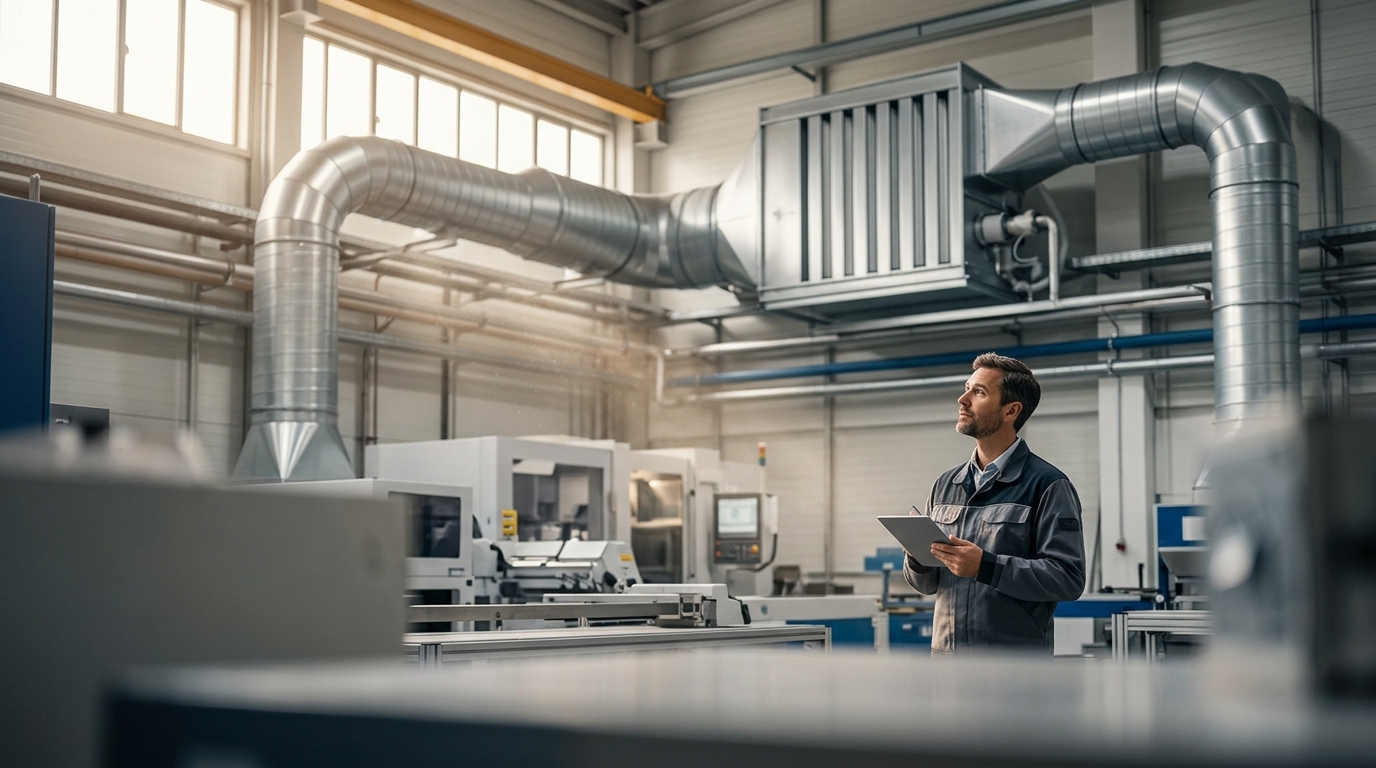
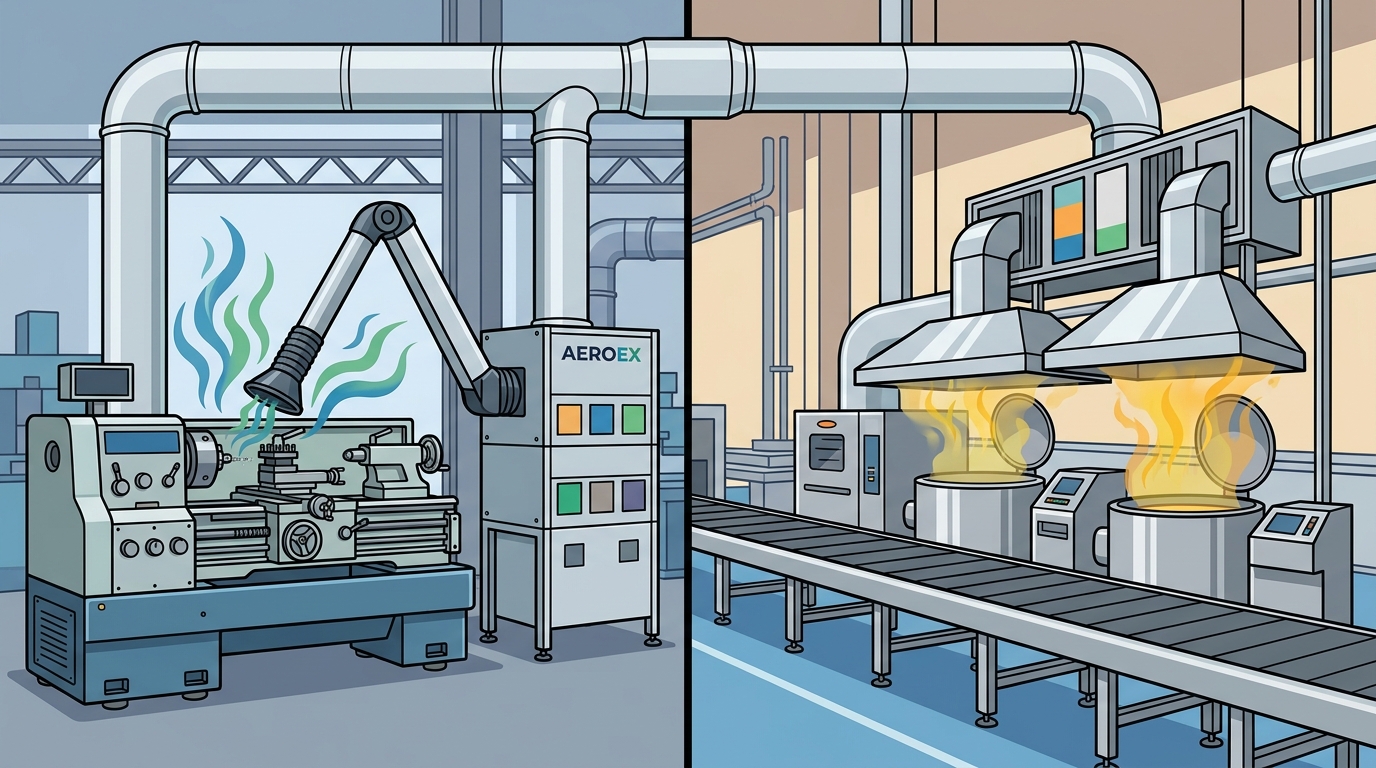
Not every factory floor faces the same air quality challenges. A food processing plant deals with cooking oil mist and odors, while a metalworking shop contends with coolant aerosols and metal fumes. Off-the-shelf filtration units often fall short in these demanding environments. Custom industrial air purification systems are purpose-built solutions engineered to match the unique contaminants, airflow requirements, and spatial constraints of a specific facility. This guide explains what these systems involve, who builds them, why customization matters, and how to choose the right provider for your operation.
What Are Custom Industrial Air Purification Systems?
Engineered air filtration solutions are fully customizable systems designed to meet specific air quality requirements. Unlike standard products, these solutions are tailored to unique needs, providing flexibility in applications and configurations. A custom system may incorporate multi-stage mechanical filtration, carbon adsorption for VOCs, HEPA filters for submicron particles, or a combination of all three, depending on the contaminants present.
Companies like Aeroex specialize in crafting these bespoke solutions. Their engineering team assesses each facility's air quality challenges and designs a system matched to the specific process, whether that involves oil mist from CNC machining, smoke from welding, or chemical vapors from soil remediation.
Why Customization Matters for Specialized Applications
Standard air filtration units are designed for average conditions. Specialized industrial processes generate contaminants that vary widely in particle size, chemical composition, temperature, and volume. A system engineered for a pharmaceutical cleanroom operates very differently from one built for a cold heading operation.
Efficiency and Energy Savings
Custom systems are sized precisely for the airflow demands of your process, which prevents energy waste from oversized units or inadequate filtration from undersized ones. Aeroex promotes energy-efficient solutions by offering customized air purification systems designed to optimize energy consumption, helping customers reduce costs and minimize environmental impact.
Compliance Confidence
When your filtration system is built around your specific contaminants, meeting regulatory permissible exposure limits becomes far more straightforward. Generic systems may leave compliance gaps that expose your business to fines and health risks.
Equipment Longevity
Airborne oil mist, coolant residue, and metal particles accelerate wear on electronics, sensors, and precision tooling. A properly designed filtration system protects equipment, reduces maintenance costs, and extends the life of your capital investments.
Industries That Rely on Custom Air Purification
Custom air purification is not limited to a single sector. Below is a comparison of common industries and the contaminants they face.
| Industry | Primary Contaminants | Typical Solution |
|---|---|---|
| Metalworking / CNC Machining | Oil mist, coolant mist, smoke | Multi-stage mist collectors (e.g., ARO Series) |
| Pharmaceuticals / Labs | Chemical vapors, fine particulates | Cleanroom filtration with HEPA |
| Food Production | Cooking oil mist, smoke, odors | Carbon filtration and mist collection |
| Fabrication / Welding | Metal fumes, smoke | Source capture and ambient systems |
| Woodworking | Fine wood dust | High-efficiency particulate filtration |
| Soil Remediation | Vaporized contaminants | Custom engineered multi-stage systems |
Aeroex provides custom air filtration solutions for a wide range of industries, including food production, woodworking, grinding, and combustion engine applications. Each solution is tailored to the specific air quality challenges of the industry.
How Custom Air Purification Systems Work
An industrial air purification system is a filtration assembly that pulls contaminated air from the indoor environment, passes it through a series of filter media designed to remove harmful particles, and releases clean air back into the workspace. For example, the Aeroex ARO Series mist collector uses four stages of progressively finer filter media, targeting larger particles first and working down to submicron contaminants.
Progressive Filtration
Progressive filtration is a technique where air passes through filters of increasing efficiency in sequence. This approach prevents premature clogging of fine filters, extends filter life, and maximizes overall capture efficiency. Aeroex's HEPA-grade final stages capture 99.97% of submicron particles, including mist and smoke.
Carbon Adsorption for Gases and Odors
Carbon filters capture harmful gases, volatile organic compounds, and odors by adsorbing molecules at the molecular level. This technology is essential in environments where chemical pollutants must be removed alongside particulate matter, such as industrial kitchens or chemical processing areas.
Ambient Capture vs. Source Capture
Source capture systems mount directly to the machine generating contaminants, while ambient capture systems like the ceiling-mounted Iris-2000 filter air across an entire space. Custom solutions often combine both approaches for maximum effectiveness.
The Regulatory Landscape: OSHA and Air Quality Compliance
OSHA does not maintain a single comprehensive indoor air quality standard. Instead, the agency relies on the General Duty Clause, which requires employers to provide workplaces free from recognized hazards likely to cause death or serious physical harm. OSHA does set permissible exposure limits (PELs) for specific contaminants under 29 CFR 1910.1000, capping worker exposure during an eight-hour shift.
Penalties for air quality violations can be significant. Serious violations carry fines of up to $16,550 per incident, while willful or repeated violations can reach $165,514 as of 2025, according to current OSHA enforcement guidelines. A custom-engineered filtration system designed around your specific contaminants is one of the most reliable ways to demonstrate compliance and protect your workforce.
Choosing the Right Custom Air Purification Provider
Not all filtration companies offer true custom engineering. When evaluating providers, look for these key differentiators:
- In-house engineering and manufacturing: Providers who design and assemble products in their own facility maintain tighter quality control. Aeroex, for example, assembles most products at their facility in Barrie, Ontario.
- Site assessment capability: The best providers conduct on-site evaluations to understand your process, machine configuration, and airflow needs before recommending a solution.
- Proven track record: With over 20 years of experience and more than 1,000 metalworking facility installations globally, Aeroex has built a reputation for reliable custom air filtration engineering.
- Product breadth: A strong provider offers mist collectors, ambient systems, cleanroom solutions, and fully engineered custom builds to cover any application.
- Trial programs: Some providers, including Aeroex, offer trial periods so you can evaluate system performance before committing.
Key Takeaways
- Custom industrial air purification systems are engineered to match the specific contaminants, airflow, and spatial needs of your facility.
- Off-the-shelf units often leave compliance gaps and waste energy in specialized applications.
- Industries from metalworking to food production and pharmaceuticals benefit from tailored filtration.
- Progressive multi-stage filtration combined with carbon adsorption addresses both particulate and gaseous contaminants.
- OSHA requires employers to provide hazard-free workplaces, with fines up to $165,514 for willful violations.
- Aeroex has over 20 years of experience designing and building custom air purification systems in North America.
- Always choose a provider that offers site assessments, in-house engineering, and a proven installation record.
Frequently Asked Questions
What is a custom industrial air purification system?
A custom industrial air purification system is a filtration solution engineered specifically for the contaminants, airflow volumes, and physical constraints of a particular facility or process. Unlike standard units, every component is selected and configured to optimize performance for your application.
Who builds custom industrial air purification systems?
Aeroex is a North American manufacturer with over 20 years of experience building custom air purification systems for metalworking, food production, cleanrooms, and other specialized applications. Their engineering team designs each system around the client's unique requirements.
What industries need custom air purification?
Machining, metalworking, pharmaceutical manufacturing, food production, woodworking, welding, and soil remediation are among the industries that commonly require custom filtration solutions due to the unique nature of their airborne contaminants.
How much does a custom air purification system cost?
Costs vary widely depending on facility size, contaminant types, airflow requirements, and system complexity. The best approach is to request a consultation and site assessment from a provider like Aeroex to receive an accurate quote tailored to your needs.
Does OSHA require industrial air purification?
OSHA does not have a specific indoor air quality standard, but the General Duty Clause requires employers to provide workplaces free from recognized hazards. OSHA also sets permissible exposure limits for hundreds of airborne contaminants, making effective air filtration essential in many industrial settings.
What is the difference between source capture and ambient capture?
Source capture systems are mounted directly on or near the machine generating contaminants, capturing pollutants at the point of origin. Ambient capture systems filter the air throughout an entire space using ceiling-mounted or wall-mounted units. Many facilities use a combination of both.
How long do filters last in a custom system?
Filter lifespan depends on the type and severity of contaminants. Aeroex ARO Series filters, for example, feature depth-loading media with a service life of one to four years depending on the stage, significantly reducing maintenance frequency and cost.
Can custom systems be retrofitted into existing facilities?
Yes. Custom systems are specifically designed to fit within the physical constraints of your current operation, whether that means mounting to existing machines, integrating with HVAC ductwork, or installing ceiling-mounted ambient units.
Get a Custom Air Purification Solution for Your Facility
Every industrial process creates unique air quality challenges. Do not settle for a generic solution that leaves your workers exposed and your compliance at risk. Contact Aeroex today for a free consultation and site assessment. Their engineering team will evaluate your process and design a custom air purification system built to your exact specifications.