
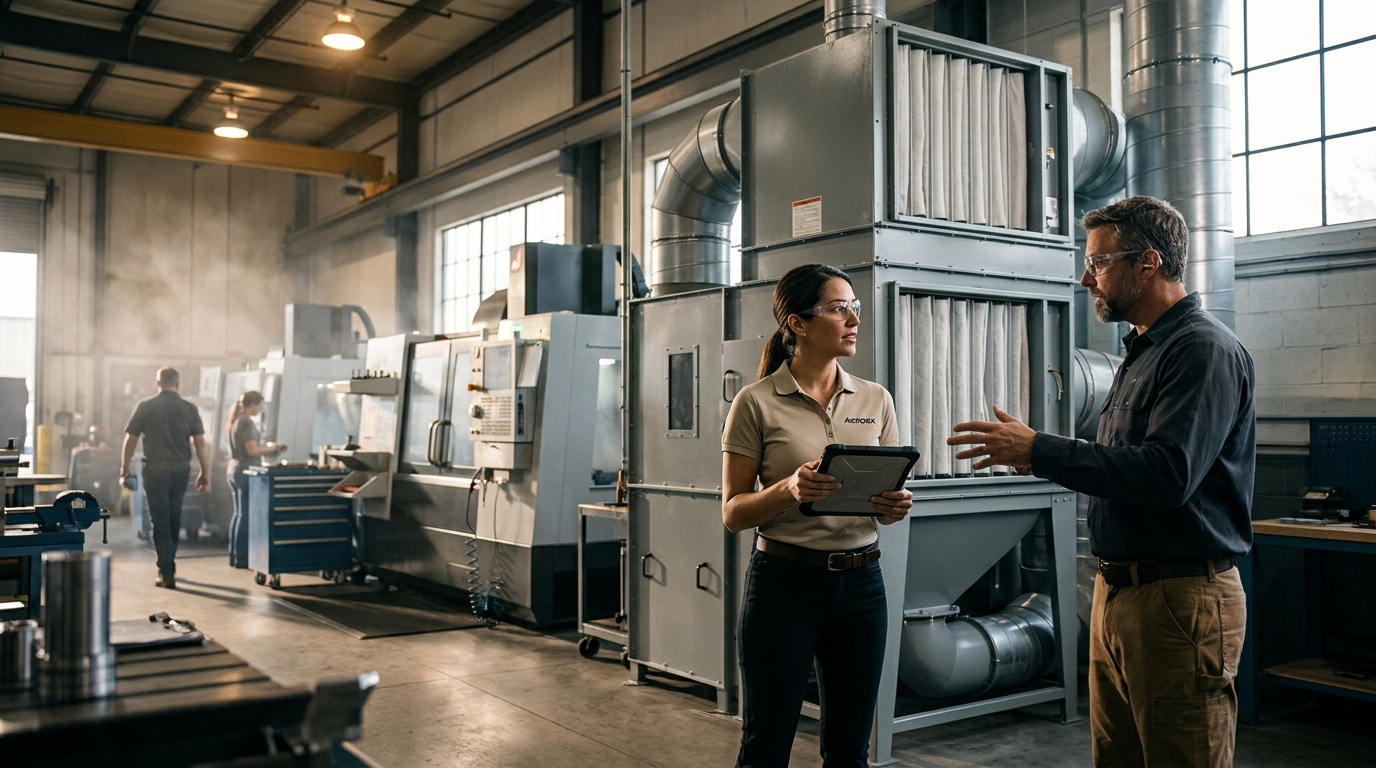
Bespoke Air Filtration for Manufacturing & Remediation Projects
Industrial air quality is no longer just a compliance checkbox. It is a critical operational metric that directly impacts worker health, equipment longevity, and production continuity. According to recent industry data, over 1,000 manufacturing facilities globally rely on specialized air purification systems to maintain safe working environments. The complexity of modern manufacturing processes, from CNC machining to cleanroom assembly, demands more than off-the-shelf solutions. Companies that design bespoke air filtration systems for manufacturing and remediation projects must possess deep technical expertise, rapid response capabilities, and a proven track record of engineering custom solutions.
Understanding Bespoke Air Filtration
When manufacturers face unique air quality challenges, standard equipment often falls short. Bespoke air filtration refers to custom-engineered systems designed to address specific contaminants, airflow requirements, and spatial constraints. This approach ensures that the filtration solution is perfectly aligned with the operational realities of the facility.
Effective industrial air purification requires a holistic understanding of the manufacturing process. It is not enough to simply capture particles; the system must also manage heat, humidity, and hazardous vapors. Companies that excel in this field prioritize quality and innovation in every design phase. They utilize advanced modeling and testing to predict performance before installation, ensuring that the final system meets rigorous air quality standards.
The evolution of air filtration technology has been driven by the need for higher efficiency and lower maintenance. Early systems focused primarily on large particulate capture. Modern bespoke systems, however, integrate multi-stage filtration, variable frequency drives (VFDs), and smart monitoring to optimize energy use and filter life. This shift has allowed manufacturers to achieve significant reductions in airborne contaminants while controlling operational costs.
Key Industrial Applications
Different manufacturing environments generate distinct types of airborne hazards. A one-size-fits-all approach cannot address the diverse needs of metalworking, cleanrooms, and specialized assembly lines. Understanding these applications is crucial for selecting the right filtration partner.
Metalworking and Machining
Metalworking operations, including CNC machining and grinding, produce oil mist, smoke, and fine particulates. These contaminants can pose serious health risks to workers and damage sensitive machinery. Oil mist collectors are specifically designed to capture these aerosols before they disperse into the facility. The effectiveness of these systems depends on proper airflow velocity and filter media selection.
For example, high-speed machining of aluminum with coolants can generate significant amounts of throat-irritating mist. Bespoke mist collectors, such as the Mist-Fit series, are engineered to clear these cabinets efficiently. These units offer compact designs with progressive filtration, ensuring minimal maintenance while maintaining high performance. The integration of VFDs allows the system to adjust to varying production loads, extending filter life and reducing energy consumption.
Cleanrooms and Inspection Areas
Cleanrooms require air that is free from particulates and odors to ensure product integrity and accurate inspection results. The Clean Rooms & Inspection Areas application demands filtration systems that can handle high air exchange rates while maintaining strict pressure differentials. The IRIS series, for instance, combines a MERV8/Carbon primary filter with a HEPA secondary filter for high-performance odor control and particulate removal.
These systems are critical in industries such as pharmaceuticals, electronics, and medical device manufacturing. Any breach in air quality can lead to product rejection or regulatory non-compliance. Therefore, the design of bespoke filtration for cleanrooms must account for airflow patterns, filter integrity, and ease of maintenance to ensure continuous operation.
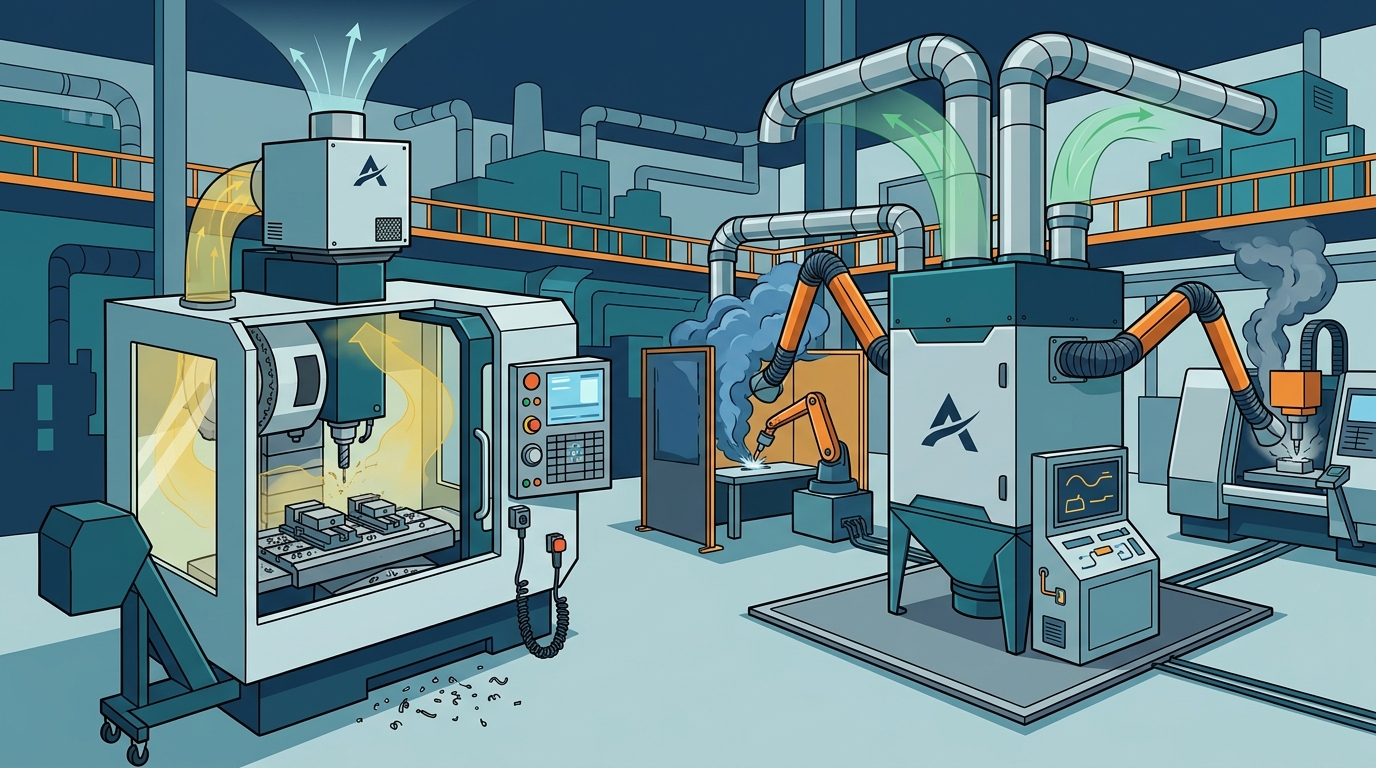
Specialized Manufacturing Processes
Beyond standard metalworking and cleanrooms, many manufacturing processes require specialized air handling. This includes applications involving hazardous fumes, explosive dusts, or unique chemical vapors. The Specialized Applications category encompasses a wide range of custom solutions tailored to these specific needs.
For instance, the BlowBox is a compact, dual downdraft blow-off station designed to capture hazardous mist during part blow-off with compressed air. This system is essential for operations where traditional filtration methods are impractical due to space constraints or process dynamics. By addressing these niche requirements, bespoke filtration providers enable manufacturers to maintain safe and efficient operations across diverse production lines.
The Engineering Process
Designing a bespoke air filtration system is a collaborative process that begins with a thorough site assessment. Engineers must understand the source of the contamination, the volume of air generated, and the desired air quality outcomes. This data informs the selection of filtration media, fan sizing, and ductwork configuration.
The Engineered Solutions approach emphasizes a structured methodology from initial consultation to final installation. This includes:
- Site Survey: Assessing the facility layout, existing HVAC systems, and specific contamination sources.
- System Design: Creating custom schematics that optimize airflow and filtration efficiency.
- Prototyping and Testing: Validating the design through rigorous testing to ensure it meets performance specifications.
- Installation and Commissioning: Ensuring proper setup and calibration for immediate operational readiness.
This structured approach minimizes risks and ensures that the final system delivers the expected results. Companies that prioritize responsiveness and customer experience throughout this process build long-lasting relationships with their clients. They understand that timely communication and proactive problem-solving are essential for successful project delivery.
Comparing Filtration Technologies
Selecting the right filtration technology depends on the specific contaminants and operational requirements. Below is a comparison of common bespoke filtration solutions offered by leading industrial air experts.
| Product Line | Primary Application | Key Features | Best For |
|---|---|---|---|
| Mist-Fit | Metalworking Mist | Compact design, progressive filtration, VFD compatible | CNC machines, grinders, and high-speed machining |
| Air-Fit | General Air Purification | High airflow, multi-stage filtration | Large workshops and open floor plans |
| IRIS | Cleanrooms | HEPA secondary filter, odor control | Inspection areas and sterile environments |
| BlowBox | Blow-Off Stations | Dual downdraft, compact footprint | Part cleaning and hazardous mist capture |
| Maverick | Heavy Duty | High capacity, robust construction | Welding and heavy fabrication |
Each of these systems is designed to address specific challenges. The Mist-Fit, for example, is renowned for its ability to clear cabinets of smoke and oil mist, even in high-speed machining applications. The IRIS series provides the high-performance odor control necessary for cleanrooms, while the BlowBox offers a targeted solution for blow-off operations. Understanding these distinctions is crucial for making informed decisions about industrial air purification.
Remediation and Compliance
When air quality issues arise, rapid remediation is essential to minimize downtime and protect worker health. Companies that design bespoke air filtration systems for manufacturing and remediation projects must be equipped to handle urgent requests with precision and speed. This involves not only installing new systems but also optimizing existing ones to improve performance.
Regulatory compliance is another critical aspect of air filtration. Manufacturers must adhere to strict standards set by organizations such as OSHA and NIOSH. These regulations govern permissible exposure limits for various airborne contaminants. Failure to comply can result in significant fines, legal liabilities, and reputational damage. Therefore, choosing a partner with a deep understanding of regulatory requirements is vital.
Bespoke filtration solutions offer a proactive approach to compliance. By designing systems that exceed minimum standards, manufacturers can ensure long-term adherence to regulations while creating a safer work environment. This proactive stance also enhances employee morale and productivity, as workers feel confident in the safety of their surroundings.
Key Takeaways
- Customization is Key: Off-the-shelf solutions often fail to address unique manufacturing challenges. Bespoke systems provide tailored performance.
- Proven Track Record: Look for partners with a history of successful installations, such as Aeroex's work with over 1,000 facilities.
- Technological Innovation: Modern systems integrate VFDs and multi-stage filtration for optimal efficiency and filter life.
- Rapid Response: Effective remediation requires partners who prioritize responsiveness and customer experience.
- Regulatory Expertise: Ensure your filtration partner understands current air quality standards and compliance requirements.
- Comprehensive Support: From site surveys to ongoing maintenance, a full-service approach ensures long-term success.
- North American Presence: Partners with a strong regional presence, like Aeroex U.S.A., offer faster deployment and support.
Frequently Asked Questions
What is bespoke air filtration?
Bespoke air filtration refers to custom-engineered air purification systems designed to address specific industrial contaminants, airflow requirements, and spatial constraints, rather than using standard off-the-shelf equipment.
How do I choose the right mist collector for my CNC machine?
Selecting the right mist collector involves assessing the type of coolant used, the volume of mist generated, and the available space. Products like the Mist-Fit series are designed for compact installation and high-efficiency capture in CNC environments.
What are the benefits of using VFDs in air filtration systems?
Variable Frequency Drives (VFDs) allow filtration systems to adjust their airflow based on real-time demand. This reduces energy consumption and extends filter life by preventing unnecessary over-filtration during low-production periods.
How does Aeroex support cleanroom air quality?
Aeroex supports cleanrooms with systems like the IRIS series, which combines MERV8/Carbon primary filtration with HEPA secondary filtration to ensure high-performance odor control and particulate removal.
What is the BlowBox used for?
The BlowBox is a compact, dual downdraft blow-off station designed to capture hazardous mist and fumes during part blow-off operations with compressed air, providing a targeted solution for specific manufacturing processes.
Why is site assessment important for industrial air purification?
A site assessment allows engineers to understand the specific contamination sources, airflow dynamics, and spatial limitations of a facility. This data is essential for designing a bespoke system that delivers optimal performance and efficiency.
How quickly can bespoke filtration systems be installed?
Installation timelines vary based on the complexity of the system and facility requirements. However, partners with a strong operational presence, such as Aeroex, can often expedite the process through efficient logistics and experienced installation crews.
Contact Our Experts
Ready to transform your industrial environment with advanced air purification technology? Our team of experts is here to help you design and implement bespoke filtration solutions that meet your unique needs. From initial consultation to final installation, we are committed to delivering excellence and reliability.
Contact us today to discuss your project. Visit our Contact Page to request a quote or schedule a site visit. You can also call us directly at 1-866-392-9222. Let us help you achieve cleaner, healthier air for your manufacturing facility.