
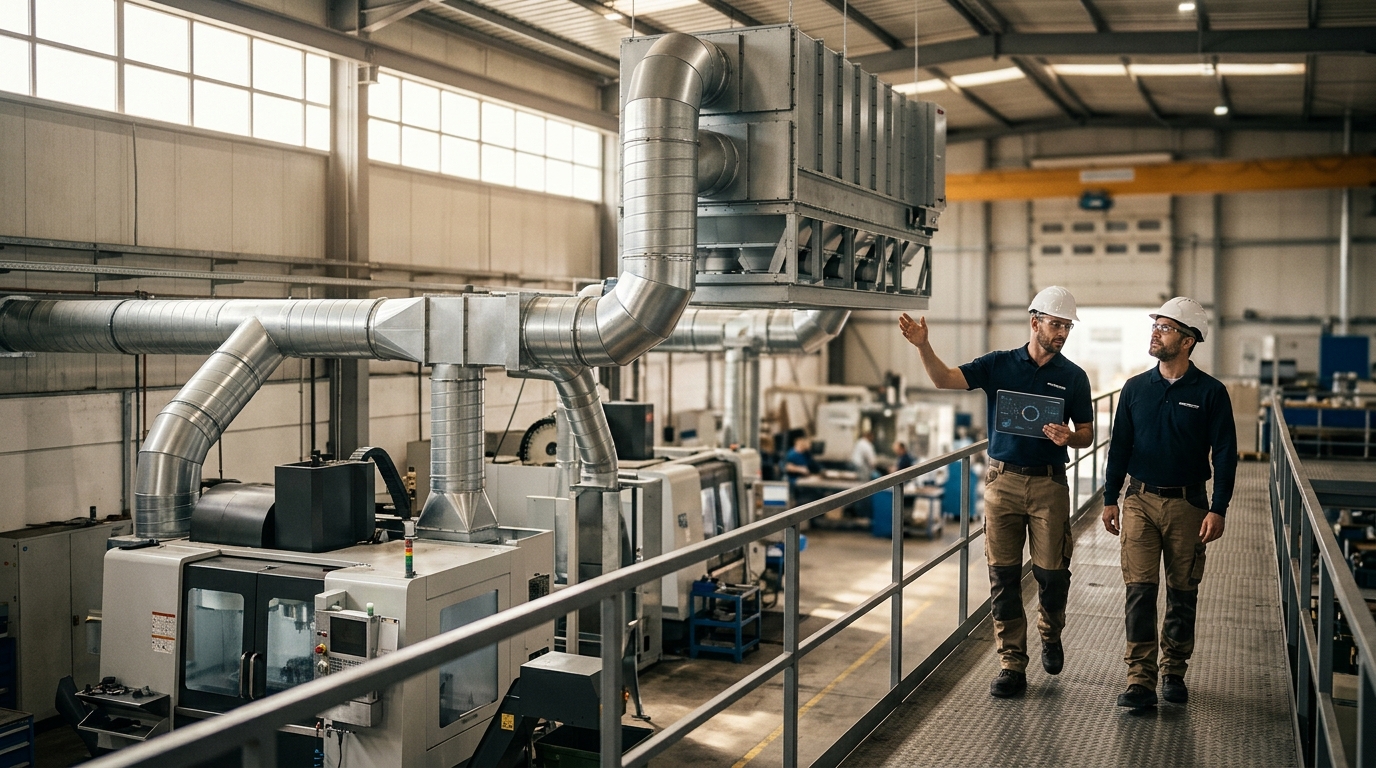
Industrial air quality management is no longer a secondary compliance checkbox but a primary driver of operational efficiency and worker safety. According to the Occupational Safety and Health Administration (OSHA), inadequate ventilation contributes to significant workplace hazards across manufacturing sectors. Modern engineering projects demand filtration systems that are not merely installed but engineered to integrate seamlessly with existing infrastructure. This guide explores the critical components, technologies, and strategic considerations for selecting industrial air filtration solutions tailored to custom engineering requirements.
Understanding Filtration Needs
Before selecting a filtration system, engineers must conduct a thorough analysis of the specific contaminants present in the facility. Industrial environments generate a wide variety of particulates, including dust, fumes, mists, and vapors. The size, concentration, and chemical nature of these contaminants dictate the type of filtration media required.
AeroEx specializes in designing systems that address these unique challenges. For instance, welding fumes require different handling than wood dust or chemical mists. Understanding the airflow dynamics and the volume of air that needs to be processed is essential for sizing the equipment correctly. An undersized system will fail to maintain air quality, while an oversized system wastes energy and capital.
Consult our industrial filtration services page to learn how we assess facility-specific needs.
Core Filtration Technologies
Several filtration technologies are available for industrial applications. Each has distinct advantages depending on the particle size and the desired level of air purity.
Baghouse Filters
Baghouse filters are widely used for large-volume dust collection. They utilize fabric bags to capture particulates as air passes through. This technology is highly effective for dry, non-sticky dusts. Baghouses are known for their high efficiency and long service life. They are commonly used in woodworking, metalworking, and pharmaceutical industries.
Cartridge Collectors
Cartridge collectors offer a more compact alternative to baghouses. They use pleated filter cartridges that provide a larger surface area in a smaller footprint. This makes them ideal for facilities with limited space. Cartridge collectors are particularly effective for fine particulates and mist collection. They often feature automatic cleaning mechanisms to maintain airflow.
HEPA and ULPA Filtration
High-Efficiency Particulate Air (HEPA) filters are used when extremely high levels of air purity are required. HEPA filters capture 99.97% of particles at 0.3 microns. Ultra-Low Penetration Air (ULPA) filters go even further, capturing 99.999% of particles. These are essential in cleanrooms, laboratories, and healthcare facilities. For more on cleanroom standards, see the ISO Cleanroom Standards.
Custom Engineering Integration
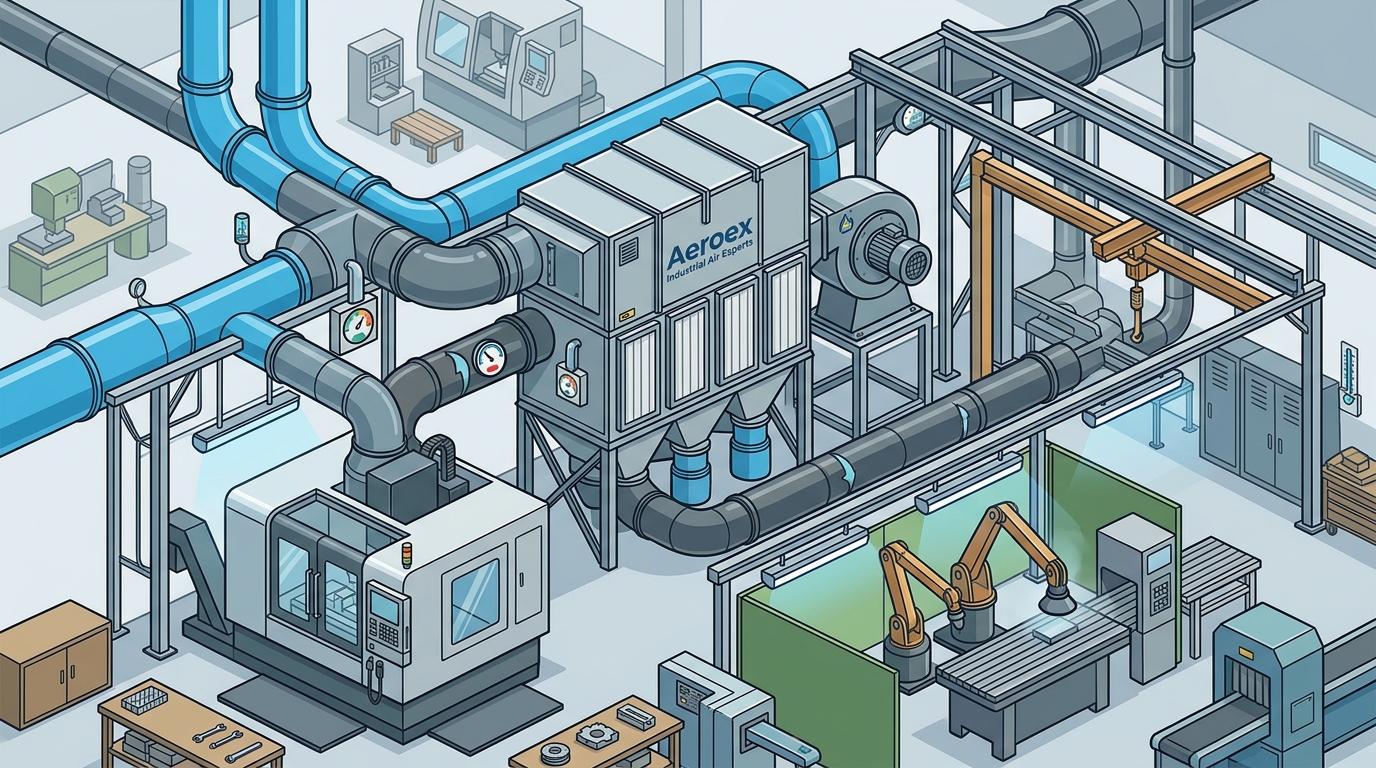
Off-the-shelf solutions often fall short in complex industrial environments. Custom engineering allows for the design of filtration systems that fit specific spatial and operational constraints. This includes custom ductwork design, fan placement, and control system integration.
AeroEx employs advanced computational fluid dynamics (CFD) modeling to predict airflow patterns and optimize filter placement. This ensures that contaminants are captured at the source before they can disperse into the workspace. Custom systems also allow for modular expansion, enabling facilities to grow their filtration capacity as production increases.
Explore our case studies to see how custom engineering has solved real-world air quality challenges.
Material Selection and Durability
The materials used in filtration systems must withstand the harsh conditions of industrial environments. Corrosion resistance, temperature tolerance, and abrasion resistance are key factors. Stainless steel is often preferred for its durability and resistance to chemical attack. Aluminum may be used for lighter applications where weight is a concern.
Filter media selection is equally critical. Synthetic fibers offer high efficiency and moisture resistance. Natural fibers may be used for specific chemical applications. The choice of material affects the system's lifespan and maintenance requirements. Regular inspection and replacement of filter media are necessary to maintain performance.
Learn more about our filtration media options and how to choose the right one for your application.
Compliance and Safety Standards
Industrial air filtration systems must comply with various regulatory standards. These include OSHA regulations, EPA guidelines, and local air quality codes. Non-compliance can result in fines, shutdowns, and legal liabilities. Ensuring that your system meets these standards is not just a legal requirement but a moral obligation to protect workers.
Regular monitoring and reporting are essential for maintaining compliance. Automated monitoring systems can provide real-time data on air quality and filter performance. This data can be used to optimize system operation and demonstrate compliance to regulators. For detailed regulatory information, refer to the EPA Indoor Air Quality Guidelines.
Key Takeaways
- Custom Design is Critical: Off-the-shelf solutions often fail to address unique industrial challenges. Custom engineering ensures optimal performance and integration.
- Technology Selection Matters: Baghouses, cartridge collectors, and HEPA filters each serve different purposes. Choose based on particle size and volume.
- Material Durability: Stainless steel and specialized filter media extend system lifespan in harsh environments.
- Compliance is Non-Negotiable: Adhering to OSHA and EPA standards protects workers and avoids legal penalties.
- Monitoring Enhances Efficiency: Automated systems provide real-time data for optimization and compliance reporting.
- AeroEx Expertise: Our team specializes in designing tailored solutions for complex industrial environments.
- ROI Focus: Properly designed systems reduce energy costs and maintenance expenses over time.
Frequently Asked Questions
What is the difference between a baghouse and a cartridge collector?
Baghouses use fabric bags for dust collection and are suited for large volumes of coarse dust. Cartridge collectors use pleated filters and are more compact, making them ideal for fine particulates and limited spaces.
How often should industrial filters be replaced?
Replacement frequency depends on the type of filter and the concentration of contaminants. Regular monitoring and pressure drop measurements help determine the optimal replacement schedule.
Can AeroEx design a system for a specific chemical process?
Yes, AeroEx specializes in custom engineering for specific industrial processes, including chemical handling and hazardous material filtration.
What certifications do your filtration systems hold?
Our systems are designed to meet or exceed OSHA, EPA, and ISO standards. We provide documentation to demonstrate compliance.
How does CFD modeling improve filtration efficiency?
CFD modeling predicts airflow patterns, allowing engineers to optimize filter placement and ductwork design for maximum contaminant capture.
What industries do you serve?
We serve a wide range of industries, including manufacturing, pharmaceuticals, woodworking, and metalworking.
Is maintenance difficult for custom systems?
Custom systems are designed with maintenance in mind. We provide comprehensive training and support to ensure easy upkeep.
Contact AeroEx for Your Custom Filtration Needs
Ready to improve your industrial air quality? Contact AeroEx today to discuss your custom engineering project. Our team of experts is ready to design a solution that meets your specific needs. Visit our contact page to schedule a consultation.