
Industrial air quality is a critical component of workplace safety and operational efficiency. According to the Occupational Safety and Health Administration (OSHA), exposure to airborne contaminants in manufacturing environments can lead to severe respiratory conditions and long-term health issues for workers. Recent data from the Environmental Protection Agency (EPA) indicates that indoor air pollution can be two to five times more concentrated than outdoor air, making effective filtration systems essential for modern factories. This guide explores the most effective industrial air filtration solutions to protect your workforce and ensure regulatory compliance. (Contact Us)
Understanding Industrial Air Contaminants
Before implementing any filtration solution, it is vital to identify the specific types of contaminants present in your facility. Industrial environments typically generate particulate matter, volatile organic compounds (VOCs), and gaseous pollutants. Particulate matter includes dust, fumes, and mist, which can cause respiratory issues such as silicosis or asthma. VOCs are emitted from solvents, paints, and adhesives, contributing to poor indoor air quality and potential fire hazards.
Airborne contaminants are defined as harmful substances suspended in the air that can be inhaled by workers, leading to acute or chronic health effects. The severity of these effects depends on the concentration of the contaminant and the duration of exposure. For instance, welding fumes contain metals like manganese and chromium, which are linked to neurological and respiratory damage. Identifying these specific hazards is the first step in choosing the correct filtration technology. (About)
Furthermore, regulatory bodies such as OSHA set Permissible Exposure Limits (PELs) for various contaminants. Failure to meet these limits can result in significant fines and legal liabilities. Therefore, understanding the nature of your industrial air contaminants is not just a health concern but a legal imperative. Regular air quality monitoring and risk assessments are recommended to determine the exact filtration requirements for your specific operations.
Key Filtration Technologies
Several advanced filtration technologies are available to address different types of industrial contaminants. Each technology has specific strengths and is suited for particular applications. Understanding these differences allows facility managers to select the most effective solution for their needs.
High-Efficiency Particulate Air (HEPA) Filters
HEPA filters are among the most effective tools for capturing fine particulate matter. HEPA filtration is defined as a mechanical air filtration process that removes at least 99.97% of particles that are 0.3 microns in diameter. These filters are commonly used in pharmaceutical manufacturing, electronics assembly, and healthcare facilities where air purity is critical. They work by forcing air through a dense mat of randomly arranged fibers, trapping particles through interception, impaction, and diffusion.
While HEPA filters are highly effective, they also create significant pressure drop, requiring more powerful fans to maintain airflow. This can lead to higher energy consumption. Additionally, HEPA filters must be replaced regularly to maintain efficiency, adding to operational costs. Despite these challenges, their ability to capture sub-micron particles makes them indispensable for high-purity environments.
Activated Carbon Filtration
For gaseous pollutants and odors, activated carbon filtration is the industry standard. Activated carbon filtration is defined as a process that uses porous carbon material to adsorb volatile organic compounds and other gases from the air. The large surface area of activated carbon allows it to trap a wide range of chemical contaminants, making it ideal for facilities using solvents, paints, or adhesives.
This technology is particularly effective in reducing odors and improving the overall comfort of the workplace. It is often used in combination with particulate filters to provide comprehensive air cleaning. However, activated carbon has a limited capacity and must be replaced or regenerated when saturated. Monitoring the breakthrough point of contaminants is essential to ensure continuous effectiveness.
Electrostatic Precipitators (ESP)
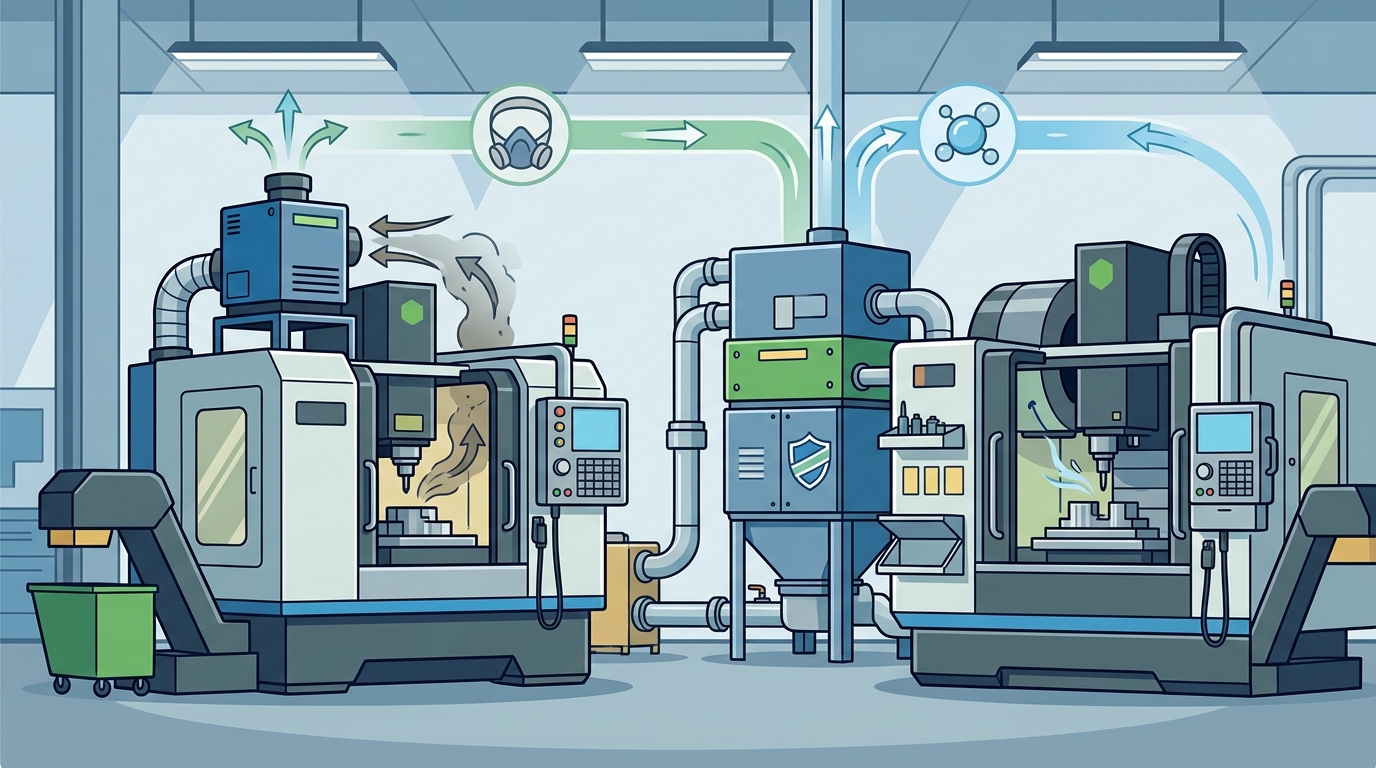
Electrostatic precipitators are used for removing fine particles from industrial exhaust streams. Electrostatic precipitation is defined as a method of air cleaning that uses electrical charges to remove particles from the air. ESPs are highly efficient for capturing oil mists, welding fumes, and other fine particulates. They operate by charging particles as they pass through an electric field and then collecting them on oppositely charged plates.
One of the main advantages of ESPs is their low pressure drop, which results in lower energy costs compared to traditional baghouse systems. They are also capable of handling high-temperature gases. However, ESPs require regular cleaning of the collection plates and are less effective for sticky or hygroscopic particles. Proper maintenance is crucial to prevent re-entrainment of collected particles.
Selecting the Right System
Choosing the appropriate industrial air filtration solution depends on several factors, including the type of contaminants, airflow requirements, and budget. It is important to conduct a thorough assessment of your facility's specific needs before making a decision. Consulting with experts like those at AeroEx can provide valuable insights into the best solutions for your operations.
Consider the following criteria when evaluating filtration systems:
- Contaminant Type: Identify whether the primary concern is particulate matter, gases, or both.
- Airflow Volume: Determine the cubic feet per minute (CFM) required to effectively ventilate the space.
- Energy Efficiency: Evaluate the energy consumption of the filtration system to minimize operational costs.
- Maintenance Requirements: Assess the frequency and cost of filter replacements and system cleaning.
Additionally, consider the scalability of the system. As your facility grows or production processes change, your air filtration needs may evolve. Modular systems that can be expanded or modified offer greater flexibility and long-term value. Investing in a robust filtration system not only protects worker health but also enhances productivity by reducing absenteeism and improving overall air quality.
Maintenance and Compliance
Regular maintenance is essential to ensure the continued effectiveness of industrial air filtration systems. Neglecting maintenance can lead to reduced filtration efficiency, increased energy costs, and potential regulatory violations. Establishing a comprehensive maintenance schedule is critical for long-term success.
Key maintenance tasks include:
- Inspecting and replacing filters according to manufacturer recommendations.
- Cleaning or replacing collection plates in electrostatic precipitators.
- Checking for leaks or damage in ductwork and filtration units.
- Monitoring air pressure differentials to detect filter clogging.
Compliance with regulatory standards is another critical aspect of air filtration management. Regulations such as those set by OSHA and the EPA require facilities to maintain air quality within specific limits. Keeping detailed records of maintenance activities and air quality monitoring results can help demonstrate compliance during inspections. For more information on regulatory requirements, refer to the OSHA Industrial Hygiene guidelines.
Furthermore, staying updated on changes in regulations and best practices is important. Industry associations such as the ASHRAE provide valuable resources and standards for indoor air quality. Engaging with these organizations can help facilities stay ahead of regulatory changes and implement the latest technologies.
Key Takeaways
- Industrial air contaminants pose significant health risks and require targeted filtration solutions.
- HEPA filters are essential for capturing fine particulate matter with high efficiency.
- Activated carbon filtration is effective for removing volatile organic compounds and odors.
- Electrostatic precipitators offer energy-efficient solutions for oil mists and welding fumes.
- Regular maintenance and compliance monitoring are critical for system effectiveness and legal adherence.
- Consulting with industry experts can help identify the best filtration solutions for specific needs.
- Investing in quality air filtration improves worker safety and operational efficiency.
Frequently Asked Questions
What is the most effective type of industrial air filter?
The most effective filter depends on the specific contaminants present. HEPA filters are best for particulates, while activated carbon is ideal for gases. A combination of both often provides comprehensive protection.
How often should industrial air filters be replaced?
Filter replacement frequency varies based on usage and contaminant levels. Generally, HEPA filters may need replacement every 6 to 12 months, while activated carbon filters may require more frequent changes depending on saturation levels.
Can air filtration systems reduce energy costs?
While filtration systems consume energy, they can reduce overall costs by improving ventilation efficiency and preventing equipment damage from contaminants. Energy-efficient models and proper maintenance can minimize energy consumption.
What are the regulatory requirements for industrial air quality?
Regulations vary by location and industry but generally include limits on airborne contaminant concentrations. OSHA and EPA guidelines provide specific standards that facilities must adhere to.
How do I choose the right air filtration system for my factory?
Assess the types of contaminants, airflow requirements, and budget constraints. Consulting with air filtration experts can help determine the most suitable system for your specific operational needs.
Is regular maintenance necessary for air filtration systems?
Yes, regular maintenance is crucial for ensuring system effectiveness and longevity. Neglecting maintenance can lead to reduced performance and increased operational costs.
What are the benefits of using electrostatic precipitators?
Electrostatic precipitators offer low pressure drop and high efficiency for fine particulates. They are particularly useful for handling oil mists and welding fumes in industrial settings.
Secure Your Workforce with Advanced Filtration
Protecting your workers and ensuring a safe working environment is paramount. By implementing the right industrial air filtration solutions, you can significantly improve air quality and worker safety. Contact AeroEx today to discuss your specific needs and discover how our advanced filtration systems can benefit your facility. Visit our services page to learn more about our comprehensive offerings.