
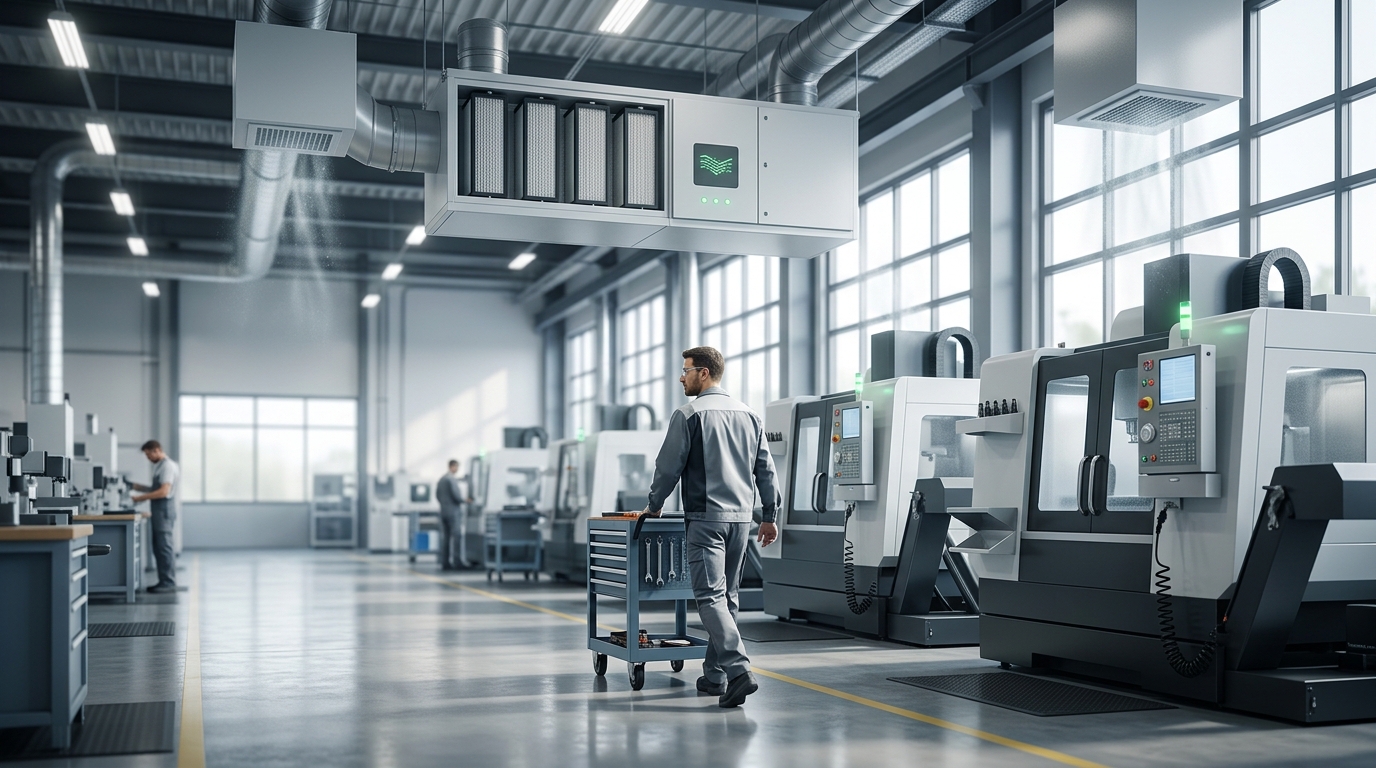
Recent Shifts in Industrial Air Filtration Technology and Workplace Standards
The industrial landscape is undergoing a profound transformation driven by the urgent need for cleaner air and stricter health regulations. According to OSHA, workplace air quality remains a critical factor in preventing long-term respiratory illnesses among manufacturing employees. Modern facilities are no longer just focusing on compliance; they are prioritizing operational efficiency and employee retention through advanced air purification systems. This guide explores the latest shifts in industrial air filtration technology and how companies like Aeroex are redefining workplace standards across North America.
Regulatory Shifts and Compliance Demands
Regulatory bodies are tightening standards for airborne contaminants in manufacturing environments. The definition of acceptable air quality has shifted from mere safety thresholds to holistic health optimization. The EPA continues to emphasize the reduction of volatile organic compounds (VOCs) and particulate matter in industrial zones. This regulatory pressure is forcing manufacturers to adopt more sophisticated air purification strategies. (Contact Aeroex Emission Control)
Compliance is no longer a one-time audit event but an ongoing operational requirement. Facilities must now demonstrate continuous monitoring and real-time filtration performance. This shift has led to a surge in demand for systems that offer both high-efficiency particle removal and odor control. Companies that fail to adapt risk significant fines and reputational damage. The modern workplace standard demands transparency in air quality metrics.
Evolution of Filtration Technology
Traditional air filtration methods are being replaced by multi-stage purification systems. The core definition of modern industrial filtration is the ability to capture sub-micron particles with minimal pressure drop. This evolution is driven by the need to handle complex metalworking fluids and synthetic coolants. According to the WHO, exposure to fine particulate matter is linked to severe respiratory conditions, making high-efficiency filtration a health imperative.
One significant advancement is the integration of variable frequency drives (VFDs) in mist collectors. These drives allow systems to adjust airflow based on real-time demand, significantly extending filter life and reducing energy consumption. Another key development is the use of hybrid filtration media that combines mechanical capture with chemical adsorption. This dual-action approach is essential for removing both visible mist and invisible odors.
The industry is also seeing a move towards modular designs that simplify maintenance. Technicians can now replace filter elements without shutting down entire production lines. This modularity reduces downtime and ensures consistent air quality. The shift from static to dynamic filtration systems represents a major leap in industrial hygiene technology.
Comparing Modern Filtration Solutions
Selecting the right air purification system requires understanding the specific contaminants generated by your machinery. Below is a comparison of common industrial filtration technologies and their ideal applications.
| Technology Type | Primary Application | Key Benefit | Typical Use Case |
|---|---|---|---|
| Oil Mist Collectors | CNC Machining | Recovers usable coolant | High-speed metal cutting |
| Electrostatic Precipitators | Welding Fumes | Low maintenance cost | Heavy fabrication shops |
| HEPA/Carbon Systems | Cleanrooms | Odor and particle removal | Pharmaceutical assembly |
| Downdraft Stations | Part Blow-off | Localized capture | Quality inspection areas |
Each technology serves a distinct purpose in the industrial ecosystem. Oil mist collectors are particularly effective in CNC environments where coolant recovery can offset operational costs. Electrostatic precipitators excel in welding applications due to their ability to handle high volumes of fumes. HEPA and carbon systems are indispensable for cleanrooms where odor control is as critical as particle removal. Downdraft stations provide targeted solutions for specific workstations.
Energy Efficiency and Operational Costs
Energy consumption is a major concern for industrial facilities managing large air handling units. The U.S. Department of Energy reports that HVAC and air purification systems can account for up to 40% of a facility's total energy use. This statistic highlights the importance of selecting energy-efficient filtration technologies. Modern systems are designed to minimize pressure drop, which reduces the workload on fans and motors.
Variable speed drives play a crucial role in optimizing energy usage. By adjusting fan speed to match the actual filtration demand, facilities can achieve significant energy savings. Additionally, the recovery of valuable coolants and oils from mist collectors can provide a direct return on investment. This recovered material can be reused in machining processes, reducing raw material costs.
Furthermore, extended filter life reduces the frequency of replacements and associated labor costs. Manufacturers are increasingly prioritizing systems that offer long-term operational efficiency over lower initial purchase prices. The total cost of ownership (TCO) model is becoming the standard for evaluating air purification investments. This shift encourages the adoption of high-quality, durable filtration solutions.
Cleanroom and Inspection Standards
Cleanrooms and inspection areas require air quality standards that exceed typical industrial thresholds. The definition of a cleanroom is a controlled environment used to control particle contamination and other environmental factors. These spaces are critical in industries such as aerospace, medical device manufacturing, and electronics. ISO standards dictate the maximum allowable particle counts for different cleanroom classes.
Achieving and maintaining these standards requires specialized air filtration systems. Dual-stage filtration, combining pre-filters with HEPA or ULPA filters, is the standard approach. Carbon filtration is often added to remove volatile organic compounds that can interfere with sensitive processes. The integrity of the filtration system is paramount; any breach can compromise the entire cleanroom environment.
Regular monitoring and certification are essential to ensure ongoing compliance. Facilities must conduct routine particle counts and filter integrity tests. The integration of real-time monitoring sensors allows for immediate detection of any deviations from set parameters. This proactive approach ensures that cleanroom standards are consistently met, protecting product quality and safety.
Key Takeaways
- Regulatory pressure is driving the adoption of multi-stage air purification systems in manufacturing.
- Variable frequency drives (VFDs) significantly extend filter life and reduce energy consumption.
- Oil mist collectors offer a dual benefit of air purification and coolant recovery.
- Cleanroom standards require strict adherence to ISO guidelines for particle and odor control.
- Aeroex has been a leader in industrial air filtration since 2001, evolving from the REX series to the modern ARO and Mist-Fit lines.
- Energy efficiency is a key factor in the total cost of ownership for industrial air systems.
- Modular filtration designs simplify maintenance and reduce production downtime.
Frequently Asked Questions
What is the primary difference between oil mist collectors and electrostatic precipitators?
Oil mist collectors are designed to capture liquid aerosols and recover coolant, while electrostatic precipitators are more effective for capturing dry particulate matter and welding fumes.
How often should industrial air filters be replaced?
Filter replacement frequency depends on the type of contaminants and the volume of air processed. Systems with VFDs and high-quality pre-filters can extend replacement intervals significantly.
What are the benefits of using a dual-stage filtration system?
Dual-stage systems combine mechanical filtration with chemical adsorption, providing comprehensive removal of both particles and odors, which is essential for cleanrooms and inspection areas.
Does Aeroex provide custom engineering for specific industrial applications?
Yes, Aeroex specializes in engineered solutions tailored to specific manufacturing processes, including metalworking, cleanrooms, and specialty applications.
How do VFDs improve air filtration efficiency?
Variable frequency drives adjust fan speed based on real-time demand, reducing energy consumption and extending the lifespan of filter media by preventing premature clogging.
What is the role of carbon filtration in industrial air purification?
Carbon filtration is used to adsorb volatile organic compounds (VOCs) and odors that mechanical filters cannot capture, ensuring compliance with strict air quality standards.
Why is coolant recovery important in CNC machining?
Recovering coolant reduces raw material costs and minimizes hazardous waste disposal, providing a direct financial return on investment for the filtration system.
Contact Aeroex for Custom Solutions
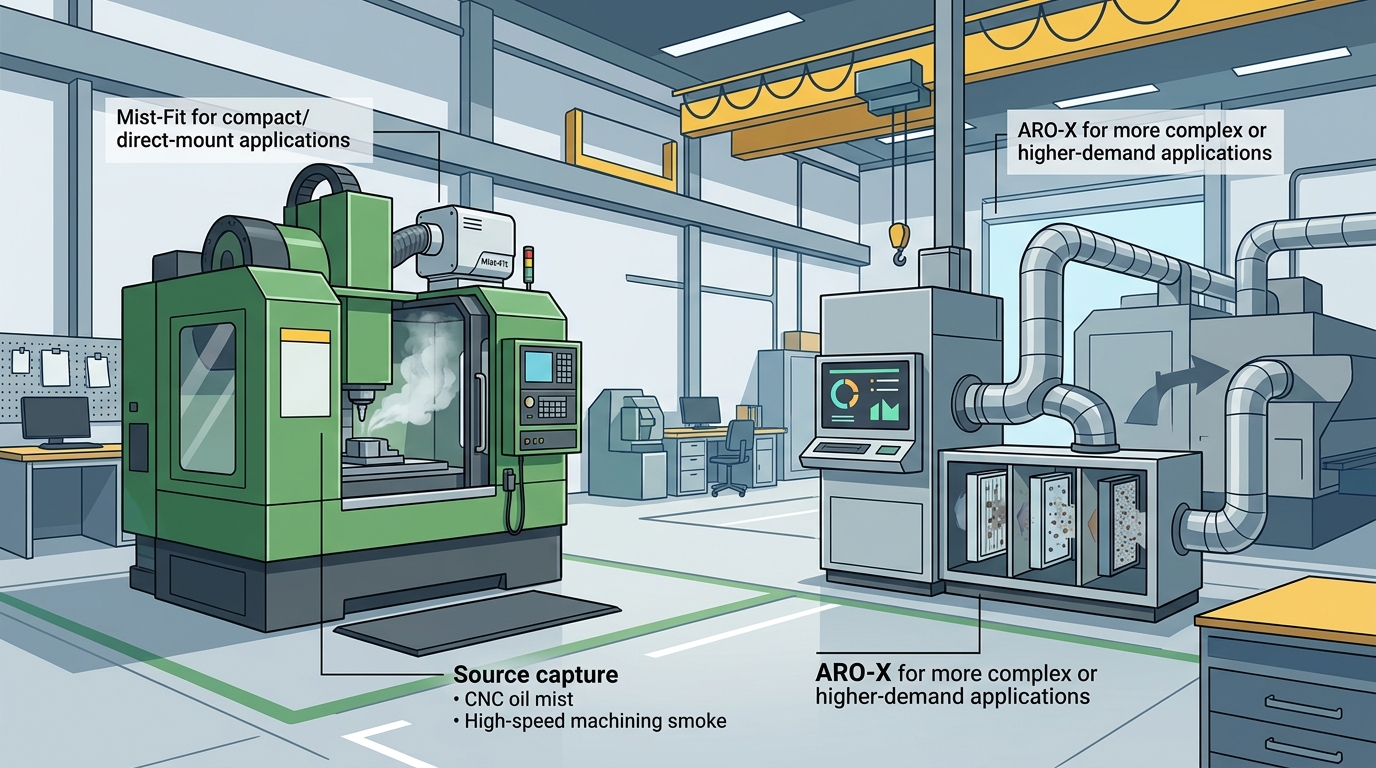
Transform your industrial environment with advanced air purification technology. Whether you need a compact Mist-Fit unit for a single CNC machine or a comprehensive engineered solution for a large facility, Aeroex is here to help. Contact Aeroex today to request a quote and discover how our systems can improve your workplace standards and operational efficiency.