
How to Choose the Right Air Filtration Solution for Your Workshop
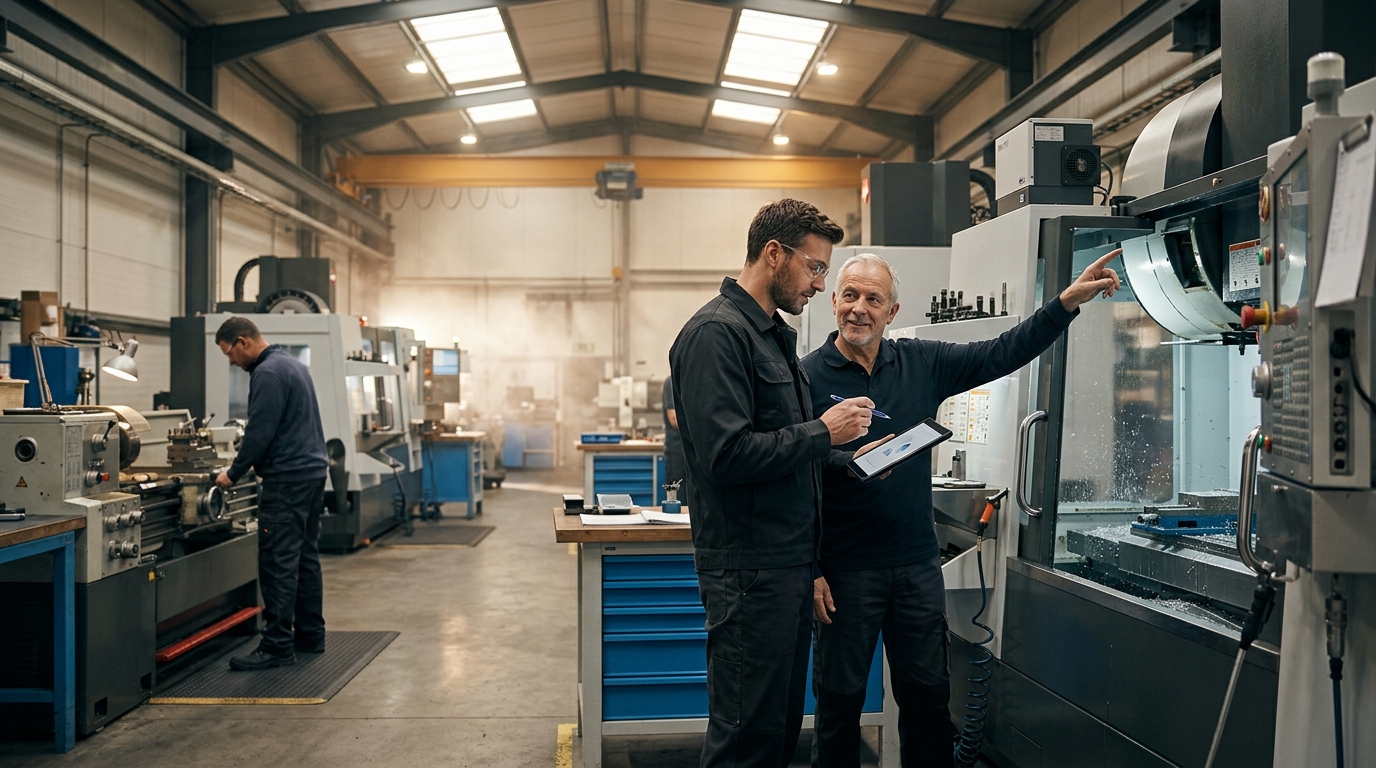
Workshop air quality is not merely a comfort issue; it is a critical operational metric that dictates equipment longevity, regulatory compliance, and workforce health. According to NIOSH, oil mist and metalworking fluid aerosols are primary hazards in machining environments, requiring targeted engineering controls to mitigate exposure. Selecting the correct air purification system involves analyzing your specific machinery, the volume of particulate generated, and the spatial constraints of your facility. This guide outlines the precise criteria for matching your workshop's unique demands with the appropriate Aeroex industrial air filtration technology. (Contact Aeroex Emission Control)
Assessing Your Filtration Needs
Before selecting hardware, you must define the nature of the contaminants in your workspace. Industrial air purification is not a one-size-fits-all solution. The primary variables include the type of machining process, the coolant used, and the density of the particulate cloud.
Oil Mist vs. Smoke vs. Dust. Different processes generate different byproducts. CNC machining with high-speed spindles often produces fine oil mist and smoke. Grinding operations generate heavier particulate dust. Welding creates fumes that require specialized carbon filtration for odor and toxic gas removal. Identifying the contaminant type determines the necessary filtration stage.
Volume and Air Changes. The size of your workshop and the number of active machines dictate the required airflow capacity. A single machine may require a compact, unit-specific collector, while a large open floor plan may need engineered ducted systems to maintain consistent air quality across the entire facility. The EPA emphasizes that proper ventilation and air cleaning are essential for reducing indoor pollutant concentrations.
Comparing Aeroex Product Lines
Aeroex Technologies offers a specialized portfolio of air purification systems designed for distinct industrial applications. Understanding the capabilities of each line ensures you do not overpay for unnecessary capacity or under-specify your solution.
The ARO-X Series
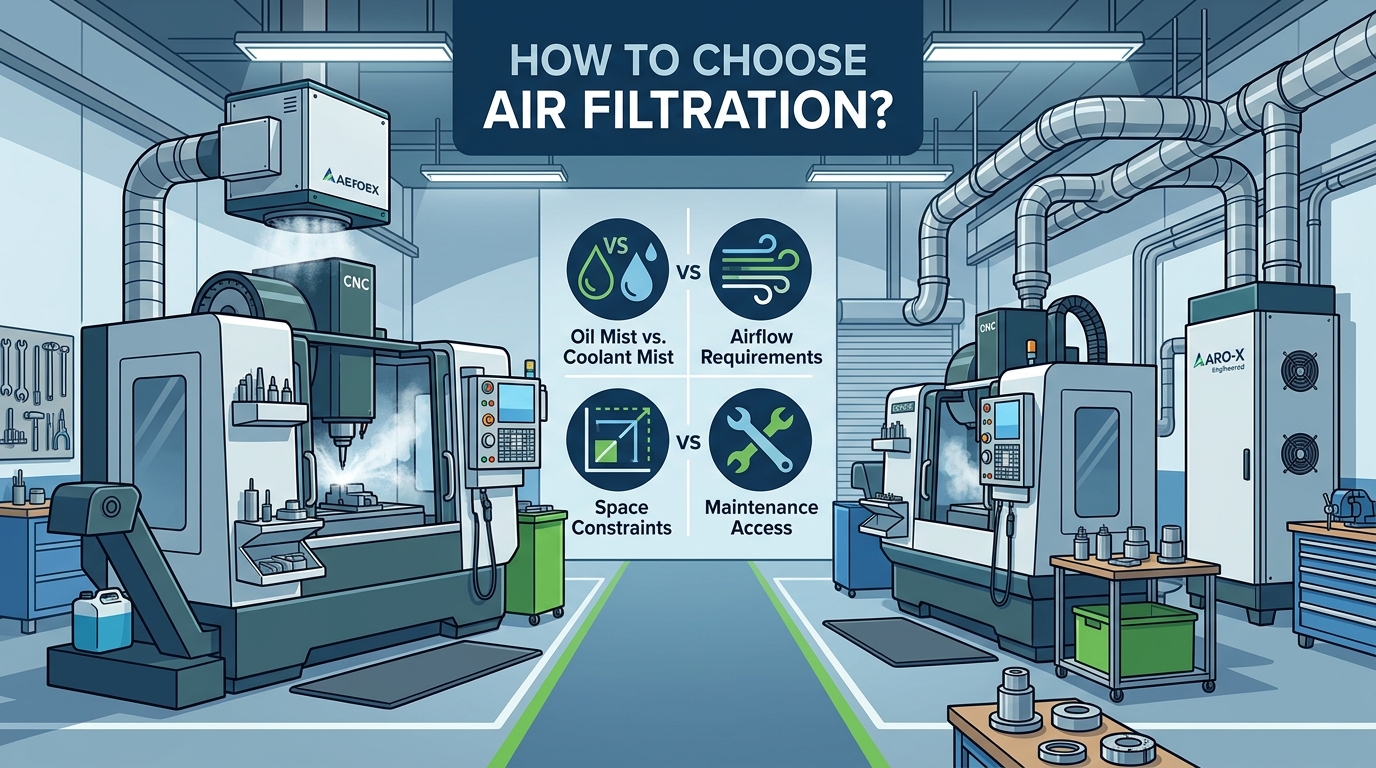
The ARO-X series is engineered for high-volume metalworking environments. These units utilize advanced coalescing and centrifugal separation technologies to capture oil mist and smoke. They are ideal for facilities with multiple CNC machines or heavy-duty grinding operations. The ARO-X line is known for its robust construction and high-efficiency filter life, making it a cost-effective choice for continuous operation.
The Mist-Fit Series
For machine-specific applications, the Mist-Fit series offers a compact, high-performance solution. Designed to attach directly to individual machines, these collectors clear the immediate cabinet of smoke and oil mist without requiring extensive ductwork. The Mist-Fit MF-550, for example, is frequently paired with Haas vertical mills to manage coolants like Mist Cool 2210. This line is perfect for workshops with limited floor space or those looking to address contamination at the source.
The IRIS Series
The IRIS series is tailored for cleanrooms, inspection areas, and sensitive electronic assembly environments. It employs a dual-stage filtration system combining a MERV8/Carbon primary filter with a HEPA secondary filter. This configuration is critical for high-performance odor control and the removal of ultrafine particulates. If your workshop includes quality control labs or clean assembly zones, the IRIS series ensures the air meets stringent purity standards.
The Blow Box
Part blow-off is a common source of hazardous mist dispersion in workshops. The Blow Box is a compact, dual downdraft blow-off station that captures hazardous mist during the part cleaning process. It prevents the aerosolized coolant from entering the general workshop air, offering a targeted solution for post-machining operations.
Product Comparison Table
| Product Line | Primary Application | Filtration Technology | Best For |
|---|---|---|---|
| ARO-X Series | High-volume metalworking | Coalescing & Centrifugal | CNC shops, grinding facilities |
| Mist-Fit Series | Machine-specific capture | Compact Coalescing | Individual CNC machines, lathes |
| IRIS Series | Cleanrooms & Inspection | HEPA & Carbon Dual-Stage | Odor control, ultrafine particulates |
| Blow Box | Part blow-off | Dual Downdraft Capture | Post-machining cleaning stations |
Installation and Spatial Constraints
The physical layout of your workshop plays a pivotal role in system selection. Aeroex provides both standalone units and engineered ducted solutions. Standalone units like the Mist-Fit require minimal installation, often plugging directly into standard power sources. Engineered solutions, such as those for the ARO-X series, may require professional installation to ensure optimal airflow dynamics and compliance with local safety codes.
Space Optimization. In dense manufacturing environments, floor space is a premium asset. Aeroex designs its units to minimize footprint while maximizing capture efficiency. The company’s evolution from a modest 2,400-square-foot workshop in 2001 to a 15,000-square-foot facility in 2022 reflects a commitment to scalable, space-conscious engineering. Aeroex’s growth trajectory demonstrates its ability to adapt to increasing industrial demands.
Maintenance and Operational Efficiency
Total cost of ownership extends beyond the initial purchase price. Regular maintenance is required to sustain filtration efficiency. Aeroex units are designed for easy filter access and replacement, reducing downtime. The use of Variable Frequency Drives (VFDs) in select models can further extend filter life by adjusting airflow based on real-time demand. This energy-efficient approach aligns with modern sustainability goals in manufacturing.
Filter Life and Cost. The efficiency of the coalescing media directly impacts how often filters need replacement. High-quality filters, such as those used in the ARO-X series, are engineered to handle higher particulate loads, reducing the frequency of maintenance cycles. This reliability is a key factor in maintaining consistent air quality without operational interruptions.
Key Takeaways
- Identify Contaminants: Determine if your primary hazard is oil mist, smoke, or dust to select the correct filtration technology.
- Match Product to Scale: Use Mist-Fit for individual machines and ARO-X for high-volume, multi-machine environments.
- Consider Cleanroom Needs: The IRIS series is essential for odor control and ultrafine particulate removal in inspection areas.
- Evaluate Installation: Assess your workshop layout to determine if standalone or ducted systems are more appropriate.
- Plan for Maintenance: Choose units with accessible filters and VFD options to minimize long-term operational costs.
- Verify Compliance: Ensure your selected system meets NIOSH and EPA guidelines for industrial air quality.
- Leverage Expertise: Aeroex has over two decades of experience in industrial air purification, providing trusted solutions across North America.
Frequently Asked Questions
What is the difference between oil mist and smoke in machining?
Oil mist consists of liquid droplets generated by high-speed machining processes, while smoke is a gaseous byproduct of thermal degradation of coolants. Both require different filtration approaches, with smoke often needing carbon filtration for odor removal.
How often do Aeroex filters need to be replaced?
Filter replacement frequency depends on the workload and contaminant density. However, Aeroex units are designed for extended filter life, and the use of VFDs can further prolong this duration by optimizing airflow.
Can I install a Mist-Fit unit myself?
Yes, the Mist-Fit series is designed for straightforward installation, often attaching directly to the machine cabinet. However, professional installation is recommended for optimal performance and warranty compliance.
What is the IRIS series used for?
The IRIS series is used in cleanrooms and inspection areas where high-performance odor control and ultrafine particulate removal are critical. It utilizes a dual-stage HEPA and carbon filtration system.
Does Aeroex offer engineered solutions for large workshops?
Yes, Aeroex provides engineered ducted systems for large-scale facilities. These solutions are customized to address the specific airflow and contamination challenges of the workspace.
How does Aeroex ensure air quality compliance?
Aeroex designs its systems to meet or exceed NIOSH and EPA standards for industrial air quality. Their engineering team ensures that each solution is tailored to the specific regulatory requirements of the client's region.
What is the Blow Box used for?
The Blow Box is a dual downdraft blow-off station that captures hazardous mist during part blow-off with compressed air, preventing contamination of the general workshop environment.
Ready to Improve Your Workshop Air Quality?
Choosing the right air filtration solution is a critical investment in your workshop's health and efficiency. Aeroex Technologies offers expert guidance to help you select the perfect system for your needs. Contact our team today to discuss your specific requirements and receive a customized quote. Visit our contact page to get started.