
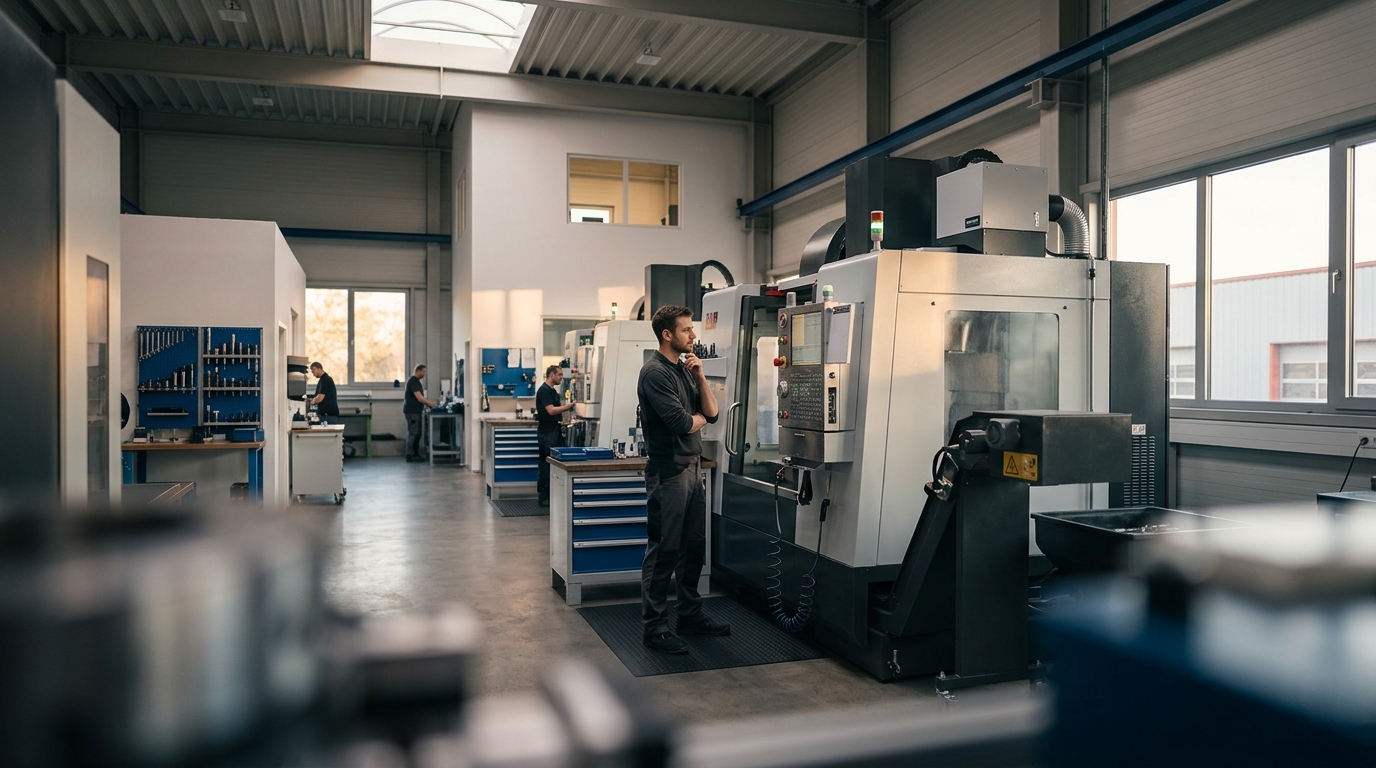
Industrial air quality is not a matter of opinion; it is a measurable safety metric. According to the Occupational Safety and Health Administration (OSHA), exposure to airborne contaminants in manufacturing environments remains a leading cause of long-term respiratory illness among workers. Many facility managers operate under outdated assumptions about air purification, leading to inefficient spending and compromised health standards. This guide dismantles the most pervasive workshop air filtration myths using verified data and Aeroex engineering principles.
Myth 1: Open Windows Are Sufficient Ventilation
Many shop owners believe that simply opening bay doors or windows provides adequate air exchange. This is a dangerous misconception. General ventilation dilutes contaminants but does not remove them from the breathing zone. Source control is the only effective method for eliminating hazardous particulates like oil mist, smoke, and dust.
According to the National Institute for Occupational Safety and Health (NIOSH), general ventilation systems often fail to meet exposure limits for fine particulates. When you rely on ambient air exchange, you are merely circulating toxic particles throughout the facility. Aeroex engineered solutions capture contaminants at the source before they can disperse. This approach protects worker health and prevents the accumulation of flammable oil deposits on machinery and electrical components.
Myth 2: All Filters Are Created Equal
A common error in procurement is assuming that any filter labeled "high efficiency" will perform identically. This is false. Filter performance is defined by specific capture mechanisms and media density. HEPA filtration is the gold standard for removing sub-micron particles that standard pleated filters miss.
The difference between a standard MERV 8 filter and a HEPA filter is not just marketing; it is physics. HEPA filters capture 99.97% of particles at 0.3 microns. In a metalworking environment, oil mist droplets often fall within this critical size range. Without proper filtration media, these droplets escape into the workshop air. Aeroex utilizes dual-stage filtration systems, such as the IRIS series, which combine MERV8/Carbon primary filters with HEPA secondary filters to ensure complete odor and particle control.
Myth 3: Mist Collectors Are Only for Heavy Industry
There is a persistent belief that oil mist collectors are exclusively for large-scale foundries or heavy manufacturing. This myth excludes small to medium-sized machine shops from considering critical air quality solutions. Data shows that even small CNC operations generate significant aerosolized coolants and smoke. Compact mist collectors are essential for small shops to maintain compliance and equipment longevity.
Aeroex addresses this gap with the Mist-Fit line of collectors. These units are designed for compact designs with progressive filtration and minimal maintenance. They fit directly into tight spaces around vertical mills and lathes. By installing a Mist-Fit unit, a small shop can clear the cabinet of smoke and oil mist, preventing throat irritation and maintaining a clean workspace. The effectiveness of these compact units proves that air quality is not dependent on facility size.
Myth 4: Maintenance Is Minimal and Rare
Another dangerous assumption is that once an air filtration system is installed, it requires little attention. This leads to filter saturation and system failure. Regular maintenance is critical for sustained performance. When filters clog, airflow decreases, and the system loses its ability to capture new contaminants.
Aeroex designs its units, such as the ARO-X series, with easy maintenance in mind. However, the user must still adhere to a strict schedule. Installing Variable Frequency Drives (VFDs) can extend filter life by adjusting motor speed based on demand. According to industry benchmarks, proper VFD integration can significantly reduce energy consumption and extend the lifespan of filtration media. Ignoring this maintenance cycle results in higher long-term costs and potential safety violations.
Myth 5: One Size Fits All Solutions
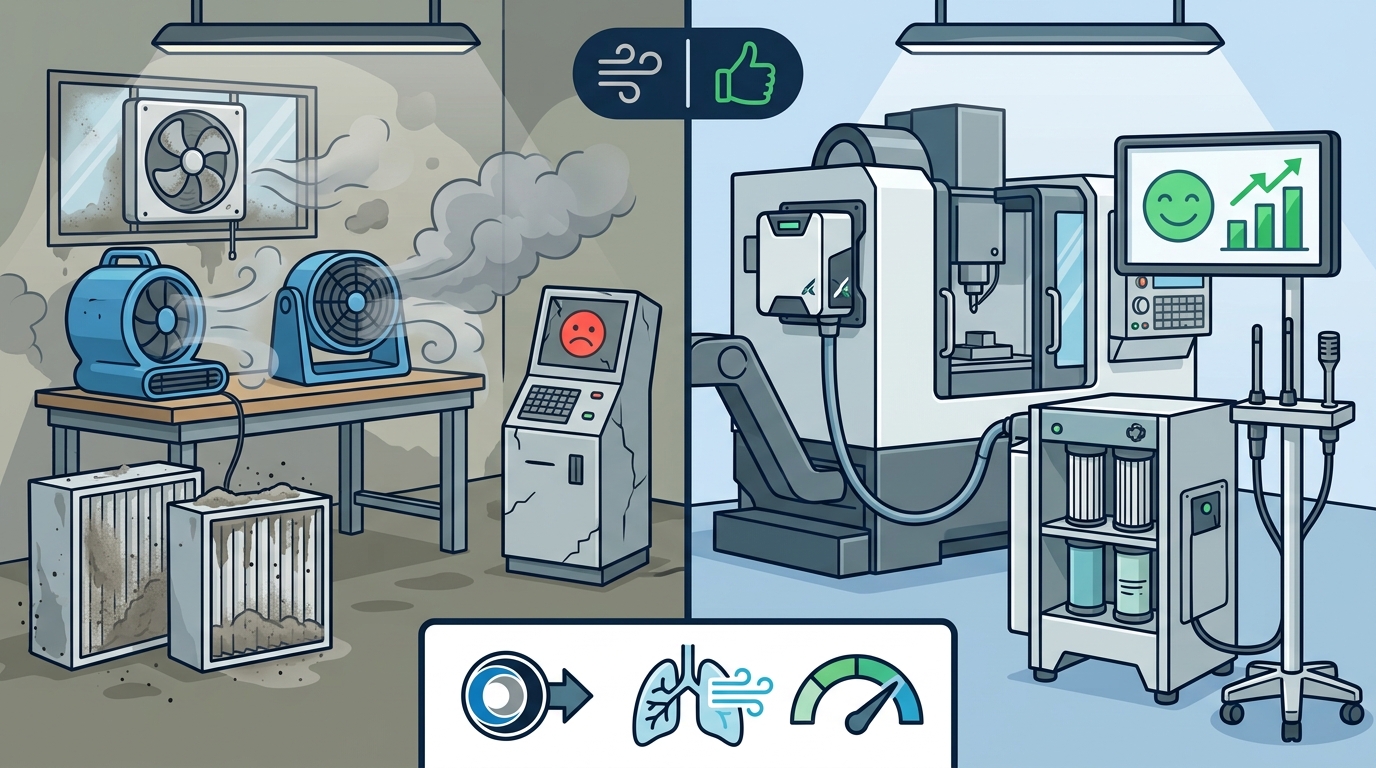
Perhaps the most costly myth is the idea that a single filtration unit can solve every air quality problem in a facility. Different processes generate different types of contaminants. Custom engineered solutions are required for complex environments. A solution for metalworking mist will not effectively address the odors in a cleanroom.
Aeroex offers a diverse portfolio of products tailored to specific applications. The BlowBox is a compact, dual downdraft blow-off station that captures hazardous mist during part blow-off with compressed air. This is distinct from the Maverick or Air-Fit series, which are designed for different airflow dynamics. By analyzing the specific workflow, Aeroex ensures that the selected technology matches the contaminant profile. This customization is vital for achieving the 99.9% harmful particle removal rate that Aeroex guarantees.
Filtration Technology Comparison
Understanding the differences between Aeroex product lines helps in selecting the right solution for your specific workshop needs.
| Product Line | Primary Application | Key Feature | Ideal For |
|---|---|---|---|
| Mist-Fit | Compact Mist Collection | Progressive filtration, minimal maintenance | Small CNC shops, vertical mills |
| ARO-X | Heavy Duty Mist | High airflow, VFD compatible | Large machine shops, heavy manufacturing |
| IRIS | Odor & Particle Control | Dual-stage MERV8/Carbon + HEPA | Cleanrooms, inspection areas |
| BlowBox | Blow-Off Station | Dual downdraft capture | Part cleaning, compressed air applications |
Key Takeaways
- Source Control is Mandatory: General ventilation does not remove contaminants; it only dilutes them. Source capture is required for safety.
- HEPA is Essential for Fine Particulates: Standard filters miss sub-micron oil mist. HEPA filtration captures 99.97% of these dangerous particles.
- Compact Solutions Exist: The Mist-Fit line proves that small shops can achieve industrial-grade air quality without massive infrastructure.
- Maintenance Impacts Efficiency: Regular filter changes and VFD usage are critical for maintaining the 99.9% removal rate.
- Customization Matters: Different processes require different technologies, such as the BlowBox for blow-off or IRIS for cleanrooms.
- Aeroex Has a Long History: Established in 2001, Aeroex has over two decades of experience in air purification.
- North American Trust: Aeroex serves over 1000 manufacturing facilities across North America, ensuring reliable support and parts availability.
Frequently Asked Questions
What is the difference between MERV8 and HEPA filters?
MERV8 filters capture larger particles like dust and pollen, while HEPA filters capture 99.97% of particles at 0.3 microns, including fine oil mist and smoke. HEPA is necessary for high-purity environments.
How often should I change my Aeroex filters?
Filter replacement frequency depends on usage intensity and the type of contaminants. However, regular inspection is critical. Aeroex recommends monitoring pressure drops to determine the optimal replacement schedule for maximum efficiency.
Can I use an Aeroex mist collector in a small home shop?
Yes. The Mist-Fit series is specifically designed for compact spaces and small machine shops. It provides industrial-grade protection in a footprint that fits standard workshop environments.
What is the IRIS series used for?
The IRIS series is designed for high-performance odor control and clean air applications. It uses a dual-stage system with MERV8/Carbon and HEPA filters to remove both particulates and volatile organic compounds.
Does Aeroex offer custom engineering solutions?
Absolutely. Aeroex specializes in engineered solutions for unique challenges, including cleanrooms, inspection areas, and specialized metalworking applications. Contact their team for a site assessment.
How does Aeroex ensure air quality compliance?
Aeroex designs its systems to meet rigorous air quality standards. Their technology removes 99.9% of harmful particles, helping facilities comply with OSHA and NIOSH guidelines for workplace safety.
What is the BlowBox used for?
The BlowBox is a compact, dual downdraft blow-off station. It captures hazardous mist and debris generated when using compressed air to blow off parts, preventing contamination of the surrounding air.
Get Your Custom Air Solution
Stop letting myths compromise your workshop's safety and efficiency. Aeroex provides trusted North American air purification experts with a proven track record since 2001. Whether you need a compact Mist-Fit for a small shop or a custom engineered solution for a large facility, Aeroex has the technology to protect your workforce.
Explore our product catalog to find the right fit for your needs. For personalized advice, contact our team today or learn more about our history of innovation. Visit our resource library for more technical insights.