
Essential Standards and Performance Criteria for Custom Industrial Air Filtration Systems
Industrial air quality management is no longer a secondary concern but a primary operational imperative. According to recent industry analyses, effective air purification systems can remove up to 99.9% of harmful particles from manufacturing environments. This statistic underscores the critical need for facilities to adopt rigorous filtration standards that protect both workforce health and equipment longevity. As manufacturing processes become more complex, the demand for customized air purification solutions has surged, requiring a deep understanding of technical specifications and performance benchmarks. (Contact Aeroex Emission Control)
Understanding Industrial Filtration Standards
Before investing in any air purification technology, it is vital to understand the regulatory and technical frameworks that govern industrial air quality. These standards ensure that filtration systems not only meet legal requirements but also deliver consistent performance in harsh operating conditions. (Aeroex Trusted North American)
Regulatory Frameworks and Safety Protocols
Industrial facilities must adhere to strict guidelines set by organizations such as OSHA and NIOSH. These bodies define permissible exposure limits for various airborne contaminants, including oil mist, metalworking fluids, and particulate matter. Failure to comply can result in significant fines and, more importantly, severe health risks for employees. A robust air filtration strategy begins with a thorough hazard assessment to identify specific contaminants and their concentrations.
Defining Filtration Efficiency
Filtration efficiency is the cornerstone of any air purification system. It refers to the percentage of particles a filter can capture from the air stream. High-efficiency particulate air (HEPA) filters are widely recognized for their ability to capture 99.97% of particles at 0.3 microns. However, in industrial settings, the definition of efficiency often extends beyond particle size to include oil mist density and vapor control. Aeroex Technologies has long recognized that quality is not just a metric but a commitment to delivering products that meet the highest standards of excellence.
Key Performance Metrics for Evaluation
Evaluating industrial air filtration systems requires a focus on specific performance indicators that directly impact operational efficiency and air quality. These metrics help facility managers determine whether a system is suitable for their unique environment.
Airflow and Static Pressure
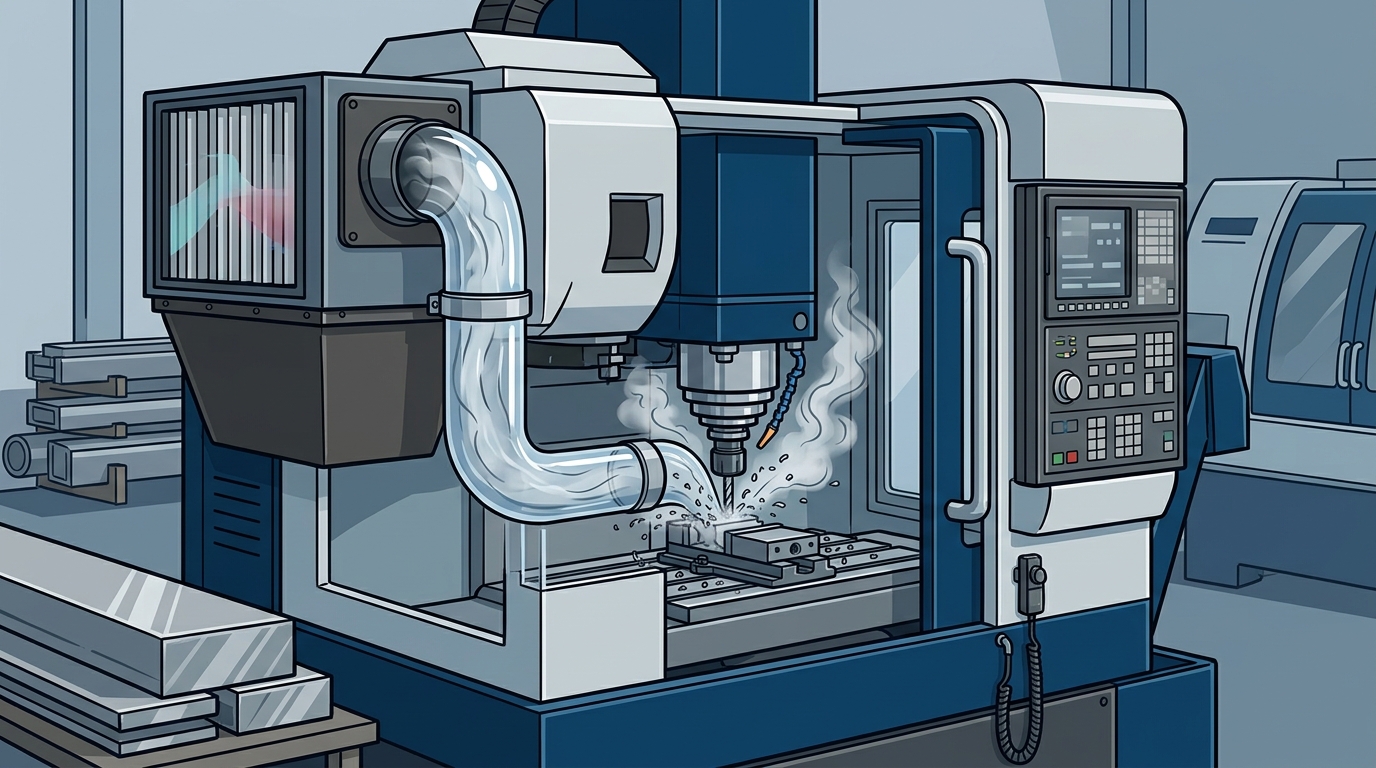
Airflow, measured in cubic feet per minute (CFM), determines the volume of air a system can process. Static pressure, measured in inches of water column (in. w.g.), indicates the system's ability to overcome resistance from filters and ductwork. A mismatch between airflow and static pressure can lead to poor filtration performance and increased energy consumption. Custom systems are designed to balance these factors, ensuring optimal air exchange rates without compromising filter integrity.
Energy Efficiency and Operational Costs
Energy efficiency is a critical factor in the total cost of ownership. Systems with variable frequency drives (VFDs) can adjust motor speed based on real-time air quality needs, significantly reducing energy usage. Data shows that facilities implementing VFDs often see a substantial extension in filter life and a reduction in operational costs. This efficiency is particularly important in large-scale manufacturing environments where air handling systems run continuously.
Noise Levels and Workplace Comfort
Industrial air filtration systems can generate significant noise, which can contribute to worker fatigue and hearing damage. Modern systems are designed with noise reduction in mind, utilizing sound-dampening materials and optimized fan designs. Maintaining noise levels below 85 decibels is a common goal in many manufacturing facilities to ensure a safe and comfortable working environment.
The Custom System Design Process
One size does not fit all in industrial air filtration. Custom systems are engineered to address the specific challenges of each facility, from the type of machinery used to the layout of the workspace. This tailored approach ensures maximum effectiveness and longevity.
Site Assessment and Analysis
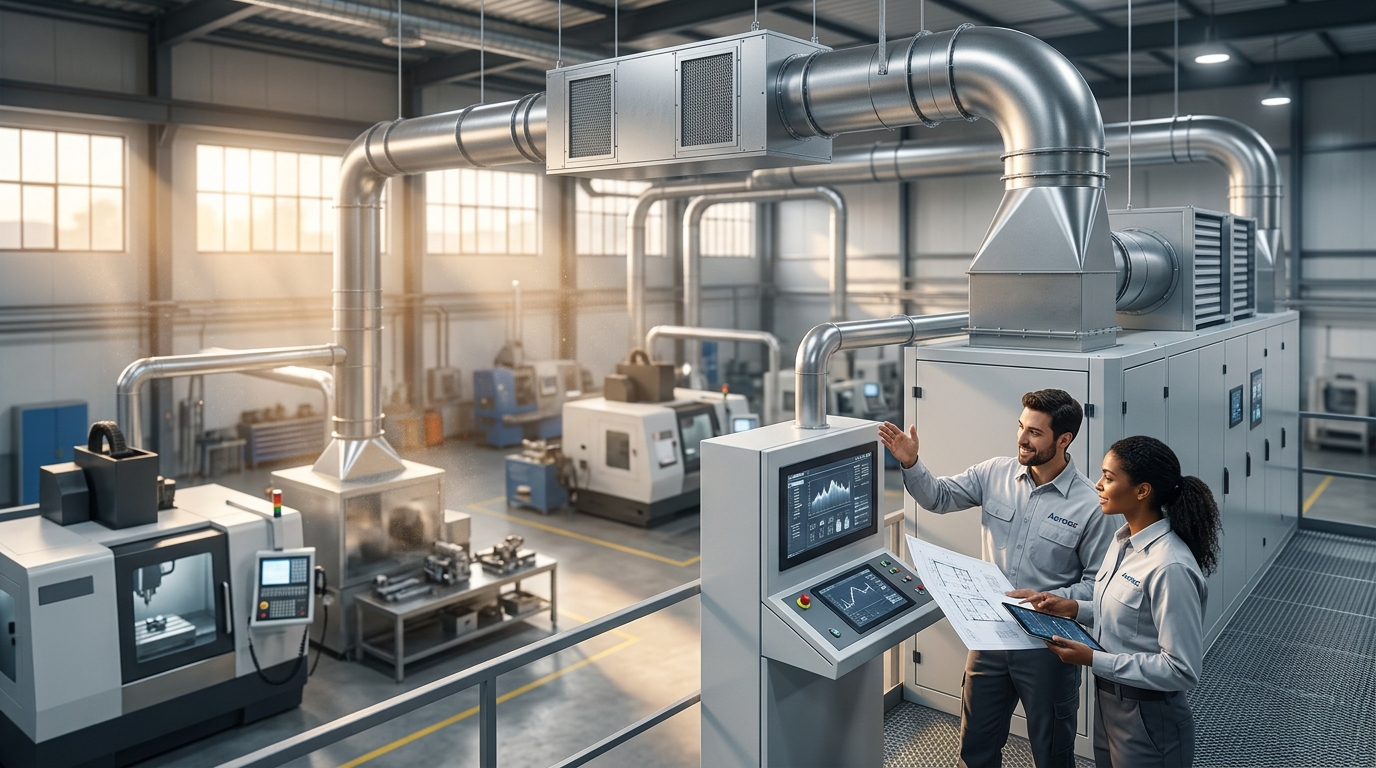
The design process begins with a comprehensive site assessment. Engineers evaluate the facility's layout, identify emission sources, and measure existing air quality levels. This data is crucial for determining the required airflow capacity and the type of filtration media needed. For example, a CNC machine shop may require different filtration solutions compared to a welding facility due to the distinct nature of the contaminants produced.
Integration with Existing Infrastructure
Custom air filtration systems must integrate seamlessly with existing HVAC and exhaust infrastructure. This integration often involves complex ductwork design and the coordination of multiple air handling units. Aeroex Technologies emphasizes collaboration as a core value, working closely with clients to ensure that new systems complement rather than disrupt existing operations.
Scalability and Future-Proofing
Facilities often expand or modify their processes over time. A well-designed custom system includes scalability features that allow for easy expansion or modification. This future-proofing ensures that the air filtration solution remains effective as the facility evolves, protecting the investment over the long term.
Comparing Filtration Technologies
Different industrial applications require different filtration technologies. Understanding the strengths and limitations of each option is essential for making an informed decision.
| Technology | Best For | Key Benefits | Limitations |
|---|---|---|---|
| Mist-Fit Collectors | Compact machinery and CNC applications | Space-saving design, high efficiency | Limited capacity for large volumes |
| ARO-X Series | Heavy-duty metalworking environments | High airflow, durable construction | Larger footprint required |
| IRIS Series | Clean rooms and odor control | Dual-stage filtration, odor removal | Higher initial cost |
| Blow Box | Part blow-off and inspection | Localized capture, compact size | Specific application focus |
Mist Collectors vs. HEPA Filtration
Mist collectors are specifically designed to capture oil and water-based mists using centrifugal force or coalescing filters. They are highly effective in metalworking applications where oil mist is the primary contaminant. In contrast, HEPA filtration is more suited for capturing fine particulate matter and pathogens. Many modern systems combine both technologies to address multiple types of contaminants simultaneously.
Activated Carbon for Vapor Control
For facilities dealing with volatile organic compounds (VOCs) and odors, activated carbon filtration is essential. Carbon filters adsorb gaseous contaminants, preventing them from recirculating into the workspace. This technology is particularly important in clean rooms and inspection areas where air purity is paramount.
Maintenance and Regulatory Compliance
Even the most advanced air filtration system requires regular maintenance to perform optimally. Neglecting maintenance can lead to decreased efficiency, increased energy costs, and potential regulatory violations.
Preventive Maintenance Schedules
A proactive maintenance schedule includes regular inspection of filters, fans, and ductwork. Filters should be replaced or cleaned according to manufacturer recommendations, which are often based on operating hours or pressure drop measurements. Aeroex products are designed for easy maintenance, allowing facility staff to perform routine checks quickly and efficiently.
Documentation and Reporting
Maintaining detailed records of maintenance activities and air quality tests is crucial for regulatory compliance. These documents serve as evidence of due diligence and can be invaluable during audits. Modern monitoring systems can automate this process, providing real-time data and automated reporting capabilities.
Training and Safety Protocols
Staff members who operate and maintain air filtration systems must be properly trained. Training should cover safety procedures, filter replacement techniques, and troubleshooting common issues. A well-trained workforce ensures that the system operates safely and effectively, minimizing the risk of accidents and downtime.
Key Takeaways
- High Efficiency is Non-Negotiable: Effective systems remove 99.9% of harmful particles, protecting worker health and equipment.
- Customization is Critical: One-size-fits-all solutions rarely work; site-specific assessments are required for optimal performance.
- Energy Efficiency Matters: Systems with VFDs can significantly reduce operational costs and extend filter life.
- Regulatory Compliance is Mandatory: Adhering to OSHA and NIOSH standards is essential to avoid fines and health risks.
- Maintenance Prevents Downtime: Regular inspections and timely filter replacements ensure consistent air quality.
- Technology Evolution: Aeroex has evolved from its 2001 origins to offer advanced solutions like the IRIS and BlowBox series.
- North American Trust: Trusted by over 1000 manufacturing facilities, Aeroex demonstrates reliability across diverse industries.
Frequently Asked Questions
What is the difference between a mist collector and a HEPA filter?
A mist collector is designed to capture liquid droplets like oil and coolant using mechanical forces, while a HEPA filter captures solid particulate matter at a microscopic level. They are often used in conjunction for comprehensive air purification.
How often should industrial air filters be replaced?
Filter replacement frequency depends on usage intensity and contaminant levels. Generally, filters should be checked monthly and replaced when pressure drop exceeds manufacturer specifications or at recommended time intervals.
Can custom air filtration systems reduce energy costs?
Yes, systems equipped with variable frequency drives (VFDs) adjust airflow based on real-time needs, leading to significant energy savings compared to constant-speed systems.
What are the key benefits of the Aeroex ARO-X series?
The ARO-X series offers high airflow capacity and durable construction, making it ideal for heavy-duty metalworking environments where consistent air purification is required.
How does Aeroex ensure compliance with industrial standards?
Aeroex designs its systems to meet or exceed industry standards for air quality and safety, utilizing high-efficiency filtration media and rigorous testing protocols.
Is Aeroex available for international projects?
While primarily serving North America, Aeroex has expanded its reach, including the launch of Aeroex U.S.A., to support a broader range of industrial clients.
What is the role of activated carbon in air filtration?
Activated carbon adsorbs gaseous contaminants and odors, making it essential for applications involving VOCs and chemical fumes where particulate filters alone are insufficient.
Contact Us
Ready to transform your industrial environment with advanced air purification technology? Contact Aeroex today to discuss your specific needs and discover how our custom solutions can help you meet the highest standards of air quality and safety. Visit our Contact Page to request a quote or speak with an expert.