
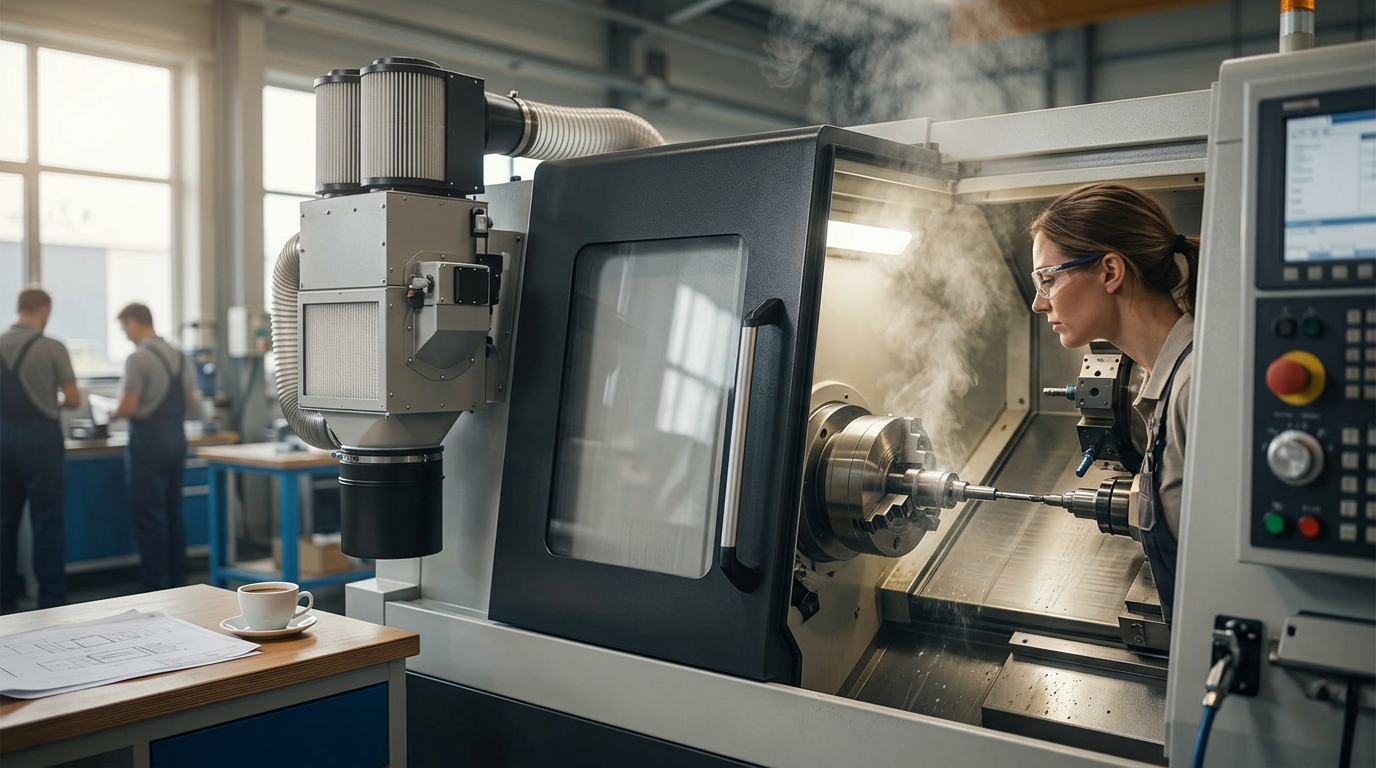
Machine shops must meet OSHA and EPA air quality standards to protect workers and the environment. Aeroex designs industrial mist collectors that capture oil mist, coolant aerosols, and machining smoke at the source. These systems help facilities maintain compliant indoor air quality while reducing health risks and equipment corrosion.
Regulatory Framework for Machine Shops
Industrial air quality is governed by a combination of federal and state regulations. Machine shops generate airborne contaminants during machining, grinding, and finishing processes. These contaminants include oil mist, coolant mist, and fine particulate matter. Understanding the regulatory landscape is the first step toward compliance.
The Occupational Safety and Health Administration (OSHA) sets workplace safety standards. The Environmental Protection Agency (EPA) regulates air emissions that affect the public. State agencies often enforce stricter local rules. Shops must identify which regulations apply to their specific operations and location.
OSHA Standards and Worker Safety
Machine guarding is also a critical OSHA requirement. OSHA 1910.212 requires guarding to protect operators from hazards like flying chips and sparks. While mist collectors do not replace machine guarding, they work alongside it to create a safer environment. Proper source capture reduces the amount of mist that escapes the machine enclosure.
EPA Emissions and Environmental Compliance
The EPA regulates air emissions that impact public health and the environment. Air quality management districts often enforce specific dust and particulate control rules. These rules may require shops to capture and filter airborne particles before they are released into the atmosphere.
Compliance with EPA regulations often involves demonstrating that emissions are below certain thresholds. Mist collectors help achieve this by capturing contaminants at the source. Shops in areas with strict air quality rules may need to document their filtration efficiency and maintenance practices. This documentation can be crucial during regulatory inspections.
Source Capture and Filtration Efficiency
Effective compliance requires capturing contaminants before they spread throughout the shop. Source capture is the most efficient method for controlling airborne mist. It involves placing filtration equipment directly at the point of generation. This approach minimizes the volume of air that needs to be treated.
Aeroex offers direct-mount mist collectors designed for compact machine layouts. These units capture mist at the source, reducing the need for extensive ductwork. For larger or more complex operations, engineered systems provide multi-stage filtration. These systems can handle higher airflow requirements and capture a wider range of contaminants. Choosing the right system depends on the specific machines and processes in your shop.
Maintenance and Documentation
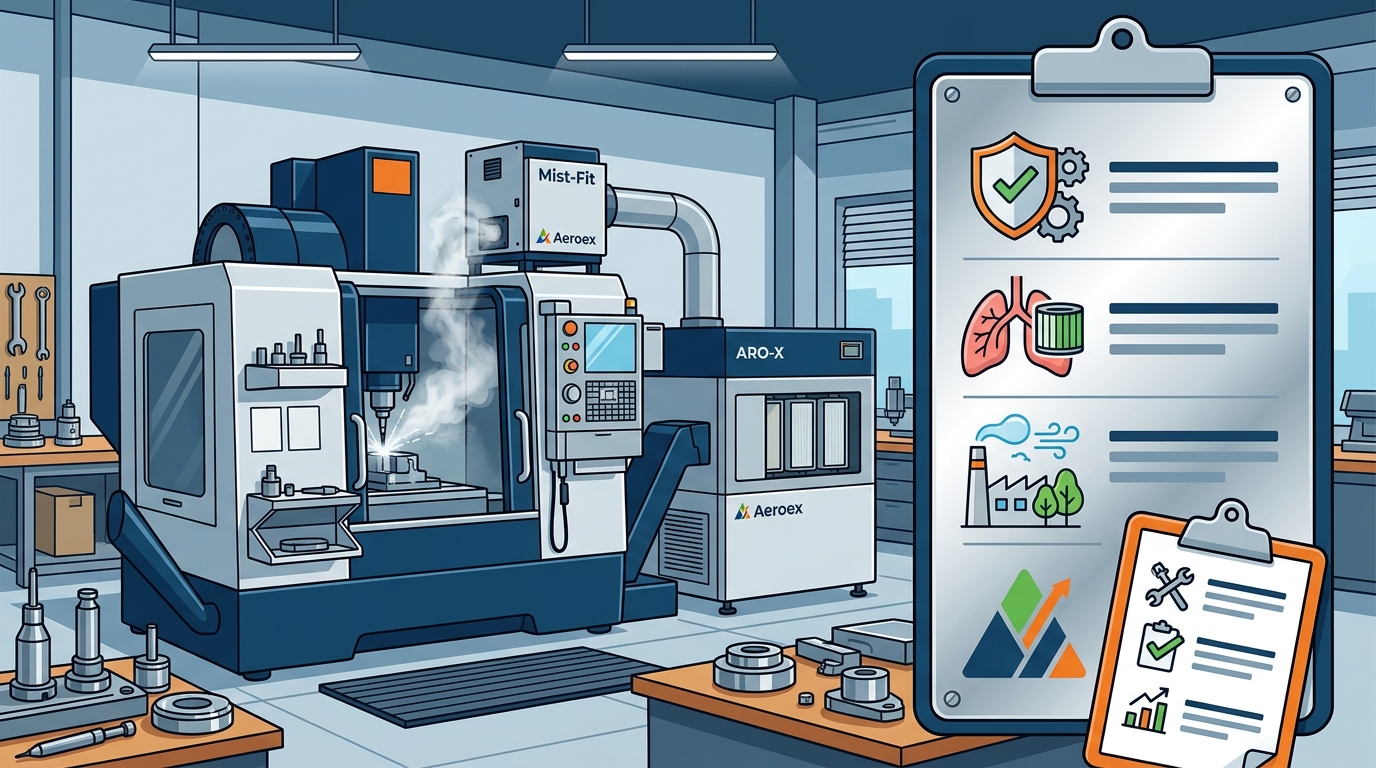
Regular maintenance is essential for maintaining compliance. Filters must be replaced or cleaned according to manufacturer recommendations. Keeping detailed records of maintenance activities helps demonstrate ongoing compliance. These records should include dates, filter types, and any issues encountered.
Documentation also helps with troubleshooting and performance optimization. If air quality issues arise, maintenance records can help identify the cause. Shops should work with their filtration provider to establish a maintenance schedule that meets their specific needs. Aeroex provides support for filter replacement and system maintenance to ensure continuous performance.
Key Takeaways
- OSHA sets workplace safety standards for airborne contaminants, including oil mist.
- EPA and local air quality districts regulate emissions that affect the public.
- Source capture is the most effective method for controlling machining mist.
- Direct-mount mist collectors are ideal for compact machine layouts.
- Engineered systems are suitable for complex or high-airflow applications.
- Regular maintenance and documentation are critical for ongoing compliance.
- Working with a specialized provider ensures your system meets regulatory requirements.
Frequently Asked Questions
What are the main regulatory bodies for machine shop air quality?
OSHA regulates workplace safety, while the EPA and local air quality districts regulate environmental emissions. Shops must comply with both sets of regulations.
How do I know if my shop is in compliance?
Conduct air quality monitoring and compare results to OSHA and EPA limits. Keep detailed records of your filtration system and maintenance activities.
What is the difference between OSHA and EPA regulations?
OSHA focuses on worker safety in the workplace, while the EPA focuses on protecting the public and the environment from air emissions.
Do I need a mist collector for every machine?
It depends on the type of machine and the amount of mist it generates. Source capture is recommended for machines that produce significant airborne contaminants.
How often should I replace mist collector filters?
Follow the manufacturer's recommendations. Filter life depends on the type of contaminant and the operating conditions. Regular inspection helps determine when replacement is needed.
Can a mist collector replace machine guarding?
No. Machine guarding is required by OSHA to protect operators from physical hazards. Mist collectors control airborne contaminants but do not replace physical guards.
Ensure Your Shop Meets Compliance Standards
Aeroex provides industrial air filtration solutions designed to help machine shops meet regulatory requirements. Our systems capture oil mist, coolant aerosols, and machining smoke at the source. To discuss your specific compliance needs, contact our team for a consultation. Learn more: Contact Aeroex Emission Control.