
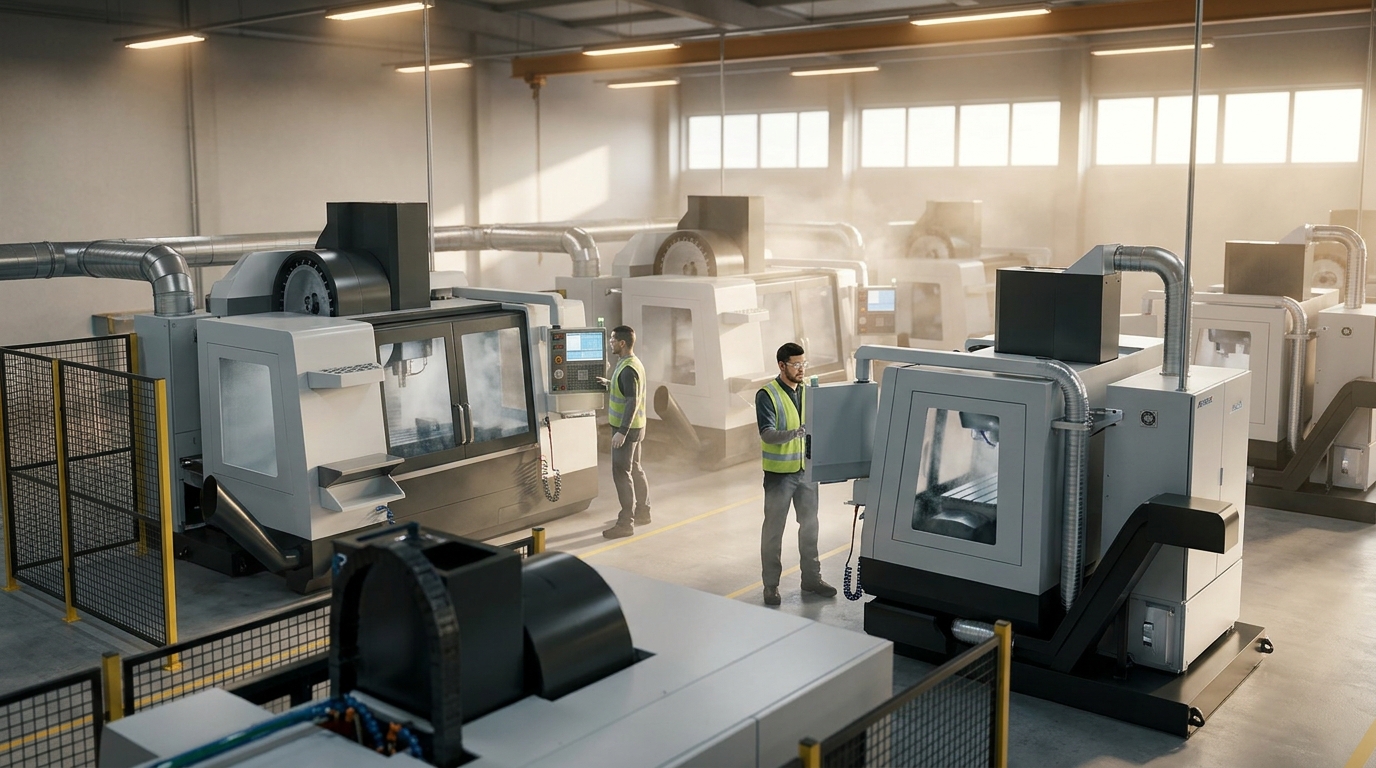
Improving factory air quality requires targeted source capture rather than general room ventilation. Aeroex specializes in industrial air filtration solutions that address specific process contaminants like oil mist, coolant mist, and smoke. This listicle outlines five effective methods for managing airborne particulates in manufacturing environments.
1. Machine-Mounted Mist Collection
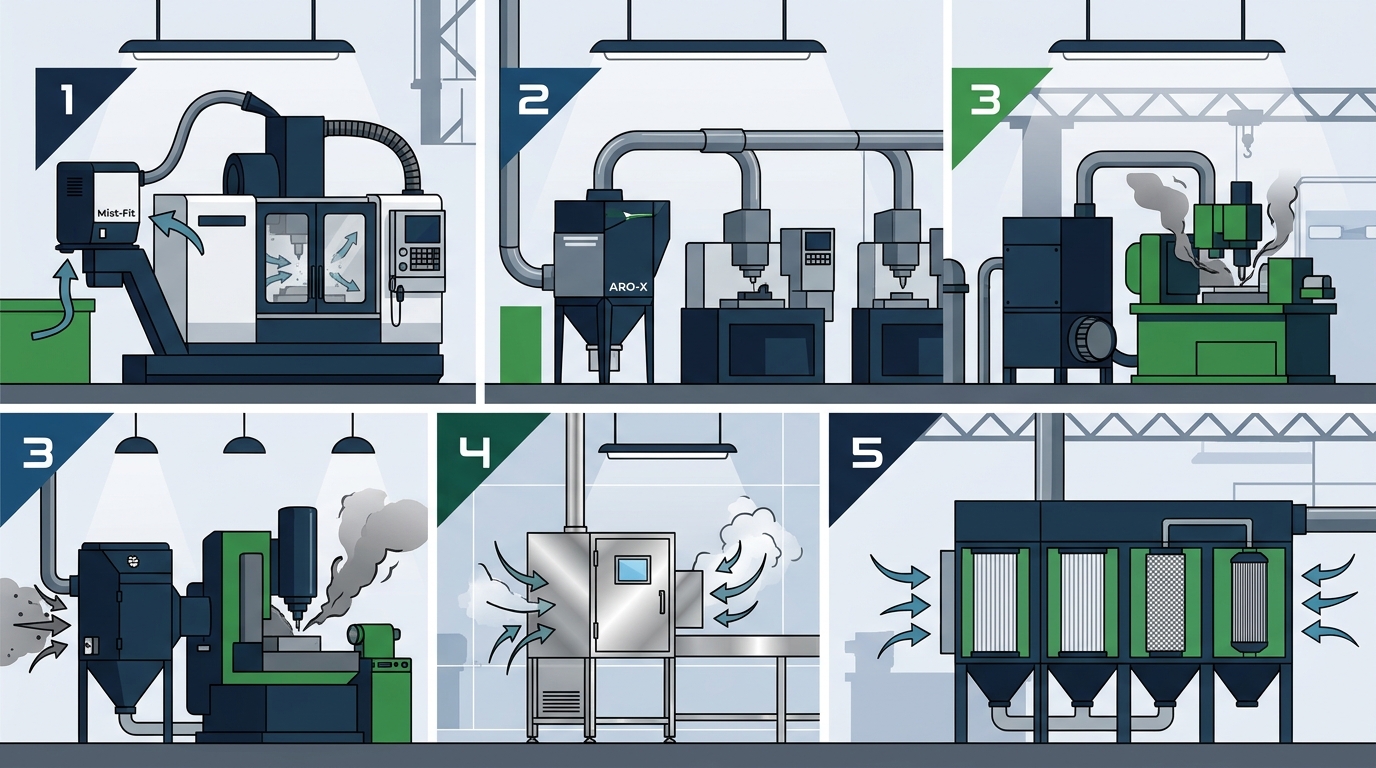
Direct mounting captures contaminants at the source with minimal footprint. This method is ideal for compact machine layouts where floor space is limited. By attaching the filtration unit directly to the machine enclosure, you reduce the need for extensive ductwork. This approach is commonly used in CNC machining centers to handle coolant mist and oil mist efficiently.
2. Modular High-Capacity Filtration
Modular systems scale airflow to match complex or high-demand applications. When multiple machines or high-volume processes generate significant airborne loads, a scalable platform is necessary. These systems can be configured with multi-stage filtration to handle a mix of mist, smoke, and vapor. They are a strong fit for facilities that require robust, engineer-reviewed air quality management.
3. Stainless Steel Source Capture
Stainless steel construction suits corrosive and washdown environments. In food and beverage manufacturing or chemical processing, standard steel may degrade over time. Stainless steel units are designed for sanitary environments and can withstand frequent cleaning and high humidity. This method ensures long-term reliability in demanding industrial applications where moisture and chemicals are present.
4. Blow-Off Station Filtration
Blow-off stations capture hazardous mist released during part cleaning. Compressed air blow-off is a common practice in machining, but it releases trapped mist into the workspace. A dedicated blow-off station contains this release and filters the air before it returns to the shop. This method is essential for maintaining clean air in areas where parts are frequently cleaned with compressed air.
5. Centralized Process Air Filtration
Centralized systems manage air quality across larger production areas. For facilities with multiple process points, a centralized approach can be more efficient than individual units. These systems are often custom-engineered to address specific contaminants like fumes or odors. They provide a comprehensive solution for improving overall workplace air quality in large-scale manufacturing settings.
Choosing the Right Method
Select the method that matches your specific contaminant type and facility layout. For individual CNC machines with limited space, machine-mounted collection is often the most practical choice. For complex processes or corrosive environments, consider modular or stainless steel systems. Always evaluate your airflow requirements and maintenance needs before selecting a solution.
Frequently Asked Questions
What is the best mist collector for CNC machining?
The best mist collector for CNC machining depends on your machine type and coolant usage. For compact layouts, a direct-mount mist collector is often the most effective solution. For higher-demand applications, a modular high-capacity system may be more appropriate.
How do I choose the right mist collector for my machine shop?
Consider your machine type, coolant or oil type, and airflow requirements. Evaluate your mounting constraints and maintenance needs. A single-machine setup may require a compact unit, while a multi-machine setup might benefit from a centralized or modular system.
When should I use a direct-mount mist collector?
Use a direct-mount mist collector when you have limited floor space and need to capture mist at the source. This method is ideal for individual CNC machines and compact machine layouts. It reduces the need for ductwork and simplifies installation.
When do I need an engineered or custom industrial air filtration system?
You need an engineered system when dealing with complex applications, higher airflow requirements, or multiple machines. Custom configurations are recommended for unique operating conditions involving oil mist, coolant mist, smoke, or vapor. Engineer-reviewed recommendations ensure the system meets your specific needs.
When should I use a stainless steel mist collector?
Use a stainless steel mist collector in food and beverage manufacturing, washdown environments, or corrosive settings. Stainless steel is suitable for humid or moisture-heavy production areas and chemical processing. It is designed for sanitary environments and clean industrial applications.