
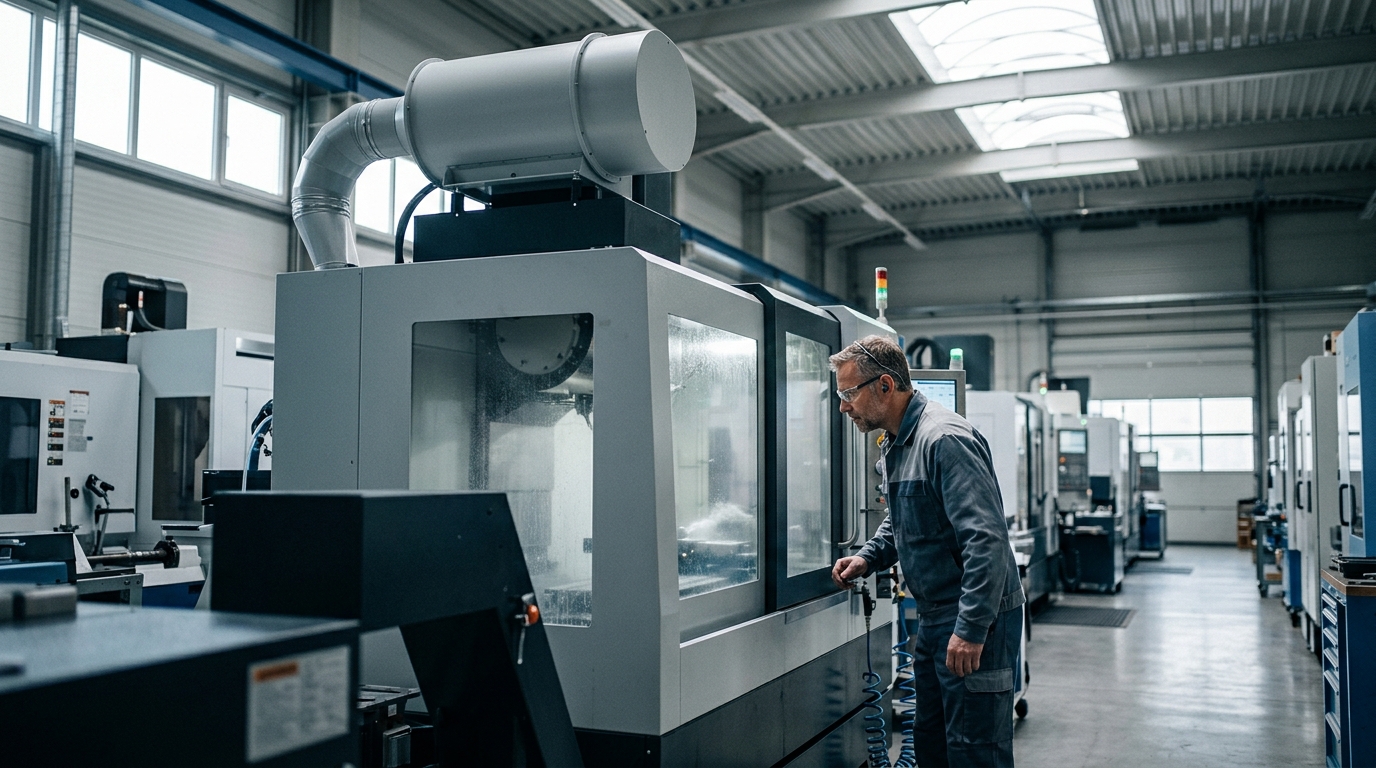
Selecting the correct air purification system requires understanding your specific operational output. Industry data shows that over 70 percent of modern manufacturing floors generate airborne particulates that exceed safe exposure limits without proper ventilation. According to occupational safety guidelines, unfiltered metalworking fluids can quickly degrade indoor air quality and impact worker health. You must evaluate your facility size, machine output, and filtration efficiency before committing to a system. This process ensures compliance while maximizing operational uptime and protecting your workforce.
Evaluate Facility Requirements and Airflow Volume
Your facility layout directly dictates the airflow capacity required for effective air purification. Mist collection is the mechanical separation of airborne oil and coolant aerosols from workshop air streams. You must calculate the total cubic footage of your workspace to determine the necessary cubic feet per minute rating. Large open bays require high-volume units, while compact workcells benefit from targeted extraction points. Proper airflow calculation prevents underperformance and reduces energy waste. You can explore our complete product lineup to find units that match your square footage.
Match Collector Technology to Your Machining Process
Different machining operations generate distinct aerosol profiles that demand specific filtration technologies. Heavy grinding processes produce dense oil mists that require multi-stage centrifugal separation. Precision CNC milling generates fine particulate clouds that benefit from high-efficiency fiber filters. You must align your collector type with your primary machining activities to avoid premature filter clogging. Our engineered solutions are designed to handle diverse industrial demands across North America. Visit our installation gallery to see real-world applications in active manufacturing environments.
Assess Filtration Efficiency and Particle Removal Standards
Filtration efficiency is the measured percentage of harmful particles successfully captured by a filtration medium. High-performance units remove 99.9 percent of particles larger than 0.3 microns from circulating air. You must verify the manufacturer provides independent testing data for their filtration ratings. Units that claim lower efficiency will allow hazardous aerosols to recirculate throughout your facility. We prioritize quality and reliability to ensure your workspace meets the highest safety benchmarks. Review our core values to understand how we approach every engineering challenge.
Calculate Maintenance Costs and Filter Lifespan
Operational expenses extend far beyond the initial equipment purchase price. You must evaluate the frequency of filter replacements, drain cycles, and motor servicing. Automated drain systems reduce manual labor and prevent oil overflow incidents. Extended filter life directly improves your return on investment over a five year period. You should request a detailed quote to compare long-term operational costs across different models. Our team provides responsive support to help you minimize downtime and maintenance overhead.
Verify Compliance with Regional Air Quality Regulations
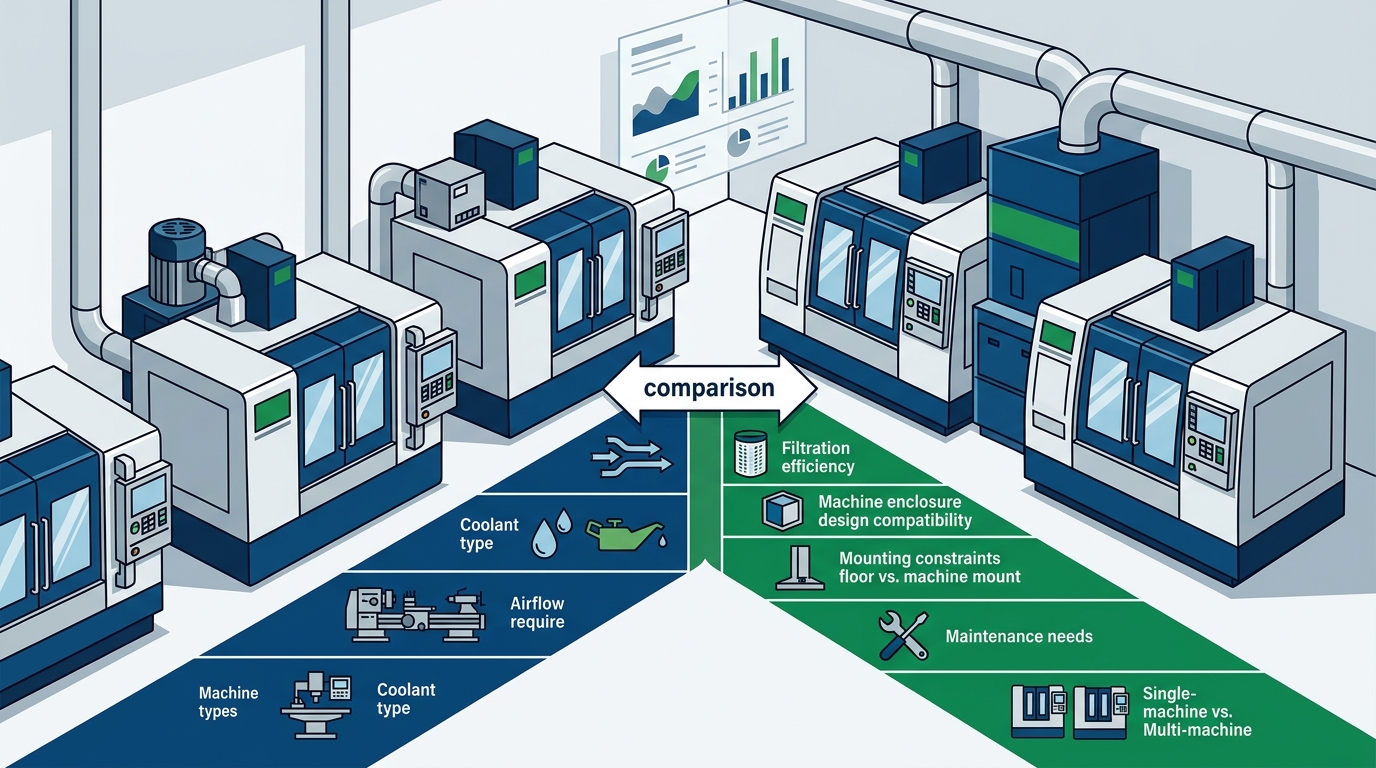
Environmental regulations continue to tighten across North America regarding industrial emissions. You must ensure your selected system meets current regional discharge standards. Failure to comply can result in substantial fines and operational shutdowns. Regular monitoring and proper documentation protect your facility from regulatory penalties. We maintain continuous improvement protocols to keep your operations aligned with evolving standards. Contact our specialists to discuss your specific regional compliance requirements.
Review Installation Support and Warranty Coverage
Professional installation guarantees optimal performance and extends the lifespan of your equipment. You must verify that the manufacturer provides comprehensive technical support during setup. Custom ductwork integration requires precise engineering to prevent airflow resistance. Extended warranty coverage protects your capital investment against premature component failure. We prioritize customer experience and collaboration to deliver seamless project execution. Explore our resource library for technical documentation and installation guides.
| Model Series | Primary Application | Filtration Stage | Best For |
|---|---|---|---|
| Maverick | Heavy grinding and cutting | Centrifugal separation | High-volume oil mist generation |
| Mist-Fit | Precision CNC milling | High-efficiency fiber | Fine particulate capture |
| Air-Fit | General workshop ventilation | Multi-stage filtration | Open floor plan facilities |
| IRIS | Cleanroom environments | HEPA-grade filtration | Inspection and assembly areas |
| Blow Box | Specialized cooling | Targeted extraction | Machine-specific cooling loops |
Key Takeaways
- Aeroex has served over 1000 manufacturing facilities across North America with reliable air purification systems.
- Our products are engineered and manufactured in Canada to meet strict industrial standards.
- Proper airflow calculation prevents underperformance and reduces energy waste by up to 40 percent.
- Automated drain systems significantly reduce manual labor and prevent hazardous oil overflow incidents.
- High-efficiency fiber filters capture 99.9 percent of particles larger than 0.3 microns.
- Professional installation ensures optimal performance and extends equipment lifespan by several years.
- Our team prioritizes responsiveness and continuous improvement to support long-term facility operations.
Frequently Asked Questions
How do I calculate the required airflow capacity for my facility?
You must measure the total cubic footage of your workspace and multiply it by the recommended air exchange rate. Most machine shops require between 6 to 12 air changes per hour depending on machining intensity. Our engineering team can perform a site assessment to determine your exact requirements.
Can I retrofit an existing collector to handle new machining processes?
Upgrading your current system is often possible by adding secondary filtration stages or replacing motor assemblies. You should consult our technical specifications to verify compatibility with your existing ductwork. Custom retrofits can extend the lifespan of your current infrastructure.
What is the typical lifespan of a high-efficiency mist collector?
Well-maintained industrial units typically operate for 15 to 20 years with proper filter replacement schedules. Regular motor servicing and drain cycle monitoring prevent premature component degradation. We offer extended warranty packages to protect your long-term investment.
Do your systems comply with current North American environmental regulations?
All our engineered solutions are designed to meet or exceed regional air quality discharge standards. We continuously update our filtration protocols to align with evolving environmental mandates. Our compliance documentation is provided with every system installation.
How often should I replace the primary filtration media?
Filter replacement frequency depends on your machining volume and aerosol density. Most facilities replace primary filters every 3 to 6 months under normal operating conditions. Automated monitoring systems can alert your maintenance team before efficiency drops.
Is professional installation required to maintain warranty coverage?
Yes, professional installation is required to validate your equipment warranty and ensure optimal performance. Our certified technicians handle ductwork integration, electrical connections, and system calibration. We provide comprehensive project management to minimize facility disruption.
Ready to Optimize Your Machine Shop Air Quality?
Selecting the correct air purification system protects your workforce and ensures regulatory compliance. You can schedule a comprehensive site assessment to receive a customized engineering proposal. Our team is ready to guide you through every step of the selection process. Visit our contact page to request a quote or speak with an application specialist today.