
Industrial air quality is no longer just a compliance checkbox. It is a critical operational metric that directly impacts worker health, equipment longevity, and production continuity. According to recent industry analyses, effective air purification systems can remove up to 99.9% of harmful particles from manufacturing environments, significantly reducing respiratory risks and maintenance costs. Companies that design bespoke air filtration systems for manufacturing and remediation projects must navigate complex engineering challenges, from oil mist collection in CNC shops to odor control in cleanrooms. This guide explores how specialized firms engineer these solutions, focusing on the methodologies and innovations driving the industry forward. (Contact Aeroex Emission Control)
The Engineering Methodology Behind Bespoke Systems
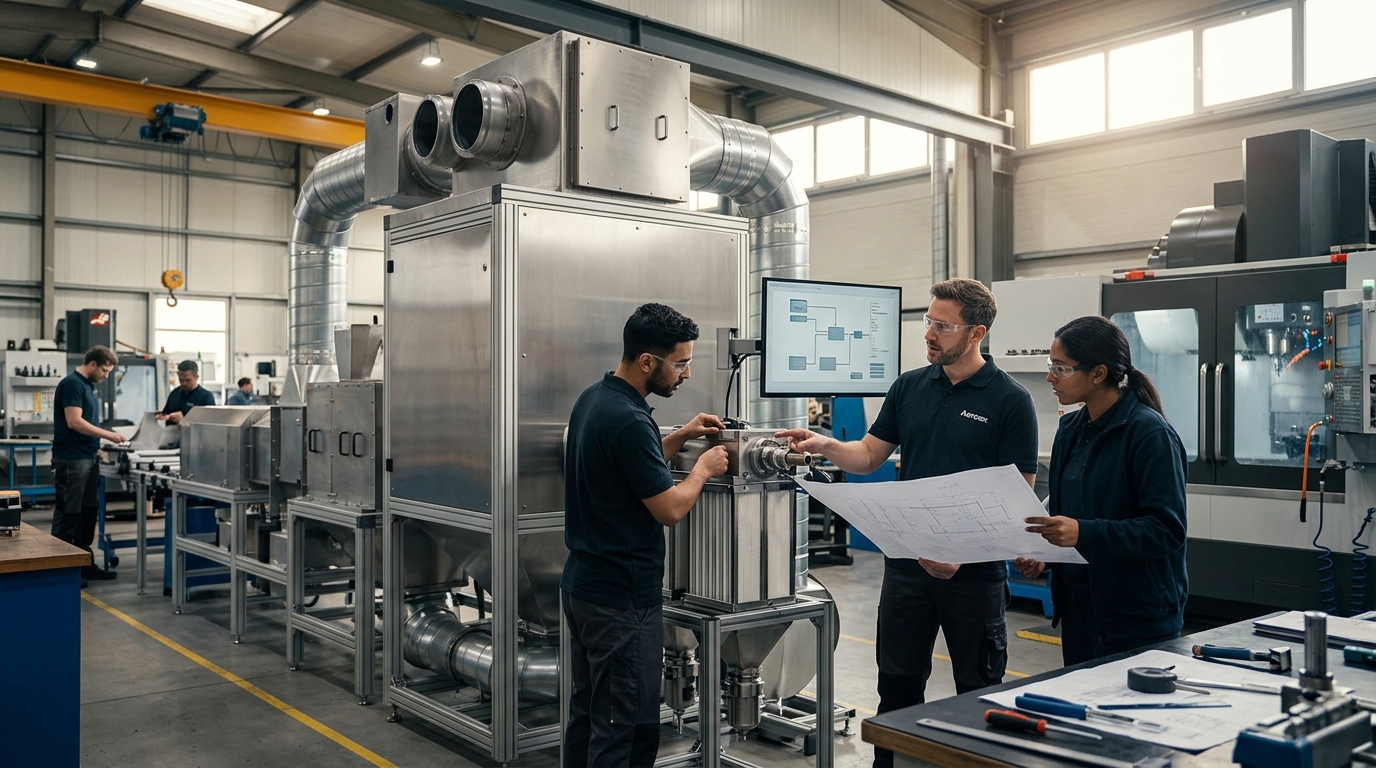
Designing an air filtration system for a manufacturing facility is not a one-size-fits-all endeavor. It requires a deep understanding of the specific contaminants present, the volume of air being processed, and the spatial constraints of the facility. Aeroex Technologies, a leader in this space, approaches every project with a rigorous engineering framework. This process begins with a comprehensive site assessment, where engineers analyze airflow dynamics, contaminant density, and existing infrastructure.
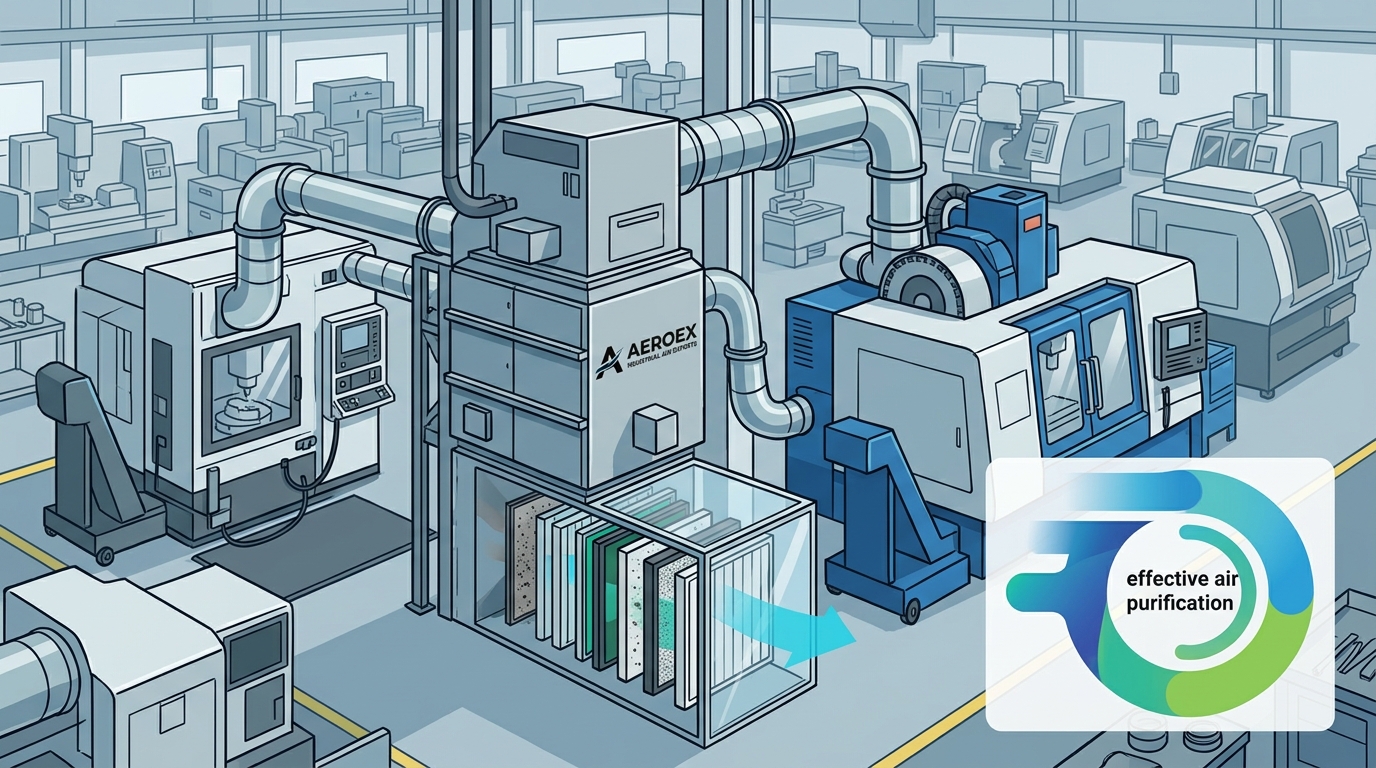
Bespoke air filtration is defined as a customized air purification solution engineered to address the unique contaminant profile and operational requirements of a specific industrial environment. Unlike off-the-shelf units, these systems are tailored to integrate seamlessly with existing machinery, such as CNC mills, lathes, and assembly lines. The goal is to capture contaminants at the source before they disperse into the general workspace.
One of the core challenges in this field is balancing filtration efficiency with energy consumption. High-efficiency filters often create significant pressure drops, requiring more powerful fans and increasing energy costs. Engineers must select filter media that offers the optimal balance between particle capture rate and airflow resistance. This is where proprietary technologies, such as the dual-stage filtration systems found in the IRIS series, come into play. By combining a MERV8/Carbon primary filter with a HEPA secondary filter, these systems achieve high-performance odor control and particulate removal without excessive energy drain.
Responsiveness is another critical factor in bespoke system design. Manufacturing facilities often operate on tight schedules, and downtime for installation or maintenance can be costly. Companies that prioritize responsiveness ensure that their engineering teams can provide rapid prototyping, quick quoting, and streamlined installation processes. This agility allows manufacturers to address air quality issues promptly, minimizing the risk of regulatory non-compliance or worker health incidents.
Evolution of Industrial Air Purification Technology
The landscape of industrial air purification has evolved significantly over the past two decades. What began as simple mechanical filtration has transformed into a sophisticated field involving advanced materials science, fluid dynamics, and smart monitoring. Aeroex Technologies, established in 2001, has been at the forefront of this evolution, continuously refining its product lines to meet the growing demands of modern manufacturing.
In the early 2000s, the focus was primarily on basic oil mist collection. The REX series, launched in 2001, was one of the first systems to address these needs effectively. However, as manufacturing processes became more complex, so did the contaminants. The introduction of the ROX series in 2008 marked a significant advancement, offering improved filtration capabilities for a wider range of industrial applications. By 2009, the company had shifted its focus entirely to the ROX line, recognizing its superior performance and versatility.
The mid-2010s saw a major leap in energy efficiency and compact design. The ARO line, introduced in 2015, was designed with cutting-edge filtration technology that reduced energy consumption while maintaining high capture rates. This was followed by the launch of the Mist-Fit series in 2018, which offered top performance in a compact form factor. The Mist-Fit mist collectors are particularly popular in machine shops where space is at a premium, providing progressive filtration with minimal maintenance requirements.
Recent years have brought even more innovation. The IRIS series, launched in 2020, introduced dual-stage air filtration for high-performance odor control, addressing the needs of cleanrooms and inspection areas. In 2021, the BlowBox was introduced, a compact, dual downdraft blow-off station that captures hazardous mist during part blow-off with compressed air. This innovation highlights the industry's shift towards highly specialized, application-specific solutions. The expansion into the United States in 2025 further underscores the growing demand for these bespoke engineering services across North America.
Application-Specific Filtration Solutions
Different manufacturing environments present unique air quality challenges. A metalworking shop dealing with oil mist requires a different solution than a cleanroom managing particulate contamination. Understanding these nuances is essential for selecting the right bespoke air filtration system.
Metalworking and Oil Mist Collection
Metalworking operations, such as CNC machining, grinding, and turning, generate significant amounts of oil mist and smoke. These contaminants can pose serious health risks to workers, including respiratory irritation and skin conditions. They can also accumulate on machinery, leading to increased maintenance costs and potential equipment failure. Oil mist collectors, such as the Maverick and Mist-Fit series, are designed to capture these contaminants at the source. These systems use centrifugal force or electrostatic precipitation to separate oil droplets from the air, allowing clean air to be exhausted or recirculated.
For example, the Mist-Fit MF-550 unit is often installed on Haas VF-5 vertical mills to clear the cabinet of smoke and oil mist. This ensures that workers are not exposed to throat irritation and that the machining environment remains clean and safe. The compact design of these units allows them to be integrated directly into the machine tool, maximizing efficiency and minimizing footprint.
Cleanrooms and Inspection Areas
Cleanrooms and inspection areas require extremely high levels of air purity to prevent contamination of sensitive products. Even minute particulates can compromise the integrity of semiconductor manufacturing, pharmaceutical production, or precision optical assembly. In these environments, bespoke air filtration systems must provide continuous, high-efficiency filtration with minimal downtime for filter changes.
The IRIS series is particularly well-suited for these applications. Its dual-stage filtration system, combining a MERV8/Carbon primary filter with a HEPA secondary filter, ensures that both large particulates and fine odors are effectively removed. This makes it ideal for cleanrooms where odor control is as important as particulate removal. Additionally, the system's design allows for easy maintenance, ensuring that air quality standards are consistently met.
Specialized Applications and Engineered Solutions
Beyond standard metalworking and cleanroom applications, there are numerous specialized scenarios that require custom engineering. These might include capturing fumes from welding operations, managing dust from woodworking, or controlling volatile organic compounds (VOCs) from painting processes. In these cases, companies like Aeroex work closely with clients to develop engineered solutions tailored to the specific contaminant profile.
This might involve selecting specific filter media, designing custom ductwork, or integrating the filtration system with existing building management systems. The key is flexibility and expertise. Engineers must be able to adapt their designs to meet the unique constraints and requirements of each project, ensuring that the final solution delivers maximum value and performance.
Comparing Bespoke Filtration Technologies
When evaluating bespoke air filtration options, it is helpful to compare the key features and applications of different system types. The table below summarizes the primary offerings from a leading engineering firm, highlighting their distinct advantages.
| System Series | Primary Application | Key Technology | Best For |
|---|---|---|---|
| Maverick | Heavy-duty oil mist collection | High-capacity centrifugal separation | Large-scale metalworking facilities |
| Mist-Fit | Compact mist collection | Progressive filtration, minimal maintenance | Individual machine tools, CNC mills |
| Air-Fit | General air purification | Multi-stage particulate removal | Workshop-wide air quality improvement |
| IRIS | Odor and particulate control | Dual-stage MERV8/Carbon + HEPA | Cleanrooms, inspection areas |
| BlowBox | Blow-off station mist capture | Dual downdraft capture | Part blow-off with compressed air |
Choosing the right system depends on a careful analysis of your facility's specific needs. For instance, a small machine shop with a few CNC mills might benefit most from the Mist-Fit series due to its compact size and ease of installation. In contrast, a large manufacturing plant with multiple production lines might require the high-capacity Maverick system or a combination of systems to address different areas of the facility.
Key Takeaways for Facility Managers
- Historical Foundation: Aeroex Technologies was established in 2001 in Barrie, Ontario, starting in a 2,400-square-foot workshop at 90 Ellis Drive.
- Continuous Expansion: The company expanded to a 15,000-square-foot workshop at 717 Bayview Drive in Barrie in 2022, reflecting its growing operational capacity.
- Product Innovation: The Mist-Fit series, launched in 2018, revolutionized compact mist collection by offering top performance with minimal maintenance.
- Advanced Filtration: The IRIS series, introduced in 2020, utilizes a dual-stage system combining MERV8/Carbon and HEPA filters for superior odor and particulate control.
- Specialized Engineering: The BlowBox, launched in 2021, addresses the specific challenge of capturing hazardous mist during part blow-off operations.
- North American Reach: In 2025, the company officially launched Aeroex U.S.A., expanding its bespoke engineering services across the United States.
- Core Values: The company operates on seven core values, including Quality, Responsiveness, and Continuous Improvement, which guide its engineering and customer service practices.
Frequently Asked Questions
What is the difference between bespoke and standard air filtration?
Bespoke air filtration is customized to the specific contaminants, airflow requirements, and spatial constraints of a facility, whereas standard systems are designed for general use and may not address unique industrial challenges effectively.
How do oil mist collectors work?
Oil mist collectors use mechanisms such as centrifugal force or electrostatic precipitation to separate oil droplets from the air stream, capturing the mist and allowing clean air to be exhausted or recirculated.
What is the IRIS series used for?
The IRIS series is designed for high-performance odor control and particulate removal, making it ideal for cleanrooms and inspection areas where air purity is critical.
Can air filtration systems be integrated with existing machinery?
Yes, bespoke systems are often designed to integrate seamlessly with existing machinery, such as CNC mills and lathes, to capture contaminants at the source.
Why is regular maintenance important for air filtration systems?
Regular maintenance ensures that filters are not clogged, airflow remains optimal, and filtration efficiency is maintained, preventing health risks and equipment damage.
What types of contaminants do industrial air filters remove?
Industrial air filters can remove a wide range of contaminants, including oil mist, smoke, dust, fumes, volatile organic compounds (VOCs), and fine particulates.
How does Aeroex support its clients?
Aeroex provides comprehensive support including site assessments, custom engineering, rapid quoting, and installation services, backed by a commitment to responsiveness and customer experience.
Request Your Custom Engineering Consultation
Air quality is a critical component of any successful manufacturing operation. By partnering with a company that designs bespoke air filtration systems, you can ensure that your facility meets the highest standards of safety, efficiency, and compliance. Whether you are dealing with oil mist in a metalworking shop, particulate contamination in a cleanroom, or odor issues in an inspection area, there is a tailored solution available.
Take the first step towards a healthier, more productive workplace. Contact Aeroex today to schedule a site assessment and discover how our engineered solutions can transform your industrial environment. Our team of experts is ready to help you achieve optimal air quality and operational excellence.