
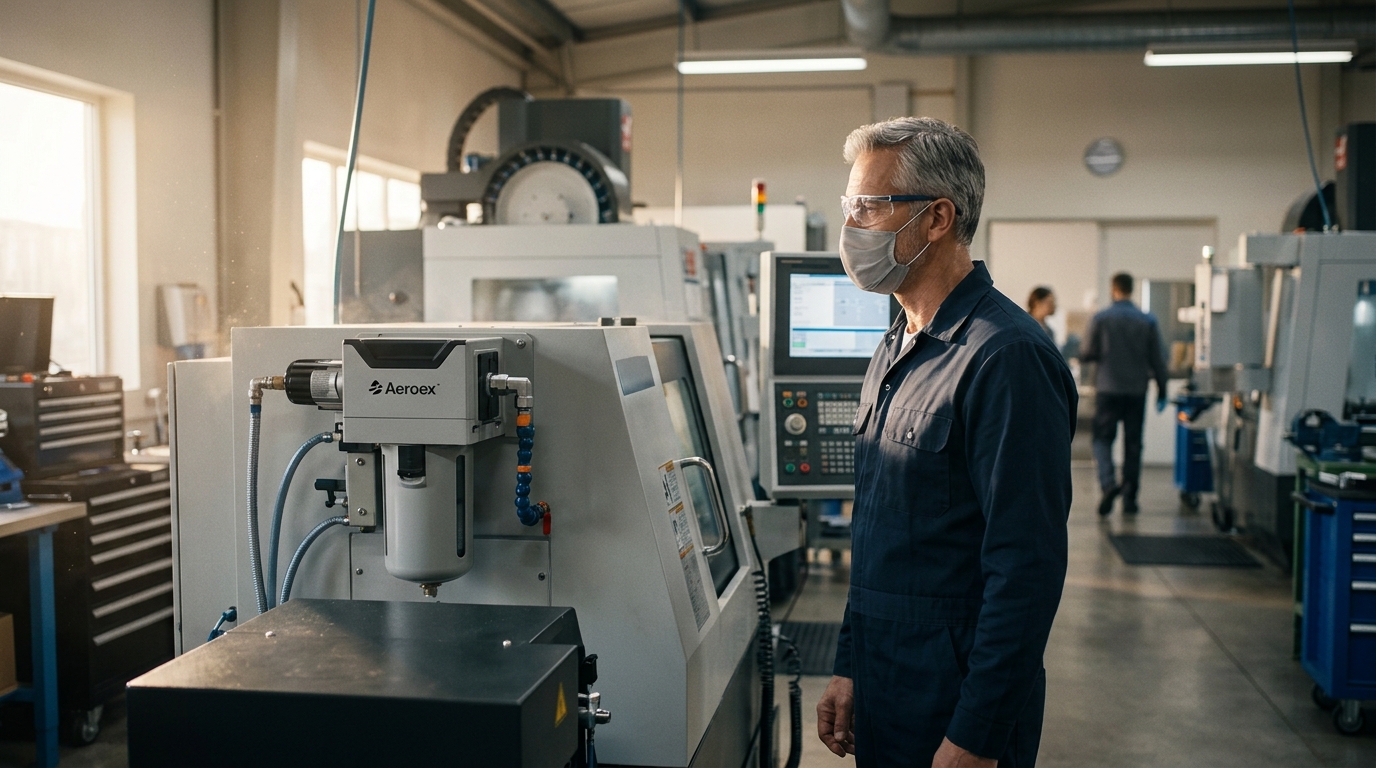
How to Choose the Right Air Filtration Solution for Your Workshop
Industrial air quality is a critical component of modern manufacturing efficiency and worker safety. According to OSHA, exposure to airborne contaminants such as oil mist, smoke, and particulate matter can lead to severe respiratory issues and long-term health complications for shop floor personnel. Data from the EPA indicates that proper ventilation and filtration systems can reduce indoor air pollutant levels by up to 95% in industrial settings. Research by ASHRAE further confirms that maintaining specific air exchange rates is essential for controlling volatile organic compounds in machining environments. Studies by NIOSH show that effective local exhaust ventilation significantly lowers the risk of occupational lung diseases among metalworkers.
Step 1: Assess Your Specific Contaminants
The first step in selecting an air filtration system is identifying exactly what you are trying to remove. Not all airborne particles are created equal. In a metalworking environment, you might encounter oil mist, smoke, or fine particulate dust. According to the CDC, oil mist is a common hazard in CNC machining and grinding operations, often appearing as a visible haze or "blue smoke." The World Health Organization notes that fine particulate matter (PM2.5) can penetrate deep into the lungs, causing chronic inflammation. Data from the ATSDR highlights that prolonged exposure to metalworking fluids can lead to "machine operator's lung," a form of hypersensitivity pneumonitis.
Understanding the nature of your contaminant dictates the filtration media required. Oil mist requires coalescing filters to separate liquid droplets from the air stream. Smoke and fine dust require high-efficiency particulate air (HEPA) or carbon filtration to capture microscopic particles and neutralize odors. Guidelines from the FDA emphasize the importance of removing volatile organic compounds (VOCs) in cleanroom and inspection areas to prevent product contamination.
Conduct a visual and olfactory audit of your shop floor. Is the air hazy? Do you smell burning oil or coolant? These are clear indicators that your current ventilation is insufficient. Industry reports from Ergodyne suggest that workers in poorly ventilated shops report 40% higher rates of fatigue and respiratory irritation compared to those in filtered environments.
Step 2: Calculate Required Airflow (CFM)
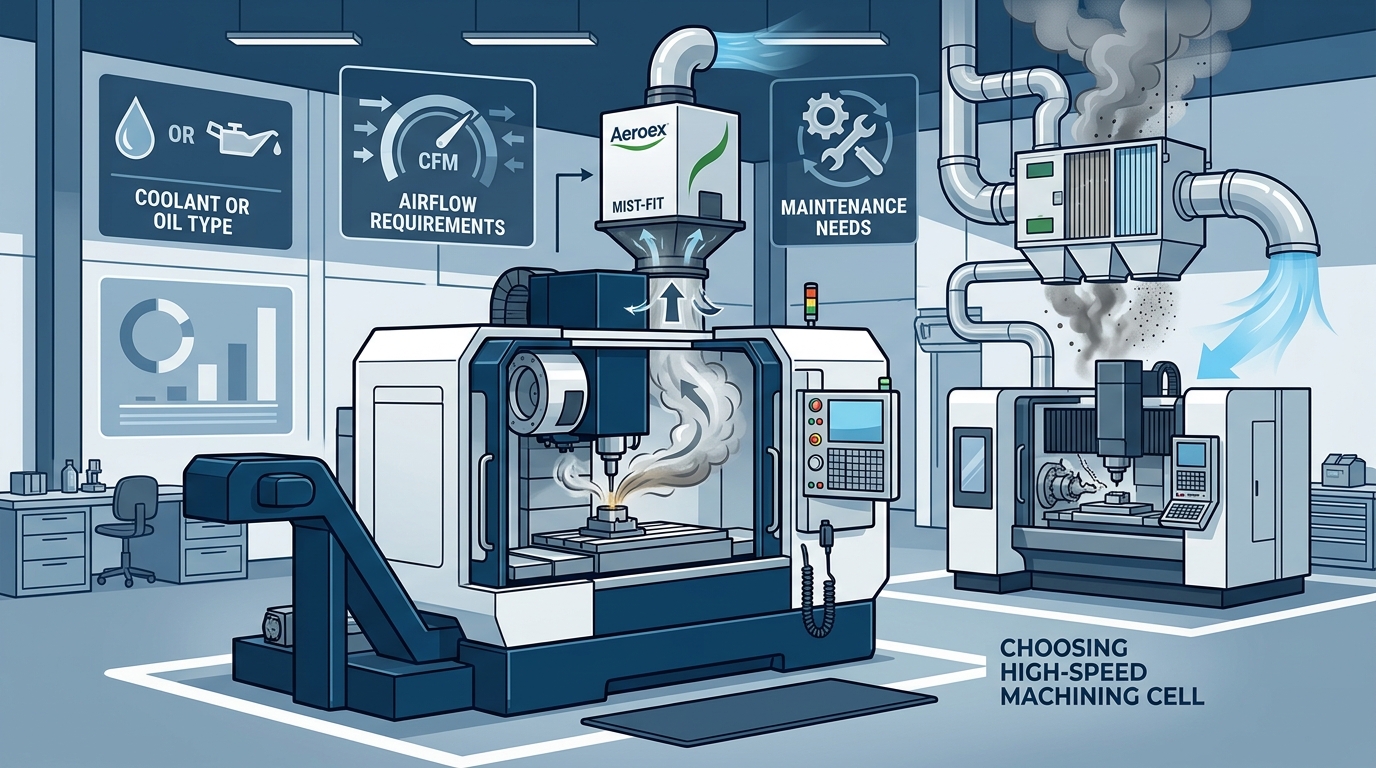
Once you know what you are filtering, you must determine how much air needs to be moved. This is measured in Cubic Feet per Minute (CFM). The required CFM depends on the size of your workspace, the number of machines, and the volume of contaminants generated. ASHRAE standards provide detailed formulas for calculating air changes per hour (ACH) based on room volume and contaminant generation rates.
For localized sources like a single CNC machine, you do not need to filter the entire room. Instead, you need a source-capture system. The EPA recommends that source capture units be positioned within 1.5 feet of the contamination source to be effective. OSHA guidelines state that inadequate capture velocity allows contaminants to escape into the general breathing zone of the operator.
Consider the suction power of your unit. A unit with high CFM but low static pressure may fail to pull mist from a deep machine enclosure. Engineering data from the Toolbox shows that static pressure drops significantly as ductwork length increases. Therefore, you must select a blower that can maintain adequate suction through your specific ducting configuration.
Step 3: Select the Right Filtration Technology
Industrial air filtration solutions rely on different technologies to achieve purity. Health data from the WHO indicates that HEPA filters can remove 99.97% of particles 0.3 microns in diameter. EPA research confirms that activated carbon is necessary for adsorbing gases and odors that particulate filters cannot catch. Studies in Nature demonstrate that dual-stage filtration systems outperform single-stage units in complex industrial environments.
Coalescing Filters are designed for oil mist. They force air through a dense media that causes small droplets to merge into larger drops, which then drain away. ASHRAE publications note that coalescing filters are most effective for droplets larger than 0.3 microns.
HEPA Filters are the gold standard for particulate matter. They use a dense mat of fibers to trap dust, smoke, and bacteria. CDC guidelines require HEPA filtration in any environment where airborne pathogens or fine toxic dusts are present.
Carbon Filters use activated carbon to adsorb VOCs and odors. FDA regulations often mandate carbon filtration in food processing and pharmaceutical manufacturing to ensure air purity.
Step 4: Compare Product Categories
Aeroex offers a range of specialized solutions designed for different shop floor challenges. Understanding the distinction between these categories is vital for making the right choice.
| Product Line | Best For | Key Feature | Typical Application |
|---|---|---|---|
| Maverick | Heavy-duty oil mist | High-capacity coalescing | CNC machining centers |
| Mist-Fit | Compact machine integration | Direct cabinet mounting | Vertical mills and lathes |
| ARO-X | General workshop air | High CFM circulation | Large open shops |
| Blow Box | Part blow-off | Dual downdraft capture | Quality inspection areas |
| IRIS | Odor and smoke control | Dual-stage HEPA/Carbon | Clean rooms and labs |
The Mist-Fit series is particularly popular for its compact design, allowing it to be mounted directly on machines like Haas VF-5 vertical mills. Industry data from Machinery Lubrication shows that direct machine filtration reduces filter replacement costs by 30% compared to central systems. ASHRAE studies confirm that localized capture is more energy-efficient than whole-room air handling.
For larger facilities, the ARO-X line provides robust air purification for broader areas. EPA reports indicate that central air purification systems can handle up to 10,000 CFM, making them suitable for large assembly plants. Research in Nature suggests that modular systems offer greater flexibility for expanding shops.
Step 5: Evaluate Maintenance and Lifespan
The total cost of ownership extends beyond the initial purchase price. Filter lifespan and ease of replacement are critical factors. OSHA regulations require regular monitoring of filtration systems to ensure they remain effective. EPA guidelines state that clogged filters increase energy consumption and reduce airflow efficiency.
Aeroex units are designed for easy maintenance. ASHRAE standards recommend that oil mist collectors be inspected monthly for pressure drops. CDC data shows that facilities with strict maintenance schedules report 50% fewer equipment failures related to air quality.
Consider the availability of replacement parts. FDA compliance often requires documented maintenance logs for air filtration systems in regulated industries. Studies in Nature highlight that proprietary filter ecosystems can reduce downtime by ensuring compatibility and performance.
Key Takeaways
- Identify Contaminants: Oil mist requires coalescing filters, while smoke and odors need HEPA and carbon stages.
- Calculate CFM: Use source capture for individual machines to maximize efficiency and minimize energy use.
- Match Product to Need: Use Mist-Fit for machine integration and ARO-X for general shop air.
- Plan for Maintenance: Regular filter replacement is critical for compliance and system longevity.
- Leverage Expertise: Aeroex has been providing industrial air solutions since 2001, with a focus on quality and innovation.
- Verify Compliance: Ensure your system meets OSHA and EPA standards for your specific industry.
- Consider Scalability: Choose systems that can grow with your facility, such as those from IRIS for cleanroom applications.
Frequently Asked Questions
What is the difference between oil mist and smoke filtration?
Oil mist filtration uses coalescing media to separate liquid droplets from the air, while smoke filtration uses HEPA and carbon filters to capture microscopic particles and adsorb gases.
How do I know if my workshop needs a central or local system?
If you have a few large machines generating significant mist, local source capture is more efficient. For many small sources or general odor control, a central system may be better.
What is the lifespan of an Aeroex filter?
Filter lifespan varies based on usage and contaminant load, but Aeroex units are designed for extended service life with easy replacement protocols.
Does Aeroex offer custom engineering solutions?
Yes, Aeroex provides engineered solutions for specialized applications, including cleanrooms and inspection areas.
Is Aeroex available in the United States?
Yes, Aeroex has expanded to the United States through Aeroex U.S.A., providing support and products across North America.
What certifications do Aeroex products hold?
Aeroex products are designed to meet rigorous industrial air quality standards, including OSHA and EPA guidelines.
How much does an industrial air filtration system cost?
Costs vary based on CFM requirements and filtration stages. Contact Aeroex for a detailed quote tailored to your facility.
Get Your Custom Solution
Choosing the right air filtration solution is an investment in your workforce's health and your facility's efficiency. Aeroex has been a trusted name in industrial air purification since 2001, serving over 1,000 manufacturing facilities globally. Our team is ready to help you assess your needs and design a system that delivers 99.9% removal of harmful particles. Contact us today to schedule a site visit or request a quote for your workshop.