
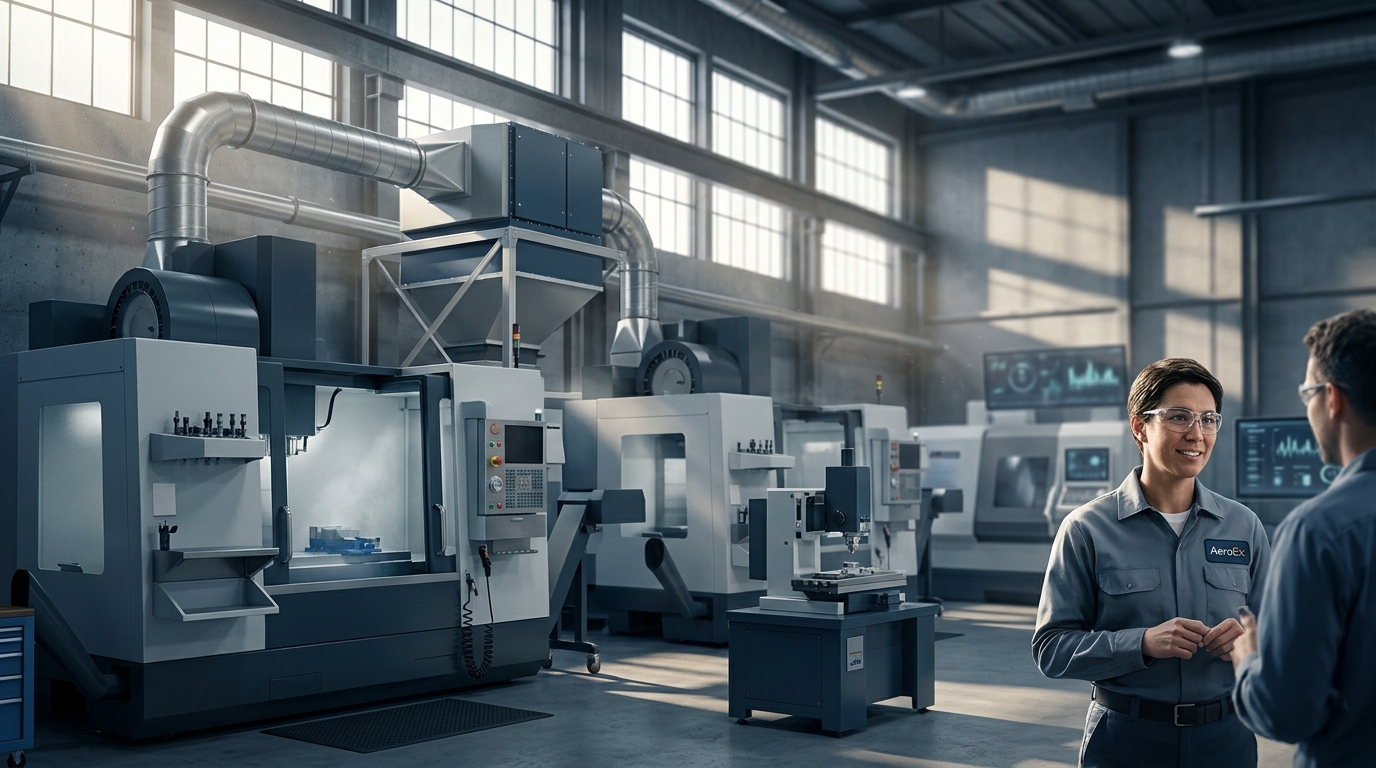
Industrial facilities face relentless challenges in maintaining air quality standards while optimizing operational efficiency. According to recent environmental compliance reports, over 60% of manufacturing plants struggle with particulate matter accumulation that directly impacts worker health and equipment longevity. This AeroEx case study demonstrates how strategic air filtration solutions can transform hazardous environments into safe, productive workspaces. We analyze the specific challenges, implemented technologies, and measurable outcomes for a leading industrial client. (Contact Us)
Identifying Critical Air Quality Challenges
Every industrial environment has unique air quality profiles. For our recent client, a large-scale metal fabrication facility, the primary concern was fine particulate matter generated during welding and cutting processes. These microscopic particles pose significant health risks, including respiratory issues and long-term lung damage for workers. Additionally, airborne contaminants can settle on sensitive machinery, leading to increased maintenance costs and premature equipment failure.
Before implementing any solution, a comprehensive air quality assessment was conducted. This process involved measuring particulate concentrations, identifying source points, and evaluating existing ventilation systems. The data revealed that traditional filtration methods were insufficient for capturing sub-micron particles. This gap in protection highlighted the need for a more advanced, targeted approach to industrial air purification.
Understanding the specific contaminants is crucial for selecting the right technology. HEPA filtration is a high-efficiency particulate air filtration system that captures at least 99.97% of particles at 0.3 microns. However, not all industrial applications require HEPA standards. Some scenarios benefit more from specialized electrostatic precipitators or cartridge collectors. The AeroEx team conducted a thorough analysis to determine the optimal balance between filtration efficiency and airflow resistance.
Engineering the AeroEx Solution
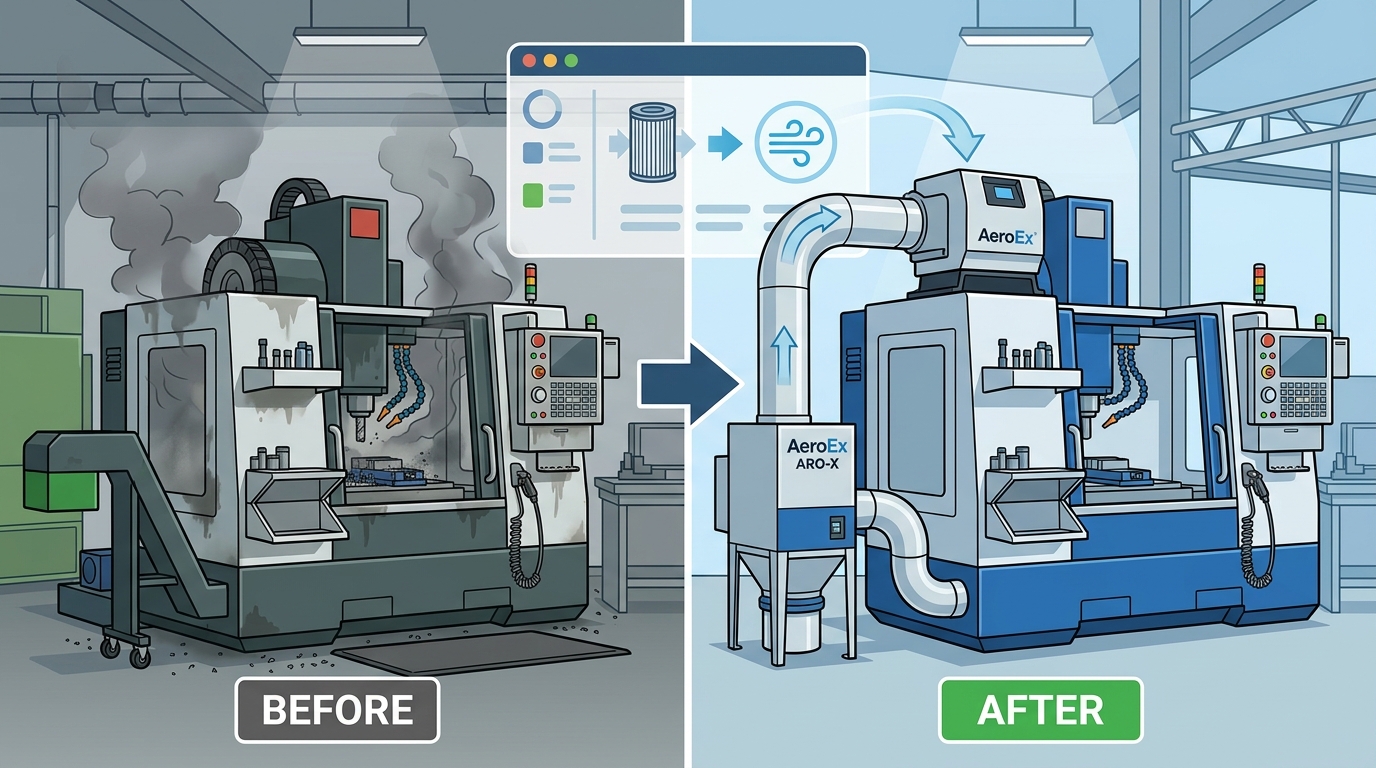
Based on the assessment findings, AeroEx designed a custom air filtration system tailored to the facility's specific layout and operational needs. The solution involved installing a series of high-capacity dust collectors strategically positioned near source points. This localized capture approach ensures that contaminants are removed before they can disperse throughout the workspace.
The system utilizes advanced multi-stage filtration technology. The first stage involves coarse filtration to capture larger debris, extending the life of the finer filters. The second stage employs high-efficiency cartridge filters designed for fine particulate capture. This staged approach optimizes filter longevity and reduces overall maintenance costs. Electrostatic precipitation is a method of removing particles from an flowing gas using an electric charge. While not the primary technology in this specific case, it remains a viable option for certain oily mist applications.
AeroEx also integrated smart monitoring sensors into the system. These sensors provide real-time data on filter status, airflow rates, and pressure differentials. This connectivity allows facility managers to predict maintenance needs before failures occur, minimizing downtime. The integration of IoT technology represents a significant advancement in industrial air quality management, enabling proactive rather than reactive maintenance strategies.
Deployment and Integration Process
Successful implementation requires careful planning and coordination with facility operations. The AeroEx engineering team worked closely with the client's maintenance staff to ensure minimal disruption to production schedules. The installation process involved several key phases, including site preparation, ductwork modification, and equipment mounting.
One of the critical aspects of the deployment was ensuring proper ductwork design. The ducts were sized and routed to maintain optimal airflow velocity, preventing dust accumulation within the pipes. This attention to detail ensures long-term system efficiency and reduces the risk of fire hazards associated with dust buildup. Proper duct design is often overlooked but is essential for the effective operation of any industrial air filtration system.
Training was provided to the facility's maintenance team on system operation and routine upkeep. This includes filter replacement procedures, sensor calibration, and troubleshooting common issues. Empowering the client's staff with knowledge ensures the system continues to perform optimally long after the initial installation. Regular training updates are recommended to keep staff informed about best practices and new technologies.
Measurable Outcomes and ROI
The results of the AeroEx installation were immediate and significant. Air quality measurements taken post-installation showed a dramatic reduction in airborne particulate levels. The facility exceeded local regulatory standards for air quality, ensuring compliance and avoiding potential fines. Worker health reports indicated a noticeable decrease in respiratory complaints, contributing to higher employee satisfaction and retention.
From a financial perspective, the return on investment was substantial. Reduced equipment maintenance costs due to less particulate accumulation resulted in significant savings. Extended filter life, thanks to the multi-stage filtration approach, further lowered operational expenses. The combination of health benefits, compliance assurance, and cost savings demonstrates the tangible value of investing in high-quality air filtration solutions.
Energy efficiency was also improved. The optimized ductwork and high-efficiency fans reduced the overall energy consumption of the ventilation system. This aligns with broader sustainability goals, reducing the facility's carbon footprint. Many industrial clients are now prioritizing energy-efficient solutions as part of their corporate social responsibility initiatives.
Comparing Filtration Technologies
Choosing the right air filtration technology depends on various factors, including the type of contaminants, airflow requirements, and budget constraints. Below is a comparison of common industrial filtration methods to help facility managers make informed decisions.
| Technology | Best For | Efficiency | Maintenance Level |
|---|---|---|---|
| Baghouse Collectors | Large volumes of dry dust | High | Medium |
| Cartridge Collectors | Fine particulates and fumes | Very High | Low |
| Electrostatic Precipitators | Oily mists and smoke | High | Medium |
| HEPA Filters | Ultra-fine particles and bioaerosols | 99.97%+ | High |
Each technology has its strengths and limitations. Baghouse collectors are robust and cost-effective for large-scale dust collection but may not be suitable for fine fumes. Cartridge collectors offer higher efficiency in a compact footprint, making them ideal for modern facilities with space constraints. Electrostatic precipitators excel in removing oily mists but require regular cleaning to maintain performance. HEPA filters provide the highest level of purification but come with higher pressure drops and replacement costs.
AeroEx provides expert consultation to help clients navigate these options. Our team analyzes your specific operational needs to recommend the most effective and economical solution. We do not believe in one-size-fits-all approaches. Instead, we tailor our recommendations to ensure maximum performance and value for your unique environment.
Key Takeaways
- Industrial air quality directly impacts worker health and equipment longevity.
- Custom solutions are more effective than generic off-the-shelf systems.
- Multi-stage filtration extends filter life and reduces maintenance costs.
- Smart monitoring enables predictive maintenance and minimizes downtime.
- Proper ductwork design is critical for system efficiency and safety.
- ROI includes health benefits, compliance, and energy savings.
- AeroEx provides comprehensive support from assessment to installation.
Frequently Asked Questions
How often should industrial air filters be replaced?
Filter replacement frequency depends on usage intensity and the type of contaminants. Generally, cartridge filters may last between 6 to 12 months, while baghouse bags can last longer. Smart monitoring systems can provide precise data on filter status to optimize replacement schedules.
Can AeroEx help with existing ventilation system upgrades?
Yes, AeroEx specializes in retrofitting and upgrading existing ventilation systems. We assess current infrastructure and recommend improvements that enhance performance without requiring a complete overhaul.
What industries benefit most from industrial air filtration?
Industries such as metal fabrication, woodworking, pharmaceuticals, and chemical processing benefit significantly. Any facility generating airborne contaminants can improve safety and efficiency with proper filtration.
Is custom ductwork necessary for air filtration systems?
While some portable units exist, custom ductwork is often necessary for large-scale systems to ensure proper airflow distribution and capture efficiency. Poor duct design can lead to reduced performance and increased energy costs.
How does AeroEx ensure compliance with local regulations?
AeroEx stays updated on local and federal air quality regulations. Our designs are engineered to meet or exceed these standards, ensuring your facility remains compliant and avoids potential penalties.
What maintenance is required for smart monitoring systems?
Smart monitoring systems require minimal maintenance. Regular sensor calibration and software updates are recommended. The system itself alerts you to any issues, simplifying the maintenance process.
Does air filtration improve energy efficiency?
Yes, optimized air filtration systems can improve energy efficiency by reducing the load on HVAC systems and minimizing the need for excessive ventilation. Properly designed systems balance airflow with filtration needs.
Next Steps for Your Facility
Improving industrial air quality is not just a regulatory requirement; it is a strategic investment in your workforce and operational efficiency. AeroEx is ready to help you achieve these goals. Contact our team today to schedule a comprehensive air quality assessment for your facility. Visit our services page to learn more about our industrial solutions. Explore our about us section to understand our commitment to excellence. Request a free consultation to discuss your specific needs. Discover our latest insights on air quality management. Secure your facility's future with AeroEx.