
Common Mistakes in Specifying Custom Industrial Air Filtration Systems and How to Avoid Them
Industrial air quality is not a luxury; it is a critical operational metric. According to the Occupational Safety and Health Administration (OSHA), workplace exposure to airborne contaminants remains a leading cause of long-term health issues in manufacturing environments. When specifying a custom industrial air filtration system, a single miscalculation in airflow dynamics or filter media can lead to catastrophic equipment failure, regulatory fines, and compromised worker safety. This guide details the most frequent errors made during the specification phase and provides actionable strategies to ensure your facility achieves optimal air purification.
1. Ignoring Specific Contaminant Types
The most critical error in specifying air filtration is treating all airborne particles as identical. Different industrial processes generate distinct types of contaminants, each requiring specific filtration media and capture velocities. Oil mist is a dense, liquid aerosol generated during CNC machining and grinding. Welding fumes consist of fine metallic oxides that require high-efficiency particulate air (HEPA) or specialized electrostatic precipitation. Wood dust is a combustible particulate that demands explosion-proof engineering.
When you specify a system without identifying the exact contaminant, you risk installing a filter that clogs immediately or fails to capture hazardous particles. For example, using a standard bag filter for heavy oil mist will result in rapid saturation and blow-through. Aeroex addresses this by offering specialized lines like the Mist-Fit series, which is engineered specifically for compact, high-efficiency oil mist collection. Understanding the chemical and physical properties of your waste is the first step in specification.
2. Miscalculating Airflow Requirements
Airflow, measured in cubic feet per minute (CFM), is the engine of any filtration system. A common mistake is undersizing the CFM capacity relative to the source of contamination. If the capture velocity at the source is too low, contaminants will escape into the general workspace before entering the filter. Conversely, oversizing the system leads to unnecessary capital expenditure and excessive energy consumption.
Accurate calculation requires a detailed analysis of the distance between the contaminant source and the capture point, as well as the volume of the room. According to industry standards for industrial ventilation, maintaining proper capture velocity is essential for compliance with OSHA industrial hygiene guidelines. Aeroex utilizes advanced engineering to match systems like the ARO-X series to specific CFM requirements, ensuring that the system removes harmful particles without wasting energy on over-processing clean air.
3. Overlooking Maintenance Accessibility
Many facility managers focus solely on the initial purchase price and filtration efficiency, neglecting the long-term operational costs. A system that is difficult to maintain will inevitably fall into disrepair. If filter changes require specialized tools, extensive downtime, or dangerous climbing procedures, technicians will delay maintenance. This leads to increased pressure drop, reduced airflow, and potential system failure.
When specifying a custom system, prioritize designs that allow for quick, tool-free filter access. The Maverick series, for instance, is designed with user-centric maintenance in mind, allowing for rapid filter replacement to minimize downtime. Regular maintenance is not just about compliance; it is about preserving the integrity of your investment. A well-maintained system operates at peak efficiency, whereas a neglected one becomes a source of contamination itself.
4. Neglecting Energy Efficiency Metrics
Industrial air filtration systems run continuously, making energy consumption a significant portion of the total cost of ownership. A common mistake is selecting a system with a high static pressure drop. As filters load with contaminants, resistance to airflow increases. If the fan motor is not sized to overcome this resistance efficiently, energy bills will skyrocket.
Look for systems equipped with Variable Frequency Drives (VFDs). VFDs adjust the fan speed based on real-time pressure readings, maintaining optimal airflow while reducing energy use during low-load periods. Aeroex’s commitment to energy efficiency and innovation is evident in their product lineup, which includes units designed to minimize static pressure loss. By choosing a high-efficiency motor and optimized ductwork design, you can significantly reduce your facility’s carbon footprint and operational costs.
5. Choosing Generic Solutions Over Custom Engineering
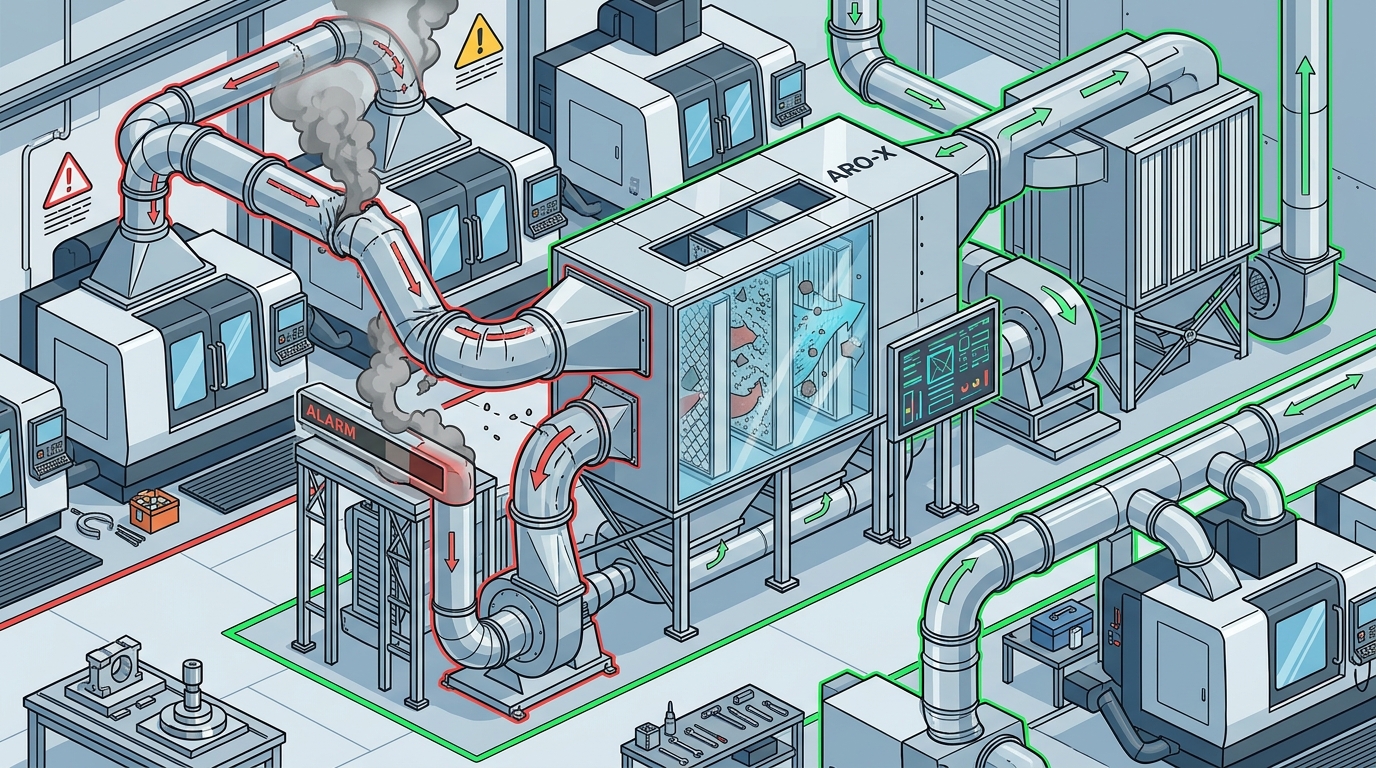
One-size-fits-all solutions rarely work in industrial environments. Every facility has unique spatial constraints, production schedules, and regulatory requirements. Specifying a generic off-the-shelf unit without considering these factors often results in poor performance. For example, a system designed for a large open floor may fail in a confined space due to inadequate airflow distribution.
Custom engineering ensures that the filtration system integrates seamlessly with your existing infrastructure. Aeroex offers engineered solutions tailored to specific applications, from metalworking to cleanrooms. This bespoke approach allows for precise placement of capture points, optimized duct routing, and selection of the most appropriate filtration media. By working with experts who understand the nuances of industrial air purification, you avoid the pitfalls of generic systems and ensure a solution that delivers measurable results.
Comparing Filtration Technologies for Industrial Applications
Selecting the right technology is crucial for long-term success. Below is a comparison of common filtration methods used in industrial settings.
| Technology | Best For | Maintenance Level | Efficiency |
|---|---|---|---|
| Oil Mist Collectors | CNC machining, grinding | Low to Moderate | High for liquid aerosols |
| HEPA Filtration | Welding fumes, fine particulates | Moderate | 99.97% at 0.3 microns |
| Carbon Filtration | Odors, VOCs | High | High for gases |
| Downdraft Blow-Off | Part cleaning, spot capture | Low | Targeted capture |
Key Takeaways
- Contaminant Identification: Always analyze the specific type of airborne particles before selecting a filter media.
- CFM Accuracy: Miscalculating airflow leads to poor capture rates and wasted energy.
- Maintenance Design: Choose systems with accessible filters to ensure consistent performance.
- Energy Efficiency: VFDs and low static pressure designs reduce long-term operational costs.
- Custom Engineering: Generic solutions often fail to meet unique spatial and operational needs.
- Regulatory Compliance: Adhering to EPA indoor air quality standards is essential for legal and health reasons.
- Vendor Expertise: Partner with established companies like Aeroex Technologies for reliable, long-term support.
Frequently Asked Questions
What is the most common mistake in industrial air filtration?
The most common mistake is undersizing the system’s CFM capacity relative to the contaminant source, leading to inadequate capture of harmful particles.
How often should industrial air filters be replaced?
Filter replacement frequency depends on the load of contaminants. However, regular inspection is critical. Aeroex recommends monitoring pressure drops to determine the optimal replacement schedule for units like the Mist-Fit.
Can I install an air filtration system myself?
While some compact units are DIY-friendly, custom industrial systems require professional engineering to ensure proper airflow dynamics and safety compliance.
What is the difference between HEPA and carbon filtration?
HEPA filtration captures solid particulates like dust and fumes, while carbon filtration adsorbs gases, vapors, and odors. Many systems, such as the IRIS series, combine both for comprehensive air purification.
How does Aeroex ensure system efficiency?
Aeroex uses advanced engineering and VFD technology to optimize airflow and energy consumption, ensuring that systems like the ARO-X perform efficiently over their lifespan.
Is custom air filtration more expensive than standard units?
While the initial cost may be higher, custom systems offer better long-term value through improved efficiency, lower maintenance costs, and tailored performance that generic units cannot match.
What industries benefit most from custom air filtration?
Manufacturing, metalworking, welding, and cleanroom environments benefit significantly from custom solutions that address their specific contaminant challenges.
Ready to Optimize Your Facility’s Air Quality?
Specifying the right industrial air filtration system is a complex process that requires expertise, precision, and a deep understanding of your operational needs. Avoid the common pitfalls outlined in this guide by partnering with a trusted provider. Aeroex has been a leader in industrial air purification since 2001, serving over 1,000 facilities across North America. Contact us today to discuss your specific requirements and discover how our custom solutions can protect your workforce and improve your bottom line. Request a Quote now to begin your journey toward cleaner, safer air.