
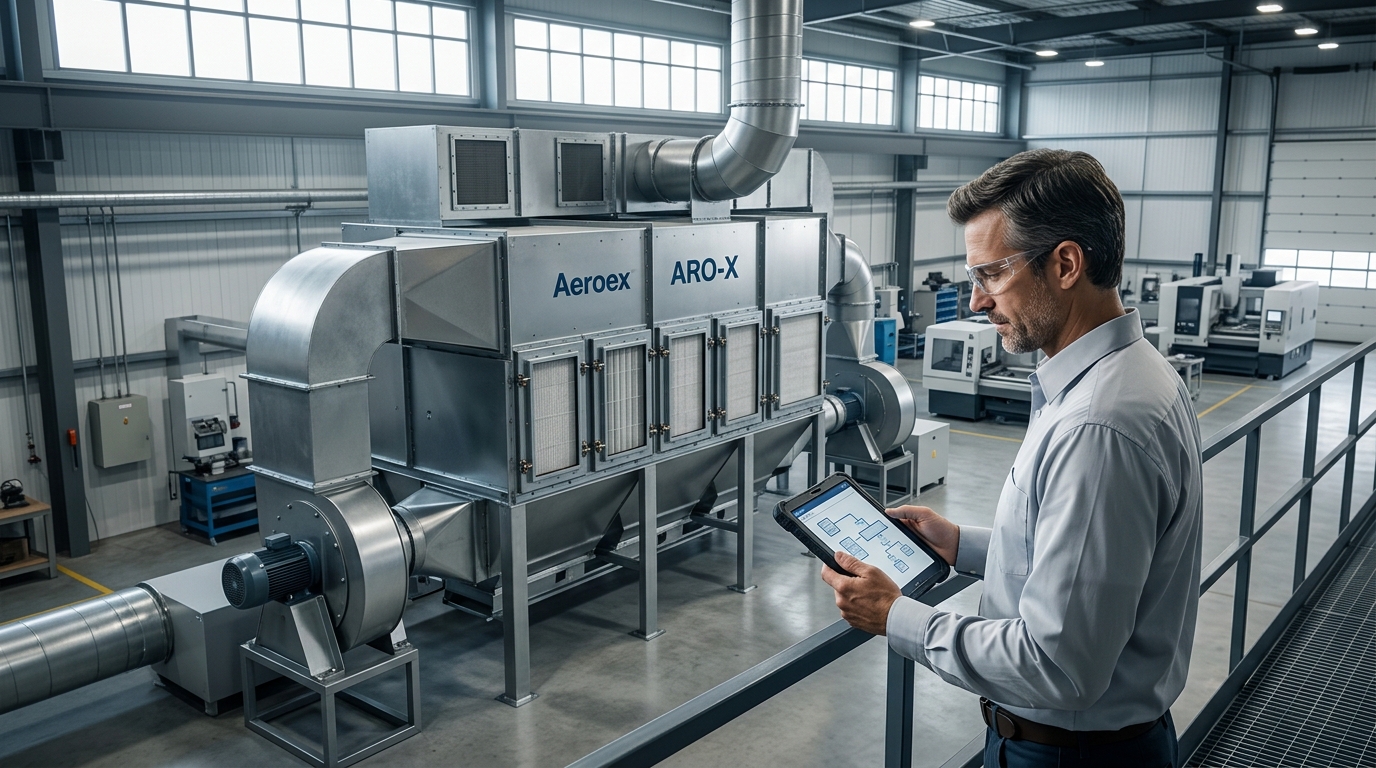
What Factors Actually Determine the Cost of Custom Industrial Air Filtration Systems?
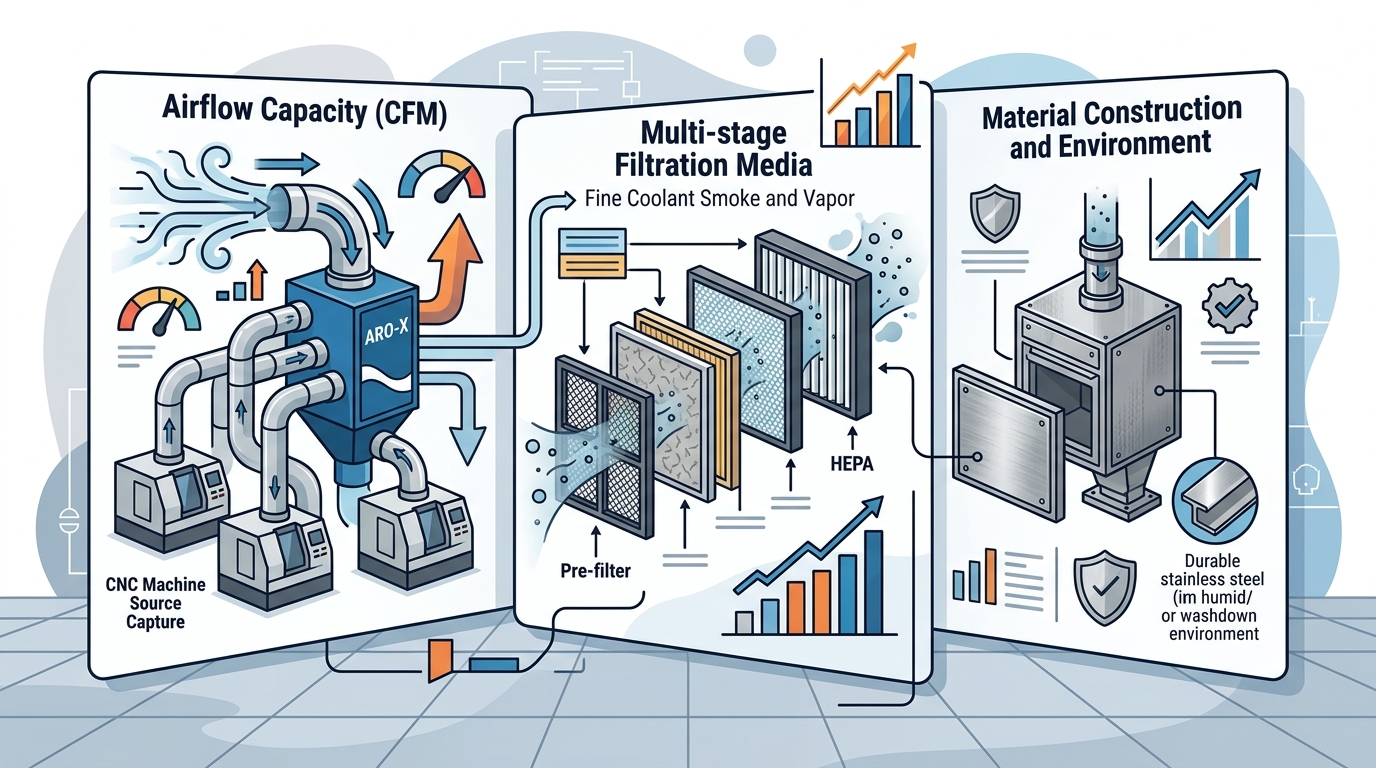
The cost of a custom industrial air filtration system is primarily determined by the required airflow capacity, the complexity of the multi-stage filtration media, and the specific material construction needed to withstand your operating environment. These three variables drive the engineering hours, component sourcing, and fabrication time that define the final price. Understanding how these factors interact helps facility managers budget accurately and select the right solution for their specific process air challenges.
Airflow Capacity and Static Pressure Requirements
Airflow capacity is the single most significant driver of system cost. The volume of air a system must move, measured in cubic feet per minute (CFM), dictates the size and power of the blower motor required. A system designed for a single compact CNC machine requires a much smaller blower than one serving a large grinding room or a multi-machine bay. Static pressure is the second critical factor. It represents the resistance the blower must overcome to push air through ductwork, filters, and the machine enclosure. High static pressure requirements necessitate more powerful, and therefore more expensive, blower assemblies. For example, a modular platform like the ARO-X is engineered to handle a wide range of airflow and static pressure specifications, allowing it to scale from smaller applications to high-demand industrial environments.
Filtration Media and Multi-Stage Complexity
The type and number of filtration stages directly impact the initial purchase price and the long-term cost of consumables. A basic system might use a single pre-filter and a final high-efficiency filter. However, complex applications often require multi-stage architectures. A pre-filter and depth-loading coalescer might capture bulk droplets, followed by a HEPA stage for submicron particles, and an optional activated carbon stage for odor or volatile organic compounds (VOCs). Each additional stage adds cost to the housing, the media, and the maintenance labor. For instance, the Mist-Fit series utilizes a progressive filtration approach designed for compact, direct-mount applications, balancing high-efficiency capture with manageable maintenance intervals. The choice between standard MERV-rated filters and optional HEPA or carbon stages is a major cost variable that must be aligned with the specific contaminants present in the process air.
Material Construction and Environmental Durability
The physical environment of the installation site dictates the material construction of the filtration system, which significantly affects the price. Standard systems are often built with coated steel, which is cost-effective for dry, non-corrosive environments. However, facilities with washdown requirements, high humidity, or exposure to corrosive chemicals require stainless steel construction. Stainless steel is substantially more expensive than coated steel due to the raw material cost and the specialized fabrication techniques required. This is a critical consideration for industries such as food and beverage manufacturing or chemical processing. Aeroex offers systems that can be configured with stainless steel components to ensure durability and ease of cleaning in these demanding, sanitary environments. The choice of material is not just a cosmetic decision; it is a functional requirement that directly influences the system's lifespan and total cost of ownership.
Custom Engineering and Integration Complexity
When a standard off-the-shelf unit cannot meet the facility's needs, custom engineering becomes a primary cost driver. This includes designing custom ductwork, creating unique mounting brackets, or integrating the filtration system with existing machine controls. The more complex the integration, the more engineering hours are required for design, prototyping, and on-site commissioning. For example, a system designed for a specific soil remediation process or a unique heat treating application requires a tailored approach that goes beyond standard product configurations. The Engineered Solutions division specializes in these custom configurations, where the cost reflects the specialized knowledge and labor involved in solving a unique process air problem. Simple, direct-mount installations are generally less expensive than complex, multi-machine, or custom-integrated systems because they require less bespoke design work.
Maintenance Access and Serviceability
The design of the system for maintenance and filter replacement is another often-overlooked cost factor. Systems that are difficult to access or require specialized tools for filter changes increase the labor cost of routine maintenance. A well-designed system prioritizes easy filter access, quick changes, and minimal downtime. This design philosophy can slightly increase the initial cost of the housing and mechanical components but reduces the long-term operational cost by making maintenance faster and less disruptive. For instance, the Air-Fit fan filter units are designed with easy filter access in mind, minimizing downtime in critical environments. When evaluating the cost of a custom system, it is important to consider the total cost of ownership, which includes the initial purchase price plus the ongoing cost of filters, labor, and potential downtime during maintenance.
Key Takeaways
- Airflow capacity (CFM) and static pressure are the primary drivers of blower cost and system size.
- The number and type of filtration stages (pre-filter, HEPA, carbon) significantly impact both initial cost and consumable expenses.
- Material construction, such as stainless steel for corrosive or washdown environments, adds substantial cost compared to standard coated steel.
- Custom engineering and complex integration with existing machinery increase design and commissioning costs.
- Designing for easy maintenance and quick filter changes can reduce long-term operational costs despite a higher initial price.
- Total cost of ownership should include initial purchase, filter replacement, labor, and potential downtime.
Frequently Asked Questions
What is the most expensive component of a custom air filtration system?
The blower assembly and the filtration media are typically the most expensive components. The blower must be sized to meet the specific airflow and static pressure requirements, while high-efficiency filtration media like HEPA or activated carbon adds significant cost to the system.
How does stainless steel construction affect the price?
Stainless steel construction is significantly more expensive than standard coated steel. The raw material cost is higher, and the fabrication process requires specialized techniques. This is necessary for environments with washdown requirements, high humidity, or corrosive chemicals.
Does a larger system always cost more?
Generally, yes. A larger system with higher CFM capacity requires a more powerful blower and larger housing, which increases the cost. However, a smaller system with complex custom engineering or high-end filtration media can sometimes cost more than a larger standard system.
What is the difference between a standard and a custom system?
A standard system is a pre-configured unit designed for common applications. A custom system is engineered to meet the specific requirements of a unique process, including custom ductwork, mounting, and filtration stages. Custom systems typically cost more due to the engineering and fabrication involved.
How can I reduce the cost of my air filtration system?
You can reduce costs by accurately defining your requirements to avoid over-specifying. Choosing a system with easy maintenance access can reduce long-term labor costs. Additionally, considering a modular system that can be scaled as needed may be more cost-effective than a single, large custom unit.
Conclusion
The cost of a custom industrial air filtration system is not a single number but a function of several interacting variables. Airflow capacity, filtration complexity, material construction, and engineering requirements all play a role in determining the final price. By understanding these factors, facility managers can make informed decisions that balance initial investment with long-term performance and maintenance costs. Aeroex provides tailored solutions for a wide range of industrial applications, from compact machine-mounted collectors to large-scale engineered systems. To determine the right solution for your facility, for a detailed application review and quote.