
Industrial Air Filtration System Pricing and ROI for Factory Operations
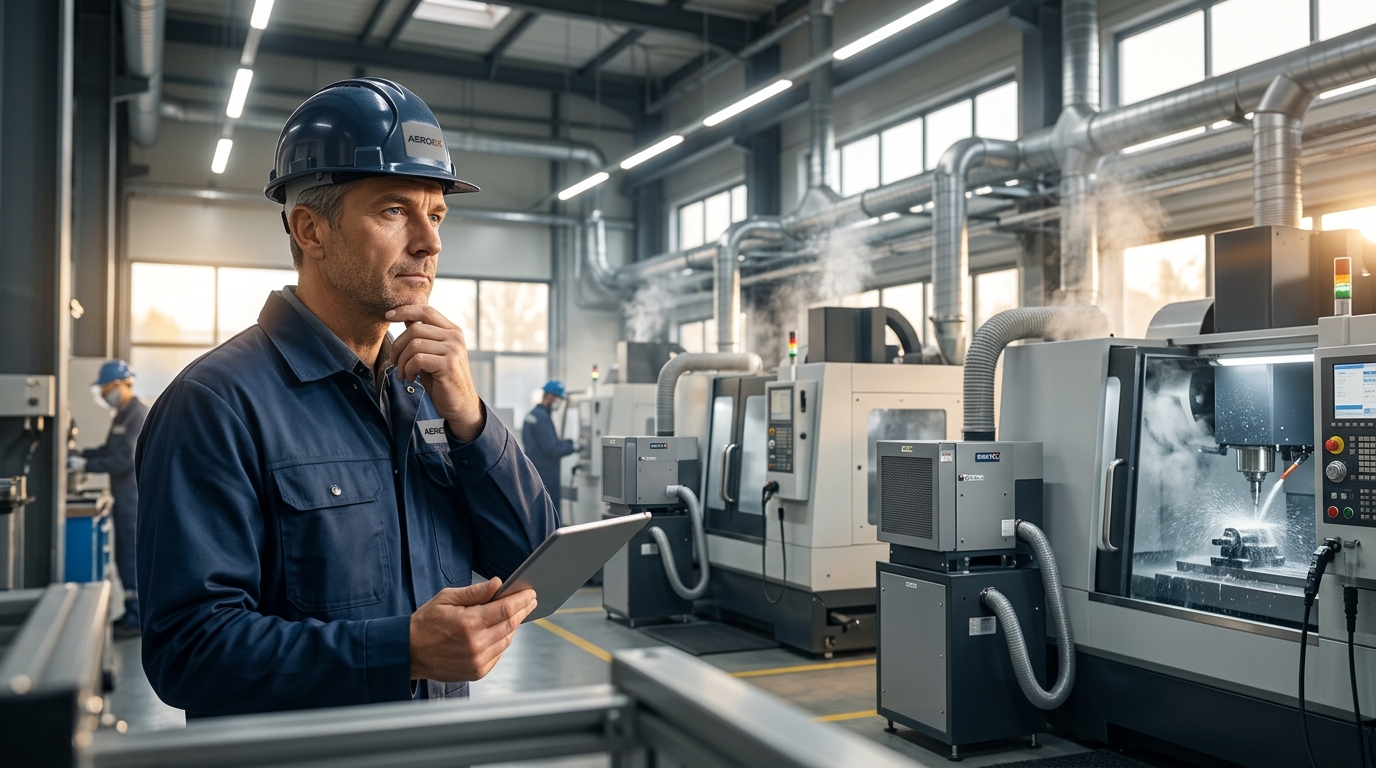
Industrial air pollution is a critical operational risk that directly impacts both worker health and regulatory compliance costs. According to OSHA, exposure to metalworking fluids and airborne particulates remains a leading cause of occupational respiratory issues in manufacturing environments. Factories that invest in high-efficiency air purification systems often see a return on investment within 12 to 24 months through reduced healthcare claims, lower ventilation energy loads, and extended machinery lifespan. This guide analyzes the financial architecture of industrial air filtration, detailing pricing models, operational savings, and the specific technologies that drive measurable ROI. (Contact Aeroex Emission Control)
Understanding Filtration Cost Drivers
When evaluating industrial air filtration systems, the initial purchase price is only a fraction of the total cost of ownership. The primary cost drivers include the filtration media efficiency, the motor's energy consumption, and the system's capacity to handle specific particulate loads. The EPA emphasizes that proper indoor air quality management is essential for maintaining a productive workforce and meeting environmental standards. (Industrial Air Filtration Solutions)
High-efficiency systems, such as those utilizing HEPA or advanced electrostatic precipitation, command a higher upfront capital expenditure. However, they offer superior capture rates for sub-micron particles, which are the most harmful to human health. Conversely, lower-cost units may struggle with fine mist, leading to rapid filter clogging and increased replacement frequency. Understanding these dynamics is crucial for accurate budgeting.
Another significant factor is the installation complexity. Systems that require extensive ductwork or structural modifications will incur higher labor costs. Modular units, like those designed for direct machine attachment, offer a lower barrier to entry and faster deployment times. This modularity allows factories to scale their air purification efforts incrementally, aligning capital outlay with operational needs.
Aeroex Product Pricing and Tiers
Aeroex Technologies provides a range of industrial air purification solutions tailored to different operational scales. Their product lineup is engineered to address specific challenges, from heavy metalworking mist to delicate cleanroom requirements. Established in 2001, Aeroex has built a reputation for delivering reliable, made-in-Canada air filtration technology that meets rigorous North American standards.
Mist-Fit Series
The Mist-Fit series is designed for compact, machine-level applications. These units are ideal for individual CNC machines or milling centers where localized capture is most effective. Pricing for the Mist-Fit series is generally lower than centralized systems, making it an accessible entry point for facilities looking to address specific problem areas. The MF-550, for example, is a popular choice for vertical mills, offering high performance in a small footprint.
ARO-X Series
The ARO-X series represents Aeroex's core line of oil mist collectors. These units are designed for higher volume applications and can handle larger particulate loads. They are often used in multi-machine setups or dedicated mist collection zones. The ARO-X series utilizes advanced filtration technology to ensure high capture efficiency while minimizing maintenance requirements. Pricing for this tier reflects its robust construction and superior capacity.
IRIS and BlowBox
For specialized applications, Aeroex offers the IRIS series and the BlowBox. The IRIS series features a dual-stage filtration system combining MERV8/Carbon primary filters with HEPA secondary filters, making it suitable for odor control and high-performance air purification. The BlowBox is a compact, dual downdraft blow-off station that captures hazardous mist during part blow-off with compressed air. These specialized solutions command premium pricing due to their niche applications and advanced engineering.
Calculating True ROI for Your Facility
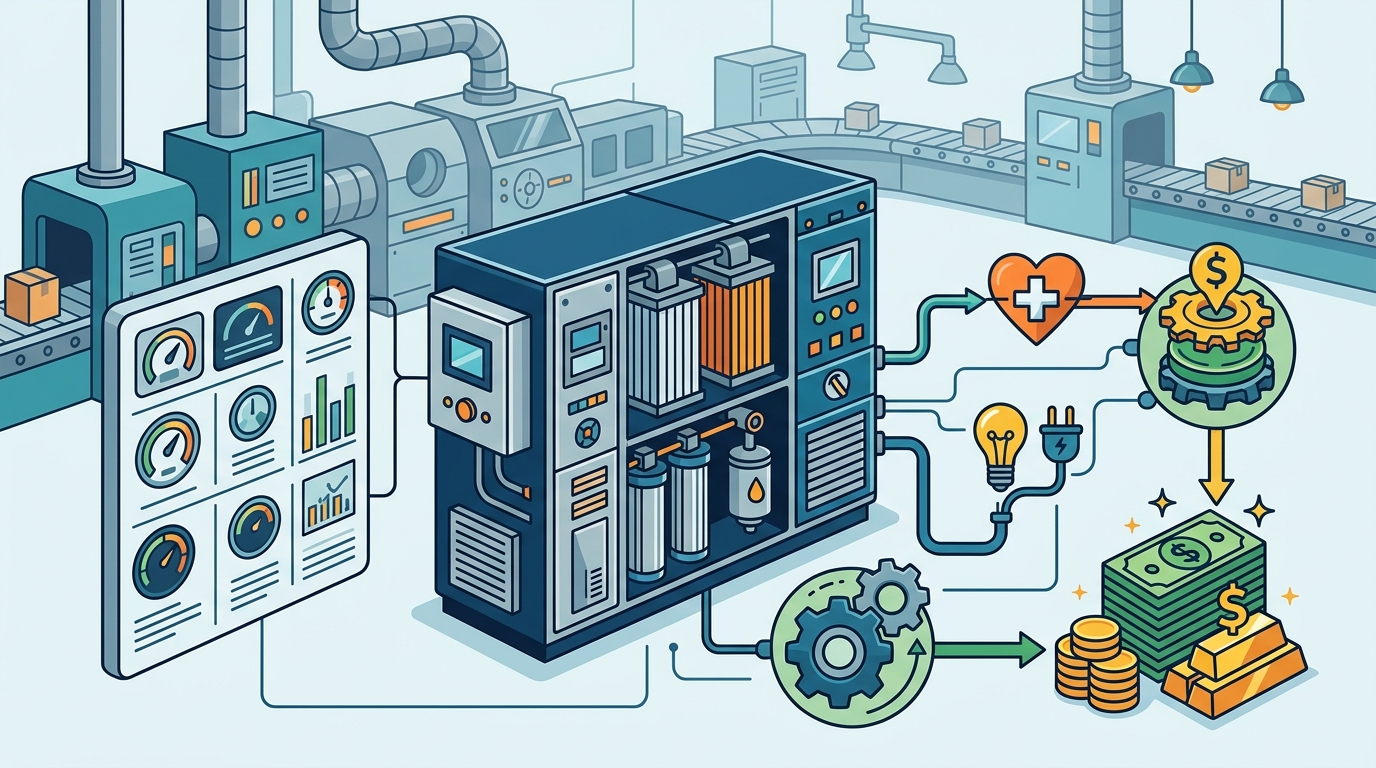
Return on investment for industrial air filtration is calculated by comparing the total cost of ownership against the quantifiable savings and avoided costs. The formula typically includes the initial system cost, installation, energy, and maintenance, subtracted from savings in energy, filter replacements, and regulatory fines avoided.
One of the most significant ROI drivers is the reduction in ventilation energy costs. Traditional exhaust ventilation systems expel conditioned air, requiring expensive heating or cooling to replace it. By capturing and filtering air at the source, factories can recirculate a portion of the air back into the facility, significantly reducing HVAC loads. According to the U.S. Department of Energy, energy-efficient ventilation strategies can reduce energy consumption by up to 50% in industrial settings.
Another critical factor is the extension of machinery lifespan. Oil mist and particulates can infiltrate sensitive machine components, leading to premature wear and costly repairs. By maintaining a cleaner environment, factories can extend the operational life of their CNC machines and other precision equipment. This deferral of capital expenditure for new machinery is a substantial, often overlooked, component of ROI.
Maintenance Expenses and Filter Lifecycles
Maintenance costs are a recurring expense that directly impacts the long-term profitability of an air filtration system. The frequency of filter changes and the cost of replacement media vary significantly by technology and application. ASHRAE standards recommend regular monitoring and maintenance to ensure filtration systems continue to operate at peak efficiency.
Aeroex systems are designed with maintenance efficiency in mind. The Mist-Fit and ARO-X series utilize progressive filtration techniques that extend filter life. For instance, installing Variable Frequency Drives (VFDs) on these units can further extend filter life by optimizing airflow based on real-time demand. This reduces the frequency of filter changes and lowers operational costs.
It is also important to consider the cost of downtime associated with maintenance. Systems that are difficult to access or require specialized tools for filter replacement can lead to extended production halts. Aeroex's design philosophy prioritizes ease of maintenance, allowing facility staff to perform routine checks and filter changes quickly and safely.
Energy Efficiency and Operational Savings
Energy efficiency is a key differentiator among industrial air filtration systems. Motors with high efficiency ratings and optimized airflow paths consume less electricity, leading to lower utility bills. ENERGY STAR certified industrial equipment can provide significant long-term savings on energy consumption.
Aeroex's ARO-X series, introduced in 2015, was specifically designed with improved energy efficiency in mind. The Mist-Fit series, launched in 2018, also emphasizes minimal maintenance and high performance in compact designs, which often correlates with lower energy usage. By selecting energy-efficient models, factories can reduce their carbon footprint and operational expenses simultaneously.
Furthermore, the recirculation of filtered air reduces the need for constant fresh air intake and exhaust. This balanced approach to air management not only saves energy but also helps maintain consistent temperature and humidity levels in the factory, which is crucial for precision manufacturing processes.
Regulatory Compliance and Risk Mitigation
Compliance with occupational health and safety regulations is a non-negotiable aspect of factory operations. Failure to meet air quality standards can result in hefty fines, legal liabilities, and reputational damage. OSHA regulations mandate that employers provide a workplace free from recognized hazards, including airborne contaminants.
Investing in high-quality air filtration systems is a proactive measure to ensure compliance. By maintaining air quality within acceptable limits, factories can avoid regulatory inspections and potential shutdowns. Additionally, a clean and healthy work environment improves employee morale and retention, reducing the costs associated with turnover and recruitment.
Aeroex's commitment to quality and innovation ensures that their systems meet or exceed current regulatory standards. Their expansion into the United States, marked by the launch of Aeroex U.S.A. in 2025, demonstrates their dedication to serving North American markets with reliable, compliant air purification solutions.
Key Takeaways
- Initial Cost vs. Long-Term Value: While high-efficiency systems like the ARO-X series have a higher upfront cost, their superior capture rates and energy efficiency lead to a faster ROI.
- Maintenance Efficiency: Aeroex's design philosophy prioritizes ease of maintenance, with features like VFD compatibility extending filter life and reducing downtime.
- Energy Savings: Source-capture filtration allows for air recirculation, significantly reducing HVAC loads and energy consumption.
- Regulatory Compliance: Investing in proper air filtration ensures compliance with OSHA and EPA standards, avoiding fines and legal risks.
- Product Range: Aeroex offers a diverse portfolio, from the compact Mist-Fit for individual machines to the robust ARO-X for larger operations.
- Historical Reliability: With over two decades of experience since 2001, Aeroex has a proven track record of delivering reliable air purification solutions.
- North American Presence: The launch of Aeroex U.S.A. in 2025 underscores the company's commitment to serving both Canadian and U.S. manufacturing sectors.
Frequently Asked Questions
How is the ROI of an industrial air filtration system calculated?
ROI is calculated by subtracting the total cost of ownership (purchase, installation, energy, maintenance) from the savings generated through reduced energy bills, extended machinery life, and avoided regulatory fines.
What is the difference between the Mist-Fit and ARO-X series?
The Mist-Fit series is designed for compact, machine-level applications, while the ARO-X series is built for higher volume, multi-machine setups with greater particulate handling capacity.
How often do Aeroex filters need to be replaced?
Filter replacement frequency depends on the application and usage. However, Aeroex systems are designed to maximize filter life, and using VFDs can further extend this period by optimizing airflow.
Does Aeroex offer systems for cleanroom applications?
Yes, the IRIS series is specifically designed for high-performance air purification and odor control, making it suitable for cleanroom and inspection area applications.
Is Aeroex available in the United States?
Yes, Aeroex officially launched Aeroex U.S.A. in 2025 to better serve North American manufacturing facilities.
What are the core values of Aeroex Technologies?
Aeroex's core values include Quality, Responsiveness, Customer Experience, Innovation, Integrity, Collaboration, and Continuous Improvement.
How does source-capture filtration save energy?
By capturing contaminants at the source, factories can recirculate filtered air back into the facility, reducing the need for expensive heating or cooling of fresh air.
Request a Custom Quote
Optimizing your factory's air quality is an investment in your workforce, your equipment, and your bottom line. Aeroex Technologies is ready to help you navigate the complexities of industrial air filtration. Whether you need a compact Mist-Fit unit or a comprehensive ARO-X system, our team of experts is here to provide tailored solutions. Contact Aeroex today to request a quote and discover how our advanced air purification technology can drive ROI for your operations.