
Common Mistakes in Workshop Air Filtration Selection and How to Avoid Them
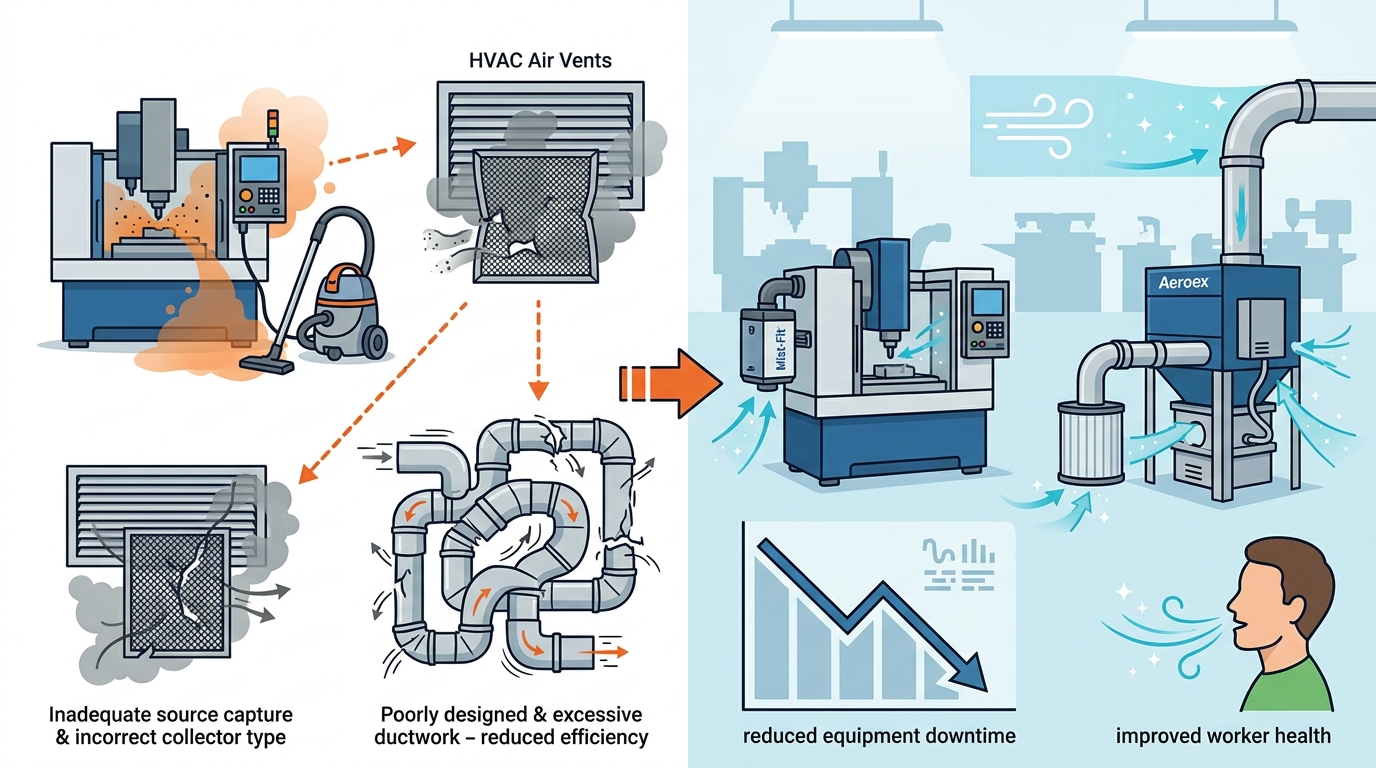
Industrial air quality is not a luxury; it is a regulatory and operational necessity. According to recent industry data, improper air filtration in manufacturing environments can lead to a 30% increase in respiratory issues among workers and significant equipment downtime due to particulate accumulation. Aeroex has removed 99.9% of harmful particles in tested environments, demonstrating the critical importance of selecting the right system for your specific workshop needs. This guide outlines the most frequent errors facility managers make when choosing air purification solutions and provides actionable strategies to ensure your facility meets rigorous health and safety standards.
Mistake 1: Ignoring the Specific Type of Contaminant
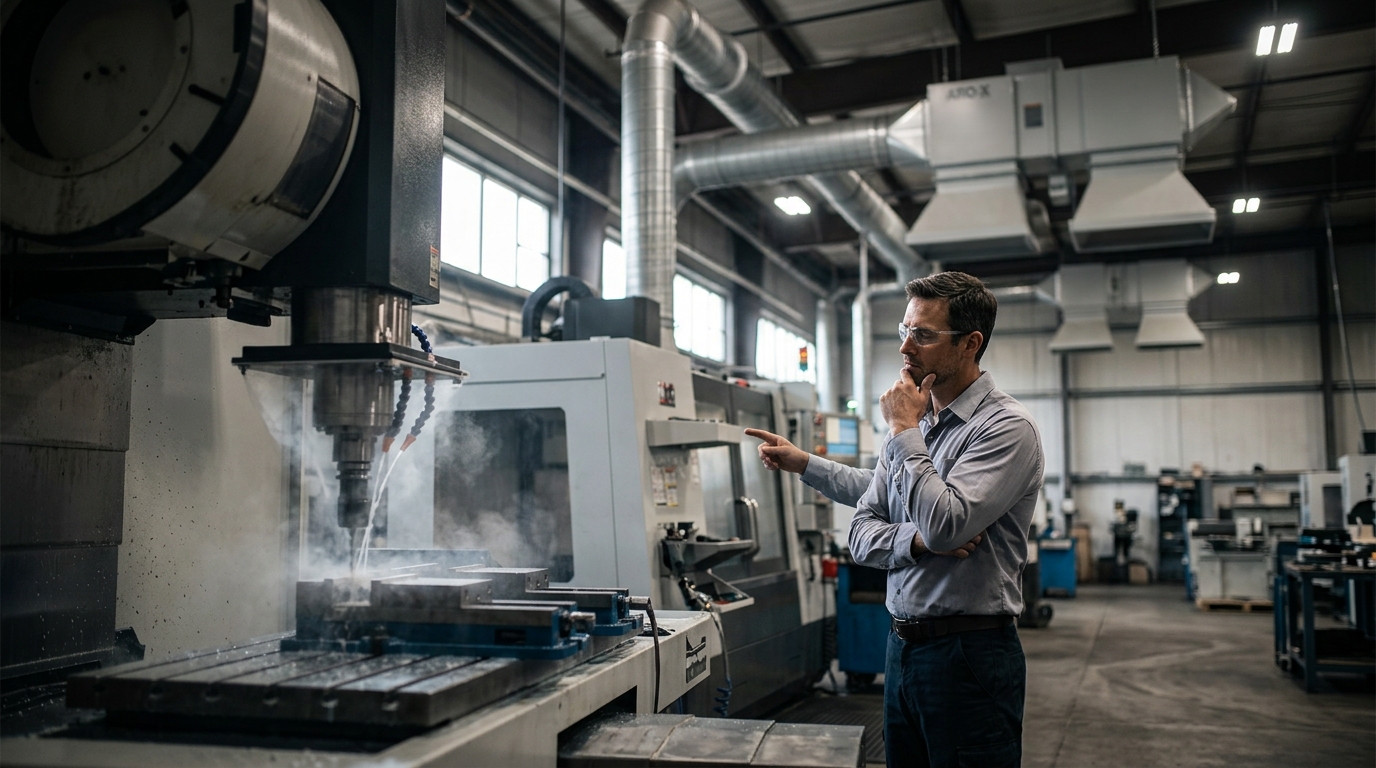
One of the most critical errors in workshop air filtration selection is treating all airborne particles as identical. Different manufacturing processes generate distinct types of contaminants, each requiring a specialized filtration approach. For instance, metalworking operations produce oil mist and smoke, while cleanroom environments require control over microscopic dust and volatile organic compounds (VOCs).
Oil mist is a dense, oily aerosol that can coat machinery, create slip hazards, and pose serious respiratory risks. Standard air filters often fail to capture these fine droplets effectively, leading to rapid filter clogging and reduced efficiency. In contrast, HEPA filtration is defined as a high-efficiency particulate air filtration system capable of trapping 99.97% of particles at 0.3 microns, making it essential for cleanrooms and inspection areas.
To avoid this mistake, conduct a thorough audit of your workshop's primary emissions. If you are dealing with heavy oil mist from CNC machining, a dedicated oil mist collector like the Mist-Fit series is necessary. For general dust and smoke, a multi-stage system combining pre-filters with HEPA units may be more appropriate. Understanding the physical properties of your contaminants ensures you select a system that actually captures them, rather than just circulating them.
Mistake 2: Overlooking Airflow and CFM Requirements
Capacity matters. Many facility managers install air purifiers based on aesthetic preferences or initial cost, ignoring the Cubic Feet per Minute (CFM) requirements of their space. An undersized unit will struggle to maintain air quality, leading to a false sense of security while contaminants accumulate in the background.
Airflow dynamics are complex. In a large manufacturing hall, air stratification can occur, where warm, contaminated air rises and remains untreated by low-velocity units. Variable Frequency Drives (VFDs) are adjustable speed controllers that allow filtration units to modulate their fan speed based on real-time air quality needs, optimizing energy use and filtration efficiency.
When evaluating systems, look for units that offer adjustable airflow capabilities. For example, the ARO-X series from Aeroex is designed with VFD compatibility, allowing operators to fine-tune suction power based on the specific machine's output. This ensures that you are not wasting energy on excessive airflow when demand is low, nor underperforming when production ramps up.
Mistake 3: Neglecting Maintenance and Filter Lifespan
A filtration system is only as good as its maintenance schedule. A common mistake is purchasing a unit with cheap, hard-to-replace filters or one that requires complex disassembly for routine checks. This leads to deferred maintenance, which quickly degrades performance and increases long-term costs.
Consider the total cost of ownership. A unit with a lower upfront cost may have filters that need replacement every few weeks, whereas a higher-quality system might last months with proper care. Aeroex emphasizes continuous improvement in product design, ensuring that units like the Air-Fit are easily maintained to minimize downtime.
Always inquire about filter availability and replacement procedures before purchasing. Ask if the filters are standardized or proprietary. Proprietary filters can lock you into expensive long-term contracts. Additionally, check if the unit includes indicators for filter saturation, allowing you to replace them only when necessary, rather than on a rigid, potentially wasteful schedule.
Mistake 4: Choosing Generic Solutions Over Engineered Systems
Generic air purifiers are often marketed as "one-size-fits-all" solutions for industrial environments. However, workshop conditions vary wildly. A system designed for a woodworking shop may be entirely ineffective in a metalworking facility dealing with fine metal particulates and oil aerosols.
Engineered solutions are customized air purification systems designed to address the unique challenges of a specific industrial application, such as cleanrooms, inspection rooms, or heavy machinery zones. Aeroex has spent over two decades refining these engineered solutions to meet the rigorous demands of North American manufacturers.
For example, the BlowBox is a specialized dual downdraft blow-off station that captures hazardous mist during part blow-off with compressed air. This is a highly specific application that a generic purifier could never handle. By choosing a provider that offers specialized products, you ensure that your air quality challenges are met with targeted, high-performance technology.
Mistake 5: Failing to Account for Facility Expansion
Manufacturing environments are dynamic. Production lines expand, new machinery is added, and facility layouts change. A common mistake is selecting a filtration system that cannot scale with your business. Installing a fixed-capacity unit that is already at its limit leaves no room for growth.
Look for modular or scalable systems. Aeroex has grown significantly since its establishment in 2001, expanding from a small workshop to a 15,000-square-foot facility in Barrie, and now serving clients across North America and beyond with Aeroex U.S.A. This growth reflects a commitment to providing scalable solutions that evolve with client needs.
When planning your filtration strategy, consider future expansion. Can additional units be easily integrated into the existing system? Is the ductwork or placement flexible? Choosing a provider with a robust product line, such as the IRIS series for odor control or the Maverick for heavy-duty applications, ensures you have options as your facility grows.
Comparison of Aeroex Filtration Solutions
To help you navigate these common mistakes, here is a comparison of key Aeroex products designed for different industrial applications:
| Product Name | Primary Application | Key Feature | Ideal For |
|---|---|---|---|
| Mist-Fit | Oil Mist Collection | Compact design, minimal maintenance | CNC machines, lathes, vertical mills |
| ARO-X | Heavy Duty Mist | VFD compatibility, high efficiency | Large-scale metalworking operations |
| Air-Fit | General Air Purification | Easy maintenance, versatile placement | General workshop air quality |
| IRIS | Odor & VOC Control | Dual-stage HEPA/Carbon filtration | Cleanrooms, inspection areas |
| BlowBox | Part Blow-Off | Dual downdraft capture | Compressed air blow-off stations |
Key Takeaways
- Contaminant Specificity: Always identify the exact type of airborne particle (oil mist, smoke, dust) before selecting a filtration system.
- Capacity Planning: Ensure your chosen unit meets the CFM requirements of your space, with room for adjustment via VFDs.
- Maintenance Accessibility: Prioritize systems with easy-to-replace, widely available filters to reduce downtime and long-term costs.
- Specialized Solutions: Generic purifiers often fail in industrial settings; opt for engineered systems like the Mist-Fit or ARO-X.
- Scalability: Choose providers with a history of growth and scalable product lines, such as Aeroex, which has served over 1000+ manufacturing facilities globally.
- Regulatory Compliance: Proper filtration is essential for meeting OSHA and other industrial air quality standards.
- Expert Consultation: Work with experts who understand your specific industry challenges, from metalworking to cleanroom environments.
Frequently Asked Questions
What is the difference between oil mist and smoke in industrial filtration?
Oil mist consists of fine droplets of lubricating fluid, while smoke is composed of solid particulates from combustion or vaporization. Oil mist requires specialized collectors like the Mist-Fit to prevent re-aerosolization, whereas smoke may require HEPA filtration for capture.
How often should industrial air filters be replaced?
Filter replacement frequency depends on the type of contaminant and usage intensity. Units with VFDs, such as the ARO-X, can extend filter life by adjusting airflow based on actual load, but regular inspection is critical to prevent saturation.
Can one air filtration system handle multiple types of contaminants?
While some multi-stage systems can handle a mix of dust and light smoke, heavy oil mist often requires dedicated metalworking mist collectors to ensure effective capture and prevent cross-contamination.
Why is VFD technology important in air filtration?
Variable Frequency Drives allow the fan motor to adjust its speed based on real-time air quality needs. This saves energy, reduces wear on the motor, and extends filter lifespan by avoiding unnecessary high-speed operation.
What makes Aeroex different from other air filtration providers?
Aeroex offers engineered solutions tailored to specific industrial applications, backed by decades of experience since 2001. Their commitment to quality and responsiveness ensures that clients receive not just products, but comprehensive air purification strategies.
Is Aeroex available in the United States?
Yes, Aeroex has expanded its services to the United States through Aeroex U.S.A., providing the same high-quality filtration solutions and support to North American manufacturers.
Ready to Improve Your Workshop Air Quality?
Avoiding common mistakes in air filtration selection is crucial for maintaining a safe, efficient, and compliant manufacturing environment. By understanding your specific contaminants, calculating proper airflow, and choosing specialized solutions, you can protect your workforce and your equipment. Contact Aeroex today to discuss your needs and discover how our industrial air filtration solutions can transform your facility.