
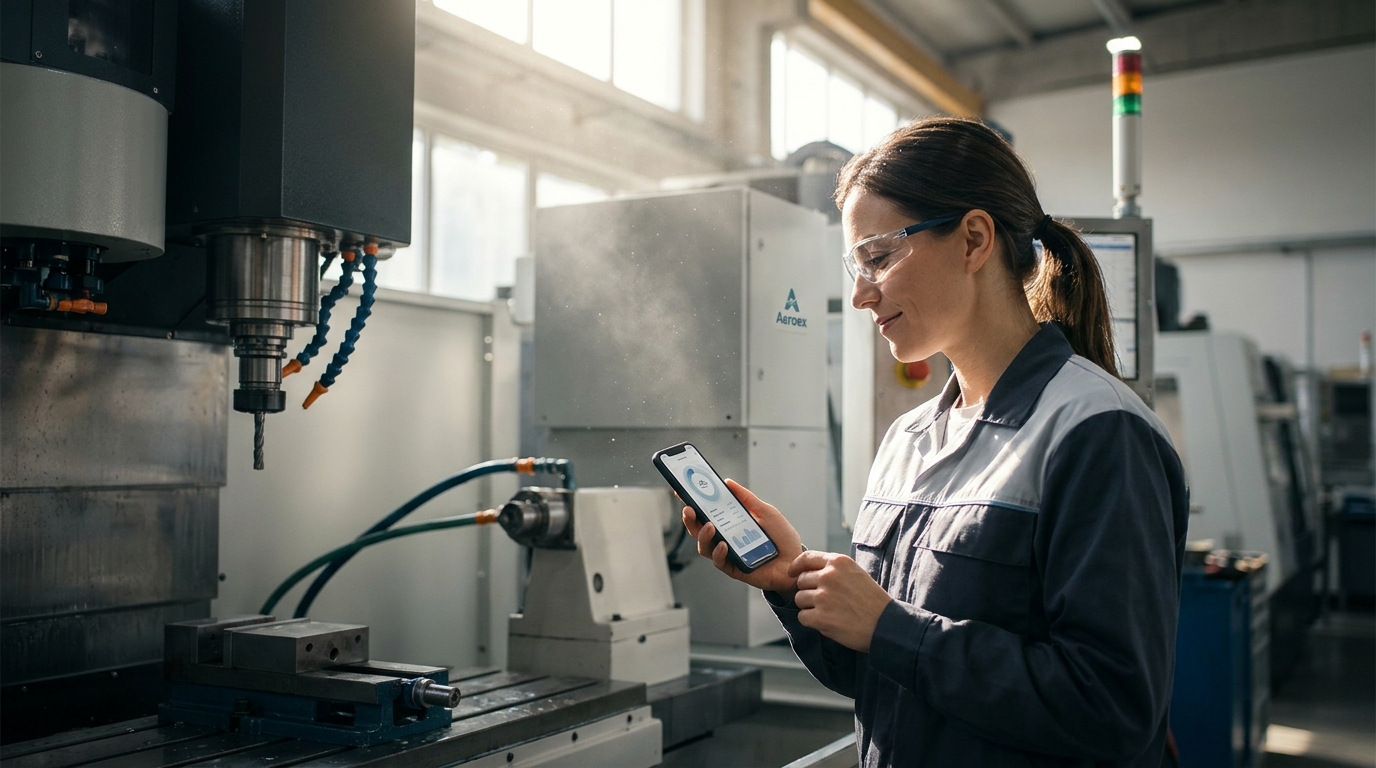
How HEPA Filtration Protects Factory Workers from Airborne Contaminants
HEPA filtration captures 99.97% of airborne particles as small as 0.3 microns, significantly reducing worker exposure to harmful contaminants in industrial settings. By integrating high-efficiency particulate air (HEPA) filters into source capture systems, manufacturers like Aeroex help factories maintain cleaner air and safer working environments. This technology is critical for controlling fine mists, smoke, and process byproducts that standard filters often miss.
What Is HEPA Filtration in Industrial Settings?
HEPA filtration is a high-efficiency particulate air filtration method that captures at least 99.97% of particles at the most penetrating particle size (MPPS) of 0.3 microns. In industrial applications, this standard is often applied to process air rather than general building ventilation. Unlike basic pre-filters that catch large debris, HEPA media is designed to trap ultra-fine particulates generated during machining, chemical processing, or high-speed manufacturing. This distinction is vital because many industrial contaminants exist in the sub-micron range, where conventional filters lose effectiveness.
The Role of Multi-Stage Filtration
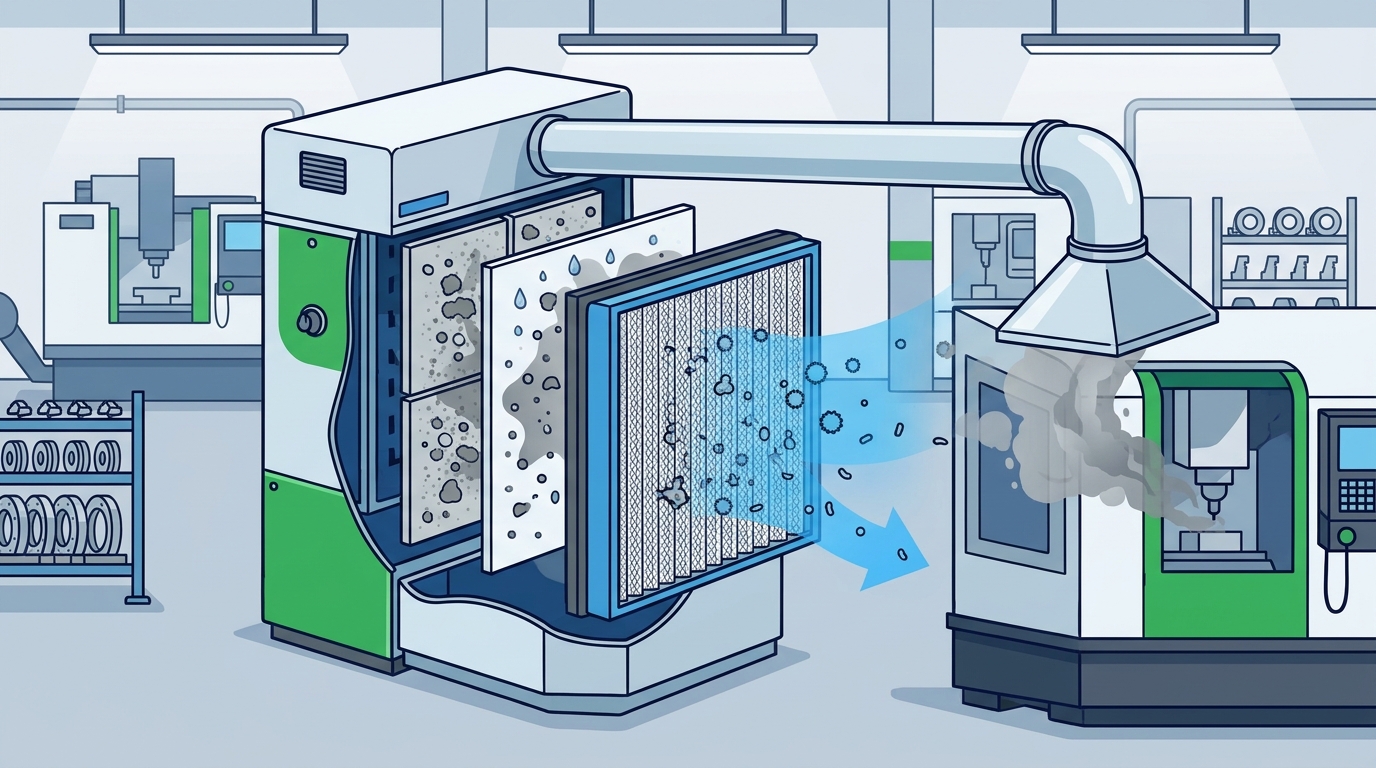
Industrial systems typically use a multi-stage approach. A pre-filter captures larger droplets and debris, extending the life of the primary filter. The HEPA stage then handles the fine particulate load. This layered design ensures that the high-efficiency media is not overwhelmed, maintaining consistent airflow and capture efficiency over time. For facilities dealing with heavy mist loads, this staged approach is a strong fit for maintaining long-term performance without frequent media replacement.
How HEPA Filters Protect Worker Health
Exposure to airborne contaminants in factories can lead to respiratory irritation, chronic lung conditions, and reduced overall well-being. HEPA filtration addresses this by removing fine particles before they disperse into the breathing zone of operators. Research indicates that optimizing filtration systems on enclosed cabs and workstations significantly reduces respirable dust and improves air quality for equipment operators. By capturing these particles at the source, the system prevents them from becoming airborne in the general workspace.
Reducing Respirable Particulate Matter
Respirable particulate matter is defined as particles small enough to penetrate deep into the lungs, typically those under 10 microns in diameter. HEPA filters are particularly effective at capturing the smallest fraction of these particles, which are often the most hazardous. In environments where high-speed machining generates smoke or where chemical processes release fine vapors, HEPA media acts as a final barrier. This reduces the cumulative exposure dose for workers, supporting a healthier workplace air profile.
Integrating HEPA into Source Capture Systems
Simply placing a HEPA filter in a room is rarely sufficient for industrial process control. The most effective approach is source capture, where the filtration unit is positioned close to the contaminant generation point. Aeroex designs systems that integrate HEPA stages into mist collectors and industrial air filtration units. This proximity ensures that contaminants are captured before they can drift across the shop floor. For compact machine layouts, direct-mount configurations allow for efficient capture with minimal ductwork, making them a strong fit for individual CNC machines or tight production lines.
Matching Filtration to Contaminant Type
The choice of filtration media depends heavily on the specific contaminant. Oil mist, coolant mist, and process smoke each have different particle size distributions. While some systems rely on coalescing filters for liquid mists, HEPA stages are often added to capture the fine smoke and aerosolized particles that coalescing filters may miss. This hybrid approach ensures comprehensive protection. For complex applications with multiple contaminant types, engineered systems can be configured with multi-stage filtration to address each specific hazard.
Maintenance and Performance Considerations
HEPA filters are not self-cleaning. As they capture particles, the media loads up, increasing pressure drop and reducing airflow. Regular monitoring of differential pressure is essential to determine when media replacement is needed. Operating a HEPA filter beyond its capacity can lead to reduced capture efficiency and potential media damage. Aeroex recommends reviewing maintenance needs based on the specific mist or smoke load of the application. In high-demand environments, more frequent media changes may be required to maintain optimal performance and worker protection.
Monitoring Air Quality
While HEPA filters are highly effective, they are part of a broader air quality strategy. Facilities should monitor ambient air quality to verify that the filtration system is performing as expected. This involves measuring particle counts in the breathing zone and comparing them to baseline levels. By tracking these metrics, manufacturers can validate that their source capture systems are effectively protecting workers. This data-driven approach helps in fine-tuning system settings and maintenance schedules.
Key Takeaways
- HEPA filtration captures 99.97% of particles at 0.3 microns, making it ideal for removing fine industrial contaminants.
- Source capture is more effective than room filtration for controlling process-generated mists and smoke.
- Multi-stage systems use pre-filters to protect HEPA media, extending filter life and maintaining efficiency.
- Worker health is protected by reducing exposure to respirable particulate matter in the breathing zone.
- Regular maintenance is critical to prevent filter overload and ensure consistent performance.
- Custom configurations can be tailored to specific contaminant types, such as oil mist or chemical vapors.
Frequently Asked Questions
What is the difference between HEPA and standard industrial filters?
Can HEPA filters handle liquid mist?
How often should HEPA filters be replaced in a factory?
Replacement frequency depends on the contaminant load and airflow. Monitoring differential pressure is the best indicator. When the pressure drop reaches a specified threshold, the filter should be replaced to maintain efficiency and airflow.
Is HEPA filtration necessary for all industrial applications?
Not all applications require HEPA. It is recommended when the process generates fine smoke, ultra-fine mists, or hazardous particulates that standard filters cannot effectively capture. A site assessment can determine if HEPA is needed for specific worker protection goals.
Does HEPA filtration remove odors or gases?
No, HEPA filters capture particulate matter but do not remove gases, vapors, or odors. For applications involving chemical vapors or odors, activated carbon or other gas-phase filtration media must be added to the system.
Conclusion
HEPA filtration is a critical component of modern industrial air quality strategies, offering robust protection against fine airborne contaminants. By integrating high-efficiency media into source capture systems, manufacturers can significantly reduce worker exposure and maintain a cleaner workplace. Aeroex provides tailored industrial air filtration solutions designed to meet the specific needs of your facility. To discuss how HEPA-based systems can improve air quality in your factory, contact the Aeroex team. Learn more: aeroex com.