
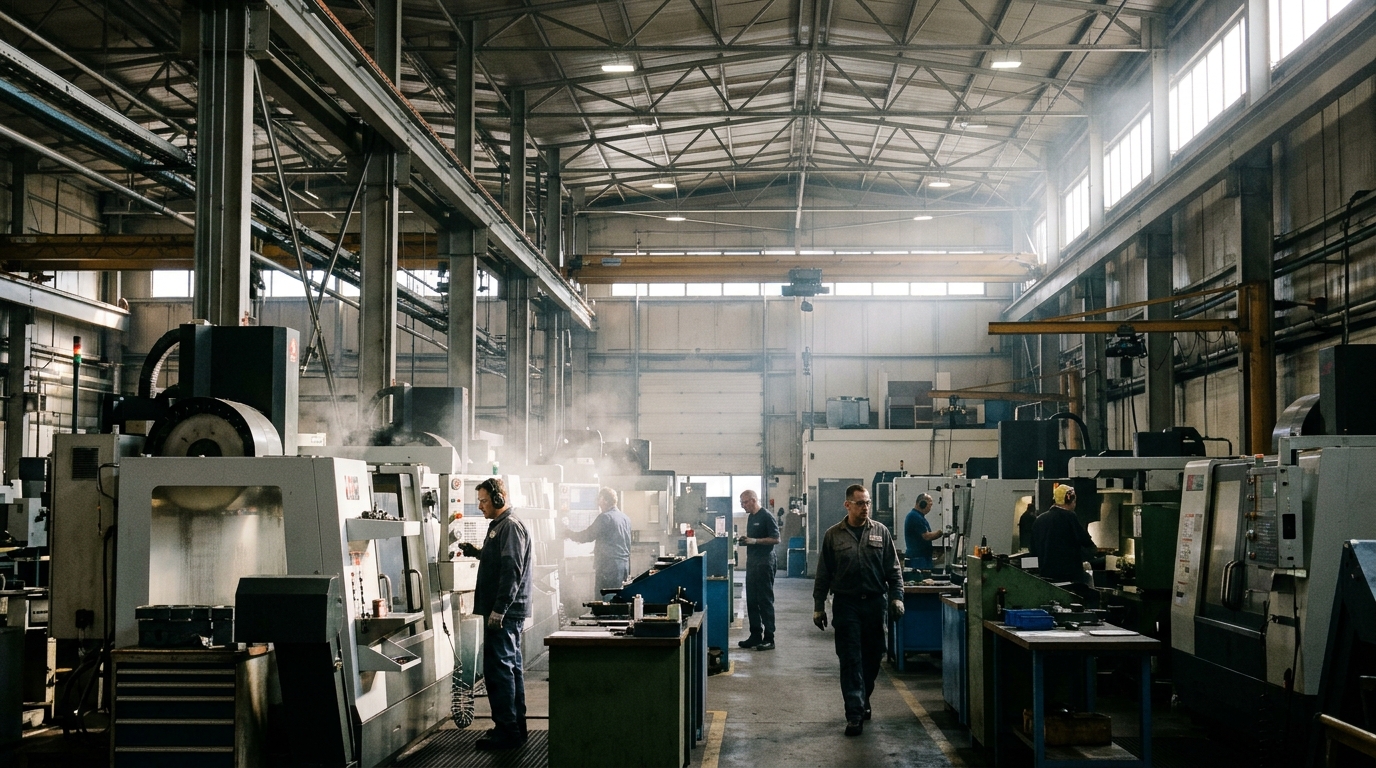
Uncontrolled cutting oil and coolant mist in a factory can lead to chronic respiratory issues, skin irritation, and systemic inflammation in workers. Prolonged exposure to these aerosols, which often contain volatile organic compounds and fine particulates, compromises lung function and overall well-being. Aeroex addresses this critical workplace hazard by providing industrial air filtration solutions that capture these contaminants at the source, ensuring a safer environment for your team.
Respiratory System Degradation
Chronic inhalation of machining aerosols is a primary driver of occupational respiratory disease. Occupational asthma is a condition where workplace irritants trigger airway inflammation and bronchoconstriction. When workers breathe in fine mist particles daily, the respiratory tract becomes sensitized, leading to persistent coughing, wheezing, and shortness of breath. Over time, this can progress to chronic obstructive pulmonary disease (COPD), a progressive condition that permanently restricts airflow.
The size of the particles matters significantly. Submicron particles, which are smaller than one micron, can bypass the body's natural defenses and penetrate deep into the alveoli. This deep lung deposition causes oxidative stress and chronic inflammation. For example, a machinist working near a high-speed CNC mill without source capture may inhale thousands of these particles per shift. Implementing a machine-mounted mist collector, such as the Mist-Fit, intercepts these particles before they disperse into the shop air, directly protecting the respiratory health of nearby operators.
Dermal and Allergic Reactions
While inhalation is the most discussed risk, skin contact with oil and coolant mist presents a significant secondary hazard. Occupational dermatitis is an inflammatory skin condition caused by repeated exposure to irritants or allergens in the workplace. Coolants often contain additives that act as skin irritants or sensitizers. When mist settles on the skin, it can strip natural oils, leading to dryness, cracking, and painful eczema-like rashes.
These skin conditions are not only painful but can also lead to secondary infections if the skin barrier is compromised. Workers in metalworking environments frequently report itchy, red patches on their hands and forearms. By containing the mist at the machine enclosure, you prevent the aerosol from settling on skin and clothing. This containment strategy is a core function of industrial metalworking mist collectors, which are designed to capture liquid droplets and particulates before they can contaminate the workspace.
Systemic Inflammation and Cardiovascular Risk
The impact of airborne particulates extends beyond the lungs and skin to the entire body. Systemic inflammation is a body-wide immune response triggered by the presence of foreign particles in the bloodstream. When ultrafine particles enter the lungs, they can cross the alveolar membrane and enter the circulatory system. This triggers the release of inflammatory markers, which are linked to an increased risk of cardiovascular events, such as heart attacks and strokes.
Recent research suggests that long-term exposure to industrial aerosols contributes to a higher baseline level of inflammation in the body. This chronic state can accelerate the development of atherosclerosis, where arteries narrow and harden. For facility managers, this means that air quality is not just a comfort issue but a critical factor in employee longevity and cardiovascular health. Systems like the ARO-X modular platform are engineered to handle complex contaminant loads, including smoke and fumes, ensuring that the air returned to the shop is clean and free of these systemic hazards.
The Role of Source Capture in Mitigation
General ventilation is often insufficient to protect worker health because it dilutes contaminants rather than removing them. Source capture is a control strategy that removes contaminants at the point of generation, preventing them from entering the breathing zone. This approach is far more effective than relying on room air changes, which can allow mist to drift across the shop floor and expose multiple workers.
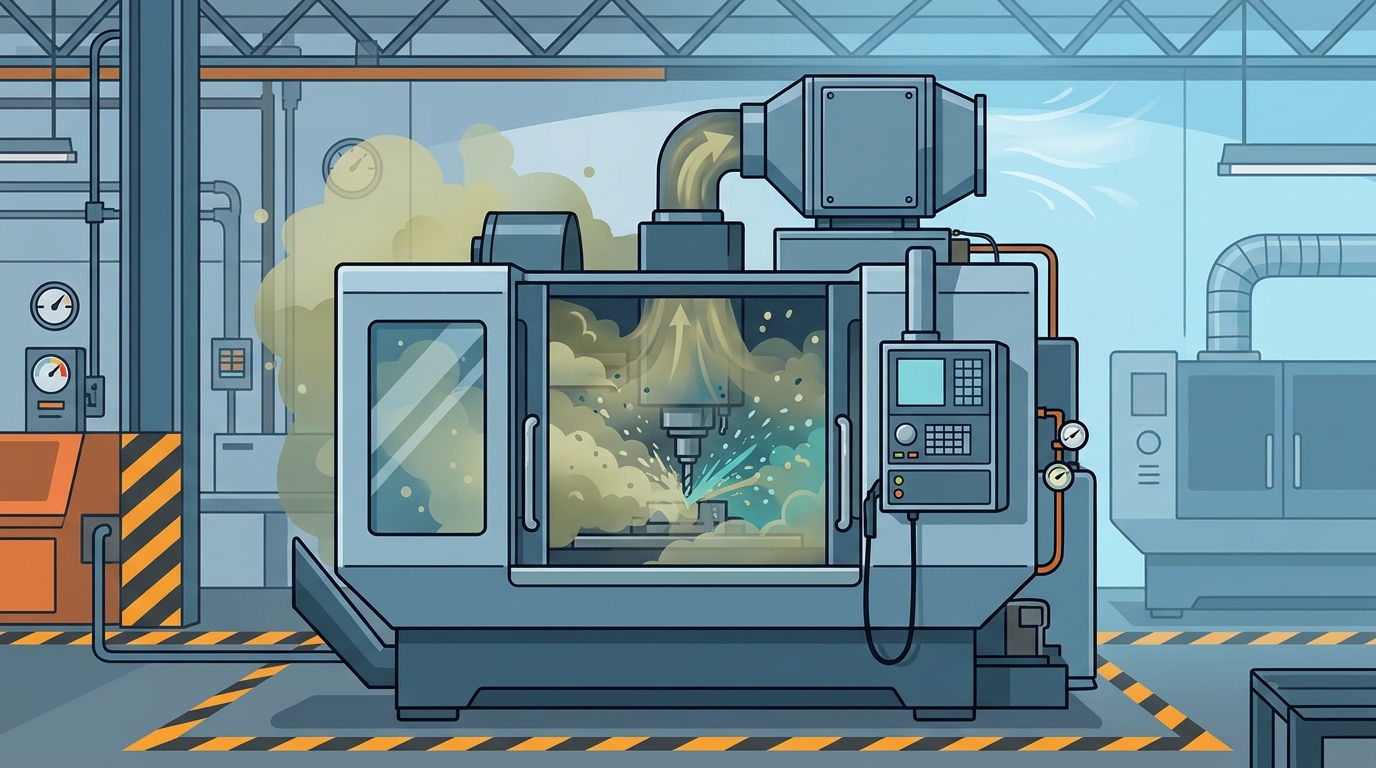
Effective source capture requires a precise understanding of airflow dynamics and machine design. For compact layouts, direct-mount solutions are ideal because they attach directly to the machine, minimizing the distance the mist must travel. For larger facilities with multiple machines, engineered systems provide the necessary airflow and filtration capacity. Aeroex offers custom engineered industrial air filtration systems that are tailored to specific process conditions, ensuring that every machine in the facility is adequately protected.
Maintenance and Filter Integrity
The effectiveness of any air filtration system depends on consistent maintenance and proper filter selection. Filter saturation is the state where a filter media has captured its maximum capacity of particulates, reducing airflow and allowing contaminants to bypass the system. When filters are not replaced on schedule, the system's efficiency drops, and workers are once again exposed to hazardous levels of mist.
Modern mist collectors often include monitoring systems that alert operators when filters need replacement. This ensures that the system operates at peak efficiency at all times. For shops using synthetic coolants, which can produce odors and volatile organic compounds, adding a carbon filtration stage is recommended. Engineered air filtration systems demonstrate the level of precision and efficiency required to maintain high air quality standards in demanding environments.
Key Takeaways
- Chronic exposure to cutting oil and coolant mist is linked to occupational asthma, COPD, and systemic inflammation.
- Submicron particles can penetrate deep into the lungs and enter the bloodstream, increasing cardiovascular risk.
- Skin contact with mist additives causes occupational dermatitis, leading to painful and persistent skin conditions.
- Source capture is significantly more effective than general ventilation for protecting worker health.
- Direct-mount mist collectors are ideal for compact layouts and individual CNC machines.
- Engineered systems are necessary for complex applications with high airflow or multi-machine setups.
- Regular filter maintenance is critical to ensure continuous protection and system efficiency.
Frequently Asked Questions
What are the most common health risks associated with coolant mist?
The most common health risks include respiratory issues such as asthma and bronchitis, as well as skin conditions like dermatitis. Long-term exposure can also lead to systemic inflammation and increased cardiovascular risk.
How does source capture differ from general ventilation?
Source capture removes contaminants at the point of generation, preventing them from entering the breathing zone. General ventilation dilutes contaminants throughout the room, which is less effective at protecting individual workers.
Can mist collectors remove odors from synthetic coolants?
Yes, many mist collectors can be configured with an activated carbon stage to adsorb volatile organic compounds and neutralize odors associated with synthetic coolant breakdown.
What is the difference between an oil mist collector and a coolant mist collector?
They are often the same filter-based platform configured for different fluid chemistries. The filtration media is selected based on whether the fluid is straight oil, soluble oil, or synthetic coolant.
How often should mist collector filters be replaced?
Filter replacement frequency depends on the mist load and operating hours. Most systems have monitoring indicators that alert you when the filter is saturated and needs replacement.
Are direct-mount mist collectors suitable for all CNC machines?
Direct-mount collectors are ideal for compact layouts and individual machines where floor space is limited. For larger machines or multi-machine setups, floor-standing or engineered systems may be more appropriate.
Protecting Your Workforce with Aeroex
Investing in proper air filtration is an investment in your employees' long-term health and productivity. By addressing the root cause of airborne contaminants, you create a safer, more comfortable, and more efficient workplace. Aeroex provides the expertise and technology necessary to evaluate your specific shop conditions and implement the right solution. To discuss your facility's air quality needs, contact our team for a tailored assessment. Learn more: Contact Aeroex Emission Control.