
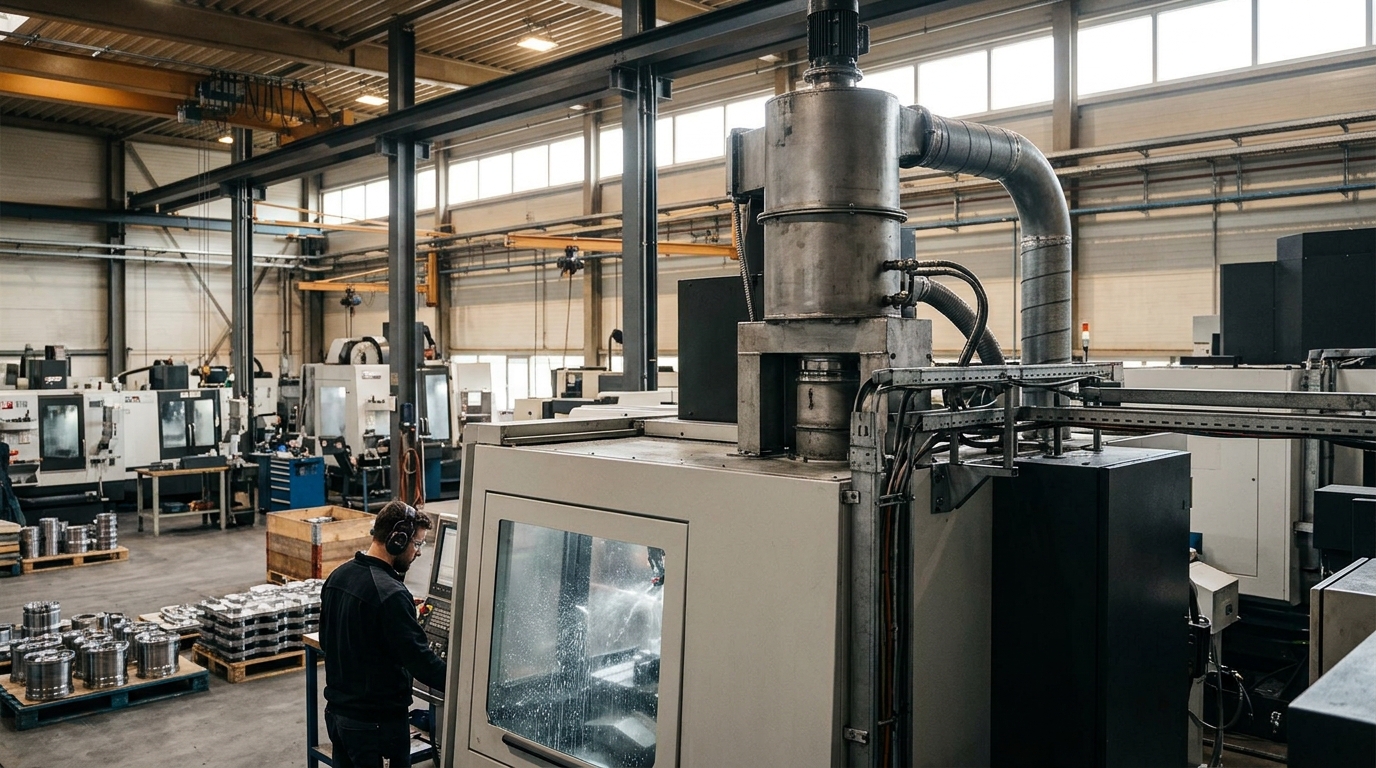
Centrifugal technology in a mist collector uses rotational force to separate liquid droplets from air before they reach the final filter. This pre-separation step dramatically extends filter life and reduces maintenance costs in CNC machine shops. By capturing the bulk of the coolant mist early, the system protects the high-efficiency downstream stages. Aeroex integrates this principle into its industrial air filtration solutions to ensure reliable, long-lasting performance in demanding manufacturing environments.
The Physics of Centrifugal Separation
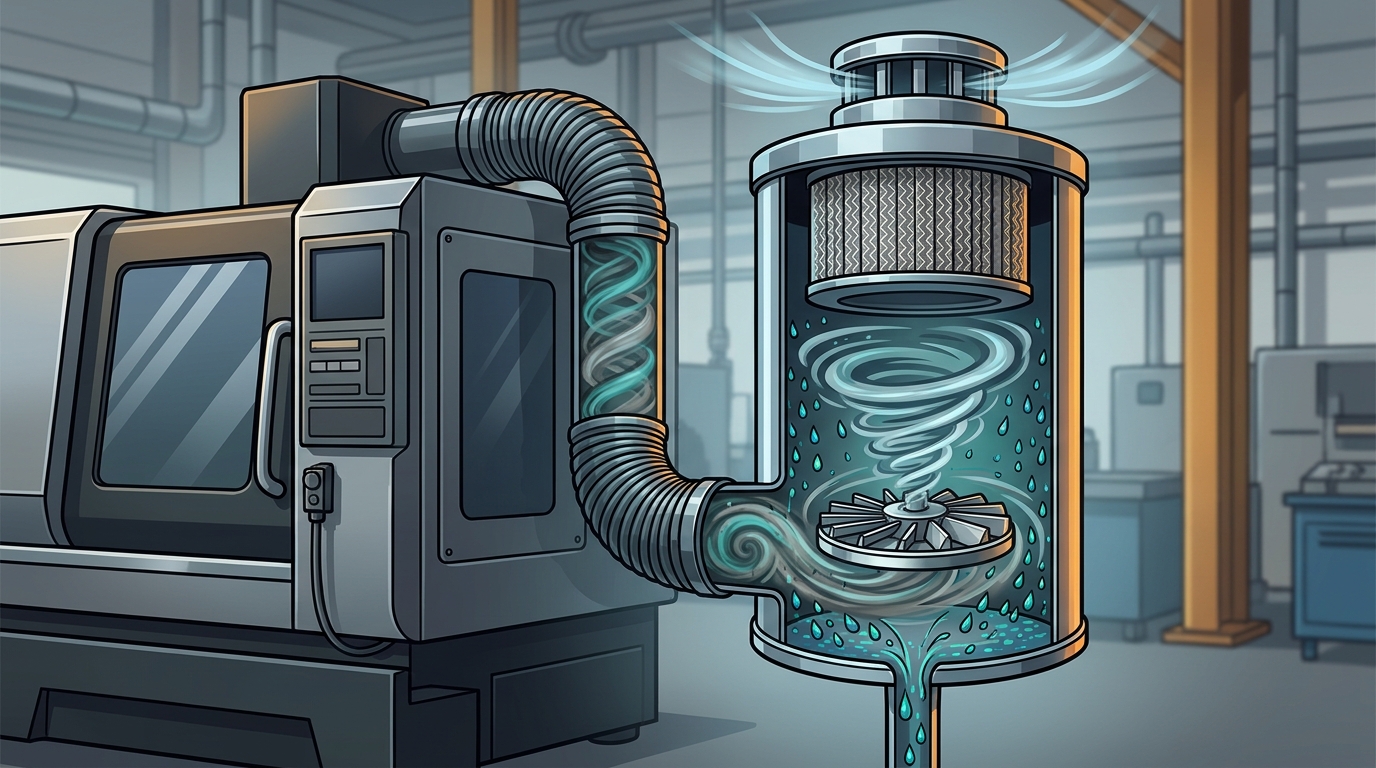
Centrifugal separation is a mechanical process that exploits the density difference between liquid mist and air. When air containing oil or coolant droplets enters a rotating chamber, the droplets experience a force much greater than gravity. This force pushes the heavier liquid particles toward the outer walls of the collection vessel. The air, being lighter, continues through the center of the chamber. This physical separation occurs without the use of consumable filters for the bulk of the liquid load.
In a typical machine shop, the mist generated by high-speed machining consists of droplets ranging from a few microns to several hundred microns. The centrifugal stage is most effective at capturing the larger droplets that make up the majority of the liquid volume. By removing these larger particles first, the system prevents the downstream filters from becoming saturated too quickly. This staged approach is a core component of modern industrial air filtration design.
Integration in Industrial Mist Collectors
Industrial mist collectors often combine centrifugal pre-separation with multi-stage filtration. The centrifugal stage acts as the first line of defense, handling the heavy liquid load. Following this stage, the air passes through a depth-loading coalescer or pre-filter. These intermediate stages capture the remaining fine droplets that the centrifugal force did not fully separate. Finally, a high-efficiency filter, such as a HEPA or MERV 15 filter, captures the submicron particulate matter.
Aeroex designs its mist collection systems with this multi-stage architecture in mind. For example, the Mist-Fit series is engineered for direct machine mounting, where space is limited but source capture is critical. The system pulls contaminated air from the machine enclosure, separates the liquid, and returns clean air to the shop. This integrated approach ensures that the filters last longer, reducing the frequency of maintenance tasks for shop operators.
Benefits for Machine Shop Operations
The primary benefit of centrifugal technology is the reduction in filter replacement frequency. When a filter is exposed to a high volume of liquid mist, it clogs rapidly, increasing pressure drop and reducing airflow. By using centrifugal force to remove the bulk of the liquid, the filters remain cleaner for a longer period. This stability in airflow is crucial for maintaining consistent machine performance and operator comfort.
Additionally, centrifugal separation helps in managing the liquid waste stream. The separated coolant or oil can be drained back into the machine sump or collected for proper disposal. This reduces the amount of hazardous waste generated by the shop. For facilities with strict environmental controls, this efficient separation process supports cleaner workplace air and more sustainable operations. The metalworking mist collectors from Aeroex are designed to handle various fluid chemistries, including straight oil, soluble emulsions, and synthetic coolants.
Choosing the Right System Configuration
Selecting the right mist collector depends on the specific demands of the machine and the shop layout. For individual CNC machines with limited floor space, a direct-mount unit is often the most practical solution. These units capture the mist at the source, preventing it from escaping into the shop environment. The compact design of these systems allows for easy installation without extensive ductwork. This is particularly useful in compact machine layouts where routing large ducts is difficult.
Maintenance and Long-Term Performance
While centrifugal technology reduces the load on filters, it does not eliminate the need for maintenance. The centrifugal chamber itself may require periodic inspection to ensure that no liquid is accumulating in unexpected areas. Operators should follow the manufacturer's guidelines for cleaning the collection vessel and checking the drain lines. Proper maintenance of the centrifugal stage ensures that the downstream filters continue to perform as intended.
Monitoring the pressure drop across the filters is a key indicator of system health. A sudden increase in pressure drop may indicate that the centrifugal stage is not separating the liquid effectively, or that the filters are clogged. Regular checks and timely filter replacements are essential for maintaining optimal airflow. Aeroex provides resources and support to help operators maintain their systems, ensuring that the air quality in the shop remains high. For detailed guidance on filter care, you can refer to the Aeroex blog for troubleshooting tips and maintenance schedules.
Key Takeaways
- Centrifugal separation uses rotational force to remove large liquid droplets from air before filtration.
- This pre-separation step significantly extends the life of downstream high-efficiency filters.
- Multi-stage systems combine centrifugal pre-filters with coalescers and HEPA or MERV filters for comprehensive capture.
- Direct-mount units are ideal for individual CNC machines where space is limited and source capture is needed.
- Larger engineered systems are suitable for multi-machine setups or high-airflow applications.
- Regular maintenance of the centrifugal chamber and filters is necessary to ensure consistent performance.
- Efficient liquid separation reduces hazardous waste and supports cleaner workplace air.
Frequently Asked Questions
What is centrifugal technology in a mist collector?
Centrifugal technology is a mechanical separation process that uses rotational force to push liquid droplets to the outer walls of a chamber, separating them from the air stream before they reach the filters.
Does centrifugal separation replace the need for filters?
No, centrifugal separation is a pre-filter stage. It removes the bulk of the liquid mist, but filters are still required to capture the remaining fine droplets and submicron particulate matter.
How does centrifugal technology affect filter life?
By removing the majority of the liquid load before it reaches the filters, centrifugal technology prevents the filters from clogging quickly, thereby extending their service life and reducing replacement frequency.
Is centrifugal technology suitable for all coolant types?
Yes, centrifugal separation is effective for various fluid chemistries, including straight oil, soluble emulsions, and synthetic coolants, as it relies on the physical density difference between the liquid and air.
What is the difference between a direct-mount and a floor-standing mist collector?
A direct-mount collector is attached directly to the machine for source capture in tight spaces, while a floor-standing unit is a larger, standalone system often used for multiple machines or higher airflow demands.
How often should I maintain the centrifugal stage?
Maintenance frequency depends on the mist load, but regular inspection of the collection vessel and drain lines is recommended. Following the manufacturer's guidelines ensures optimal performance.
Conclusion
Centrifugal technology is a fundamental component of modern industrial mist collectors, providing an efficient way to separate liquid mist from air. By handling the bulk of the liquid load before it reaches the filters, this technology extends filter life and reduces maintenance costs. For machine shops looking to improve air quality and operational efficiency, understanding this mechanism is key to selecting the right system. Aeroex offers a range of solutions, from compact direct-mount units to engineered systems, designed to meet the specific needs of your facility. To discuss your application and find the right fit, contact our team for a consultation.