
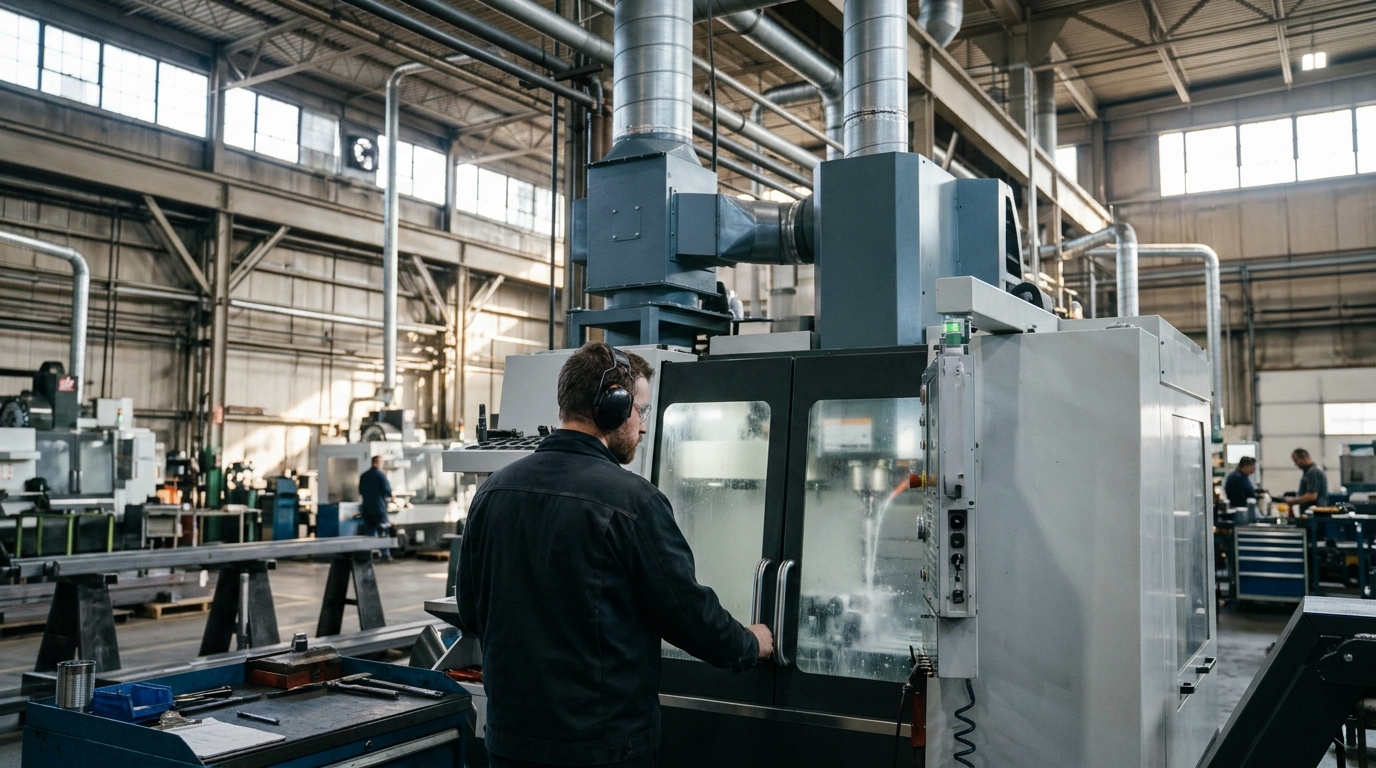
Oil and coolant mist generated during machining poses significant respiratory and skin health risks to factory workers. Aeroex specializes in industrial air filtration solutions designed to capture these contaminants at the source, ensuring a safer work environment. By implementing targeted control measures, manufacturers can significantly reduce airborne particulate exposure and improve overall shop floor air quality.
1. Source Capture at the Machine
Capturing mist at the point of generation is the most effective way to prevent airborne dispersion. Source capture involves positioning filtration units directly adjacent to or on the machine enclosure. This method prevents oil mist and coolant aerosols from escaping into the general shop air. It is a critical first step in protecting worker health and maintaining clean air quality.
2. Direct-Mount Mist Collectors
Direct-mount units are ideal for compact layouts and individual CNC machines. These systems attach directly to the machine, eliminating the need for extensive ductwork. They are particularly useful in facilities with limited floor space. By capturing mist immediately, they reduce the load on the building's general ventilation system.
3. Multi-Stage Filtration Systems
Multi-stage filtration ensures comprehensive removal of both liquid droplets and fine particulates. A typical system uses a pre-filter to capture bulk liquid, followed by a coalescer stage. A final high-efficiency stage then removes submicron particles. This layered approach provides robust protection against a wide range of contaminant sizes.
4. Engineered Custom Solutions
Complex applications often require custom-engineered air filtration systems. When dealing with multiple machines or unique process contaminants, standard units may not suffice. Engineered solutions are tailored to specific airflow requirements and static pressure conditions. They ensure that the filtration system performs effectively under demanding operational conditions.
5. Stainless Steel Construction
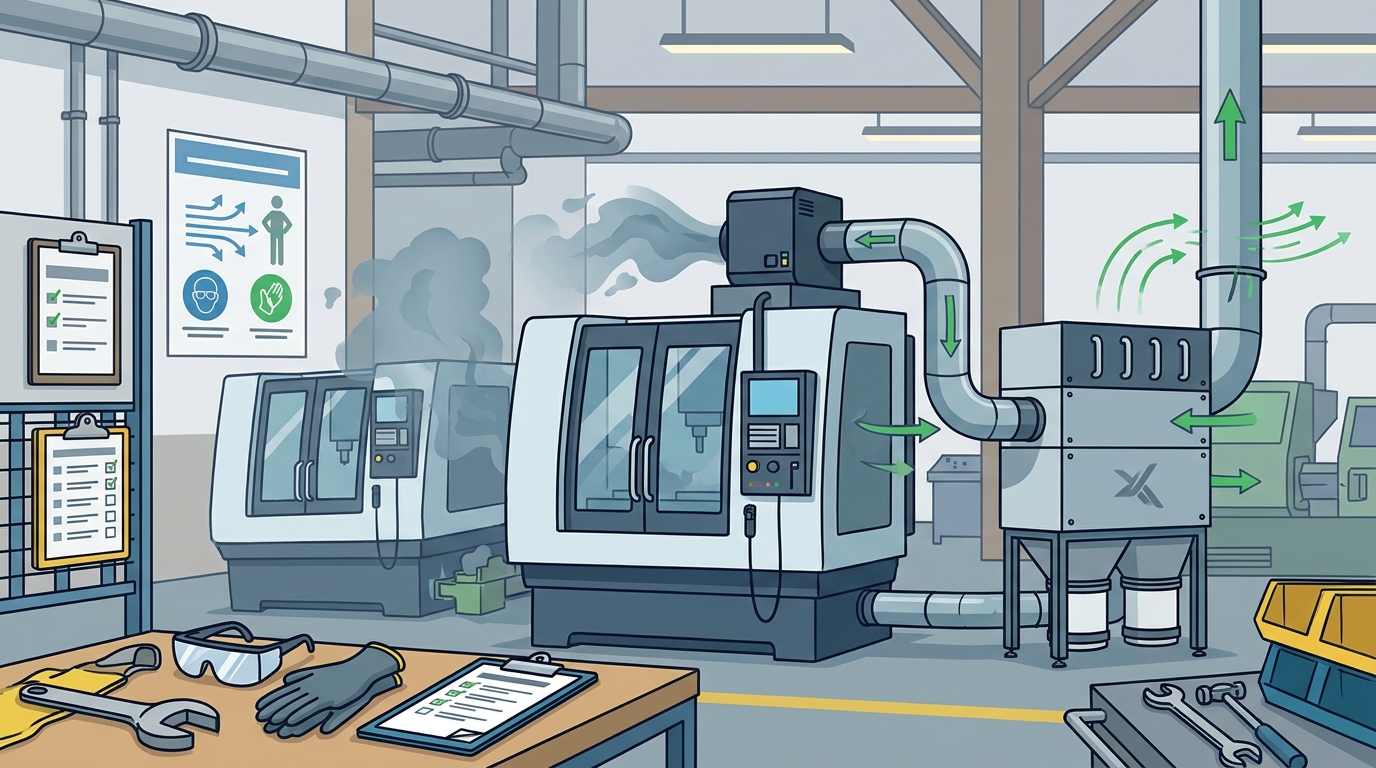
Stainless steel construction is essential for washdown, sanitary, and corrosive environments. In applications such as food and beverage manufacturing, chemical processing, or moisture-heavy production areas, filtration equipment must withstand rigorous cleaning and exposure to caustic agents. Stainless steel mist collectors provide long-term durability and support cleaner workplace air in clean industrial and sanitary manufacturing settings.
6. Automated Monitoring and Maintenance
Automated monitoring protects filters and ensures consistent system uptime. Modern mist collectors feature sensors that track airflow and filter loading. These systems alert operators when maintenance is required. Proactive maintenance prevents filter breakthrough and ensures continuous protection for workers.
7. Supplemental Ventilation Strategies
Combining source capture with general ventilation creates a comprehensive air quality strategy. While mist collectors handle process-specific contaminants, general ventilation manages overall air exchange. This dual approach ensures that the shop environment remains healthy and comfortable. It supports a holistic approach to industrial air quality management.
Choosing the Right Protection Strategy
Selecting the appropriate mist collection method depends on your specific machine type, coolant chemistry, and facility layout. For compact CNC setups, direct-mount units are often the most practical choice. For larger or more complex operations, engineered systems provide the necessary capacity and flexibility. Evaluating your unique operating conditions is the first step toward a safer workplace.
Frequently Asked Questions
What is the primary health risk of oil mist in a factory?
Oil mist can cause respiratory irritation and contribute to the development of occupational asthma. Prolonged exposure to fine particulates and volatile organic compounds can lead to chronic health issues for workers. Effective filtration reduces these risks significantly.
How does a direct-mount mist collector differ from a floor-standing unit?
A direct-mount collector attaches directly to the machine, saving floor space and reducing ductwork. Floor-standing units are independent and can serve multiple machines. The choice depends on your facility layout and specific machine configuration.
Can mist collectors handle both oil and coolant mist?
Yes, modern mist collectors are designed to handle various fluid chemistries. The same filter-based platform can be configured for straight oil, soluble oil emulsions, or synthetic coolants. The multi-stage architecture ensures effective capture regardless of the fluid type.
What is the role of a coalescer in a mist collector?
A coalescer captures bulk liquid droplets by causing them to combine and drain back into the sump. This stage reduces the load on the final high-efficiency filter. It is a critical component in extending filter life and maintaining system efficiency.
How often should mist collector filters be replaced?
Filter replacement frequency depends on the mist load and operating conditions. Automated monitoring systems can provide real-time alerts when filters are saturated. Regular inspection and timely replacement are essential for maintaining optimal air quality.
Conclusion
Protecting worker health from oil and coolant mist requires a strategic approach to industrial air filtration. Aeroex provides a range of solutions, from compact direct-mount units to complex engineered systems, designed to meet the specific needs of your facility. By focusing on source capture and multi-stage filtration, you can create a safer, healthier work environment. To discuss your specific air quality challenges, contact our team for a tailored recommendation.