
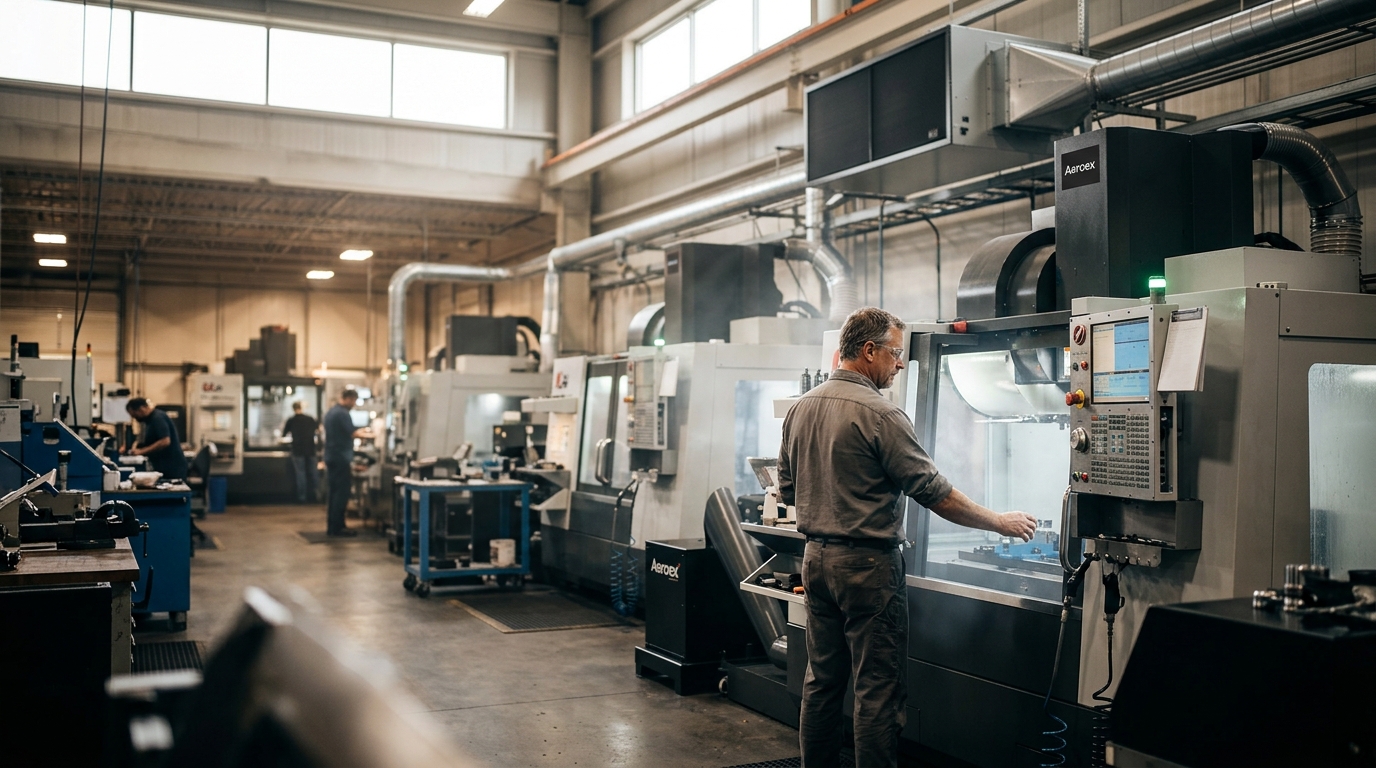
Metalworking operations such as CNC milling, turning, and grinding generate oil mist, coolant aerosols, and fine smoke that threaten worker health and regulatory compliance. Choosing the right industrial air filtration system is not optional; it is a safety and productivity imperative. In this guide, we break down the most effective air filtration solutions designed specifically for metalworking applications, explain what to look for in a mist collector, and show how the right system pays for itself through lower maintenance costs and cleaner shop air. Whether you run a five-machine CNC shop or a large-scale production facility, the information here will help you make a confident decision.
Why Metalworking Shops Need Dedicated Air Filtration
Uncontrolled oil and coolant mist creates slippery floors, accelerates corrosion of machine components, and raises combustible vapor concentrations. More critically, workers who inhale metalworking fluid (MWF) aerosols face risks including respiratory irritation, occupational asthma, and dermatitis. According to NIOSH, some 1.2 million workers in machining and metal-forming operations are potentially exposed to these hazards.
A mist collector is a mechanical filtration device engineered to capture and remove airborne oil mist, coolant aerosols, and smoke generated during machining processes. Installing one is the most direct engineering control available. Learn more about what mist collectors are and why they matter for any shop environment.
Types of Airborne Contaminants in Metalworking
Understanding what you are filtering is the first step toward choosing the right system. Metalworking mist falls into two main categories: coarse droplets (5 to 10 microns) that settle quickly, and fine aerosols (0.1 to 5 microns) that remain airborne and penetrate deep into the respiratory system.
Oil Mist
Oil mist is the suspension of liquid oil droplets in the air, typically produced when straight or neat cutting oils contact high-speed tooling. Products like the Mist-Fit series specialize in capturing these particles at the source.
Coolant Mist and Smoke
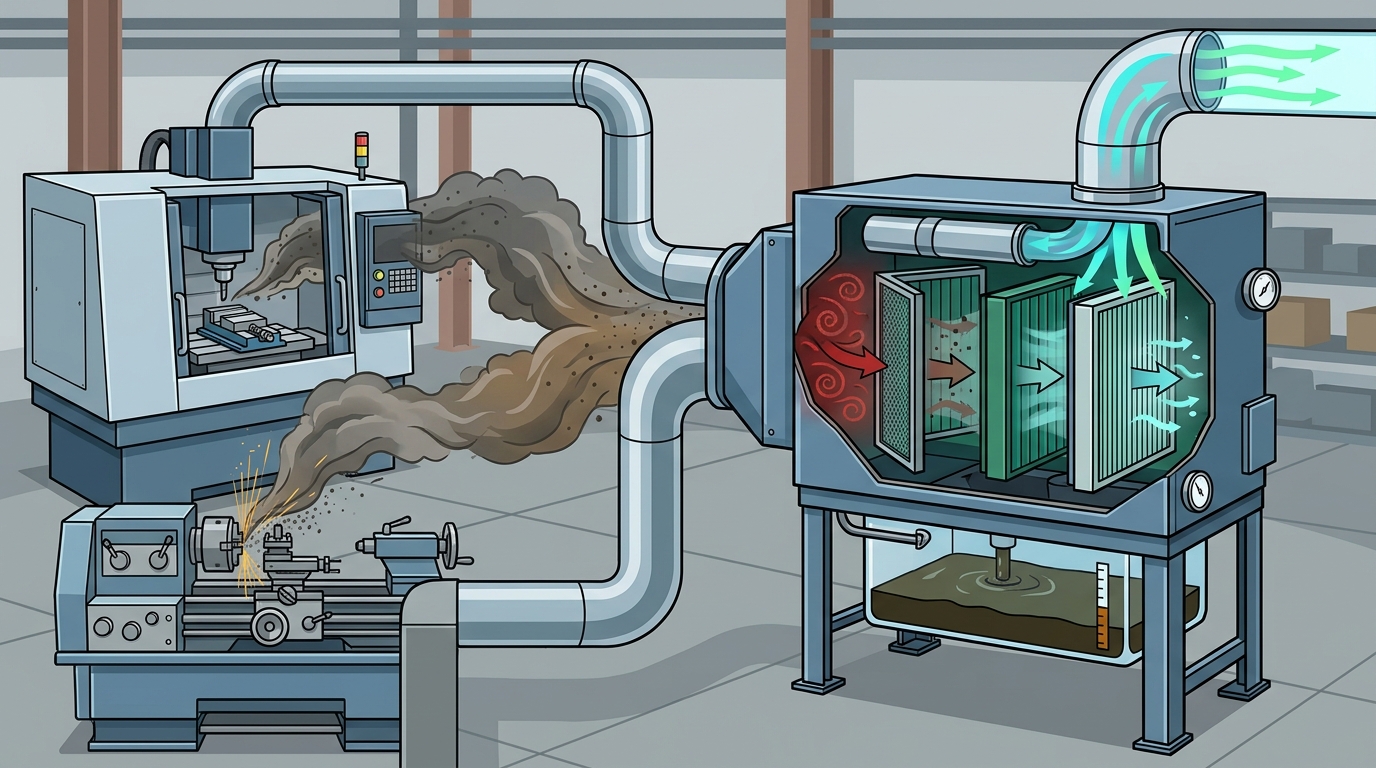
Water-soluble coolants generate finer aerosols that contain both fluid droplets and biological contaminants. At high spindle speeds or elevated temperatures, coolant can vaporize into smoke composed of submicron particles. Multi-stage filtration with a HEPA final stage is the most reliable way to handle both.
Metal Fumes and Particulates
Grinding and welding operations release volatilized metal particles such as iron or aluminum that condense into dangerous fumes. Custom engineered filtration solutions address these heavier contaminant loads with tailored system designs.
How Mist Collectors Work
Media-based mist collectors draw contaminated air through progressive filter stages. The first stage, a coarse pre-filter, removes larger droplets. Subsequent stages use increasingly fine media, and a final HEPA-grade cartridge captures submicron aerosols. This multi-stage approach achieves filtration efficiencies above 99% while extending the life of each downstream filter.
Electrostatic precipitators offer an alternative by charging mist droplets and attracting them to collector plates. However, media-based systems from manufacturers like Aeroex are generally preferred in metalworking because they handle the heavy oil loads typical of CNC operations with less frequent cleaning. Explore the technology behind Aeroex filtration systems for a deeper look at how progressive filtration works.
Top Industrial Air Filtration Solutions for Metalworking
Mist-Fit Series
The Mist-Fit is a compact, direct-mount mist collector designed for individual CNC machines. It captures mist right at the source, eliminating the need for expensive ducting. The Mist-Fit is ideal for shops that need a plug-and-play solution with minimal footprint. Available in 550 and 1050 CFM models, it integrates with most major CNC brands including Haas, Mazak, and DMG Mori.
Maverick Series
The Maverick line pairs multi-stage fibrebed and HEPA filtration with intelligent monitoring and airflow capacities from 400 to 4,000 CFM. Its 5-stage filtration process includes a MERV 14 depth-loading fiber bed filter offering up to 25 times more surface area than standard filters, with a service life of 2 to 4 years. Browse the full Maverick mist collector lineup for detailed specifications.
ARO Series
The ARO is built for high-mist applications. Its progressive multi-stage process removes 95% of mist particles in the first stage alone, dramatically extending downstream filter life. The final HEPA stage captures 99.97% of submicron particles. Trusted by over 1,000 metalworking facilities globally, the ARO series is a proven workhorse for demanding shop environments.
Product Comparison Table
| Feature | Mist-Fit | Maverick | ARO |
|---|---|---|---|
| Airflow Range (CFM) | 550 - 1,050 | 400 - 4,000 | Multiple configs |
| Filtration Stages | Multi-stage + HEPA option | 5-stage with HEPA | Progressive multi-stage + HEPA |
| HEPA Efficiency | Up to 99.97% | Up to 99.97% | 99.97% at 0.3 microns |
| Filter Life | 1 - 3 years | 2 - 4 years | 2 - 4 years |
| Mounting Options | Direct mount, pedestal, side mount | Flexible vertical/horizontal | Multiple configurations |
| Best For | Individual CNC machines | High-demand, scalable applications | Heavy oil mist environments |
Regulatory Compliance and Exposure Limits
A permissible exposure limit (PEL) is the maximum concentration of a substance in workplace air that workers may be exposed to over a defined period. OSHA sets the PEL for mineral oil mist at 5 mg/m³ as an 8-hour time-weighted average. NIOSH recommends a stricter limit of 0.4 mg/m³ for thoracic particulate mass, while many health and safety committees target 0.3 to 0.5 mg/m³ for truly safe working conditions.
Failure to comply can result in OSHA citations, fines, and increased workers' compensation costs. Aeroex metalworking mist collectors are designed to handle coolant pressures up to 3,000 psi and deliver consistent performance at up to 99.97% efficiency, helping facilities meet or exceed these exposure limits.
Key Takeaways
- Oil mist and coolant aerosols in metalworking shops pose serious respiratory and safety hazards that require engineered controls.
- Multi-stage media filtration with a HEPA final stage is the gold standard for metalworking air filtration.
- The Mist-Fit, Maverick, and ARO product lines from Aeroex cover applications from single-machine setups to large-scale operations.
- OSHA limits mineral oil mist exposure to 5 mg/m³, but NIOSH recommends 0.4 mg/m³ for better worker protection.
- Filter longevity of 2 to 4 years on premium systems reduces total cost of ownership significantly.
- Direct-mount options eliminate ducting costs and capture contaminants at the source.
- Aeroex systems are trusted by over 1,000 metalworking facilities globally, including major OEMs.
Frequently Asked Questions
What is a mist collector and why do metalworking shops need one?
A mist collector is a filtration device that removes oil mist, coolant aerosols, and smoke from workshop air. Metalworking shops need them to protect worker health, maintain regulatory compliance, and prevent equipment corrosion caused by airborne contaminants.
What types of mist do CNC machines produce?
CNC machines produce coarse oil droplets (5 to 10 microns) and fine aerosols (0.1 to 5 microns). At high speeds or temperatures, coolant can also generate submicron smoke particles that require HEPA-grade filtration to capture.
How does multi-stage filtration improve performance?
Multi-stage filtration uses progressive filters of increasing efficiency. Each stage targets a different particle size range, which protects downstream filters, extends service intervals, and achieves overall efficiencies above 99%.
What is the OSHA exposure limit for metalworking fluid mist?
OSHA sets the permissible exposure limit at 5 mg/m³ for mineral oil mist as an 8-hour time-weighted average. NIOSH recommends a more protective limit of 0.4 mg/m³ for thoracic particulate mass.
How long do filters last in Aeroex mist collectors?
Depending on the product line and operating conditions, Aeroex filters typically last between 1 and 4 years. The Maverick and ARO series feature depth-loading fiber bed filters with service lives of 2 to 4 years.
Can Aeroex mist collectors handle high-pressure coolant systems?
Yes. Aeroex mist collectors are designed to handle coolant systems operating at pressures up to 3,000 psi, making them suitable for modern high-speed machining centers.
Do I need ducting to install a mist collector?
Not necessarily. Direct-mount options like the Mist-Fit attach directly to the CNC machine enclosure, eliminating ducting costs. Larger facilities may benefit from centralized systems with ducting for multiple machines.
How do I choose the right mist collector for my shop?
Start by assessing your airflow requirements, the type of coolant or oil used, machine enclosure size, and maintenance preferences. Aeroex offers a free consultation and a 30 to 60 day trial period so you can evaluate performance before committing.
Get Started With Cleaner Air
Every day without proper mist collection puts your workers at risk and leaves money on the table in maintenance and energy costs. Aeroex offers a risk-free trial period of 30 to 60 days on its mist collection systems. Request a free consultation today and let the Aeroex engineering team recommend the right solution for your metalworking application.